2025 Top Fiber Network Cable Innovations for Faster Connectivity Solutions

In the rapidly evolving digital landscape, the need for faster and more reliable connectivity solutions has never been greater. As we look ahead to 2025, innovations in fiber network cable technology promise to revolutionize the way we connect, communicate, and conduct business. According to Dr. Emily Chen, a leading expert in fiber optics, "The advancements in fiber network cable design and manufacturing are setting the stage for unprecedented speeds and efficiency, fundamentally transforming our digital interactions.”

As industries continue to demand higher bandwidth and lower latency, the fiber network cable sector has risen to the challenge. With innovations such as improved materials, enhanced durability, and next-generation manufacturing processes, the future of connectivity appears bright. These developments not only aim to meet current demands but also anticipate the technological needs of tomorrow, positioning fiber network cables as a cornerstone of modern infrastructure.

In this article, we will explore the top innovations in fiber network cables expected by 2025, delving into the technologies that will enhance connectivity solutions and ultimately shape the future of global communications. Join us as we dissect the key trends and advancements that are paving the way for a faster, more interconnected world.

2025 Top Fiber Network Cable Innovations for Faster Connectivity Solutions

Advancements in Fiber Optic Technology for 2025
2025 Top Fiber Network Cable Innovations for Faster Connectivity Solutions

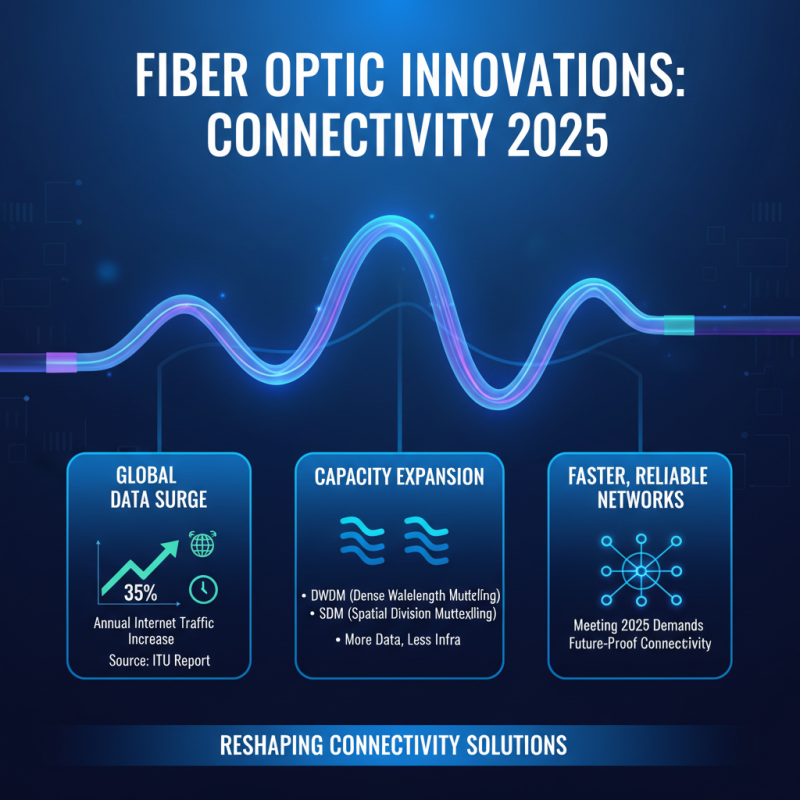
The advancements in fiber optic technology continue to reshape the landscape of connectivity solutions, particularly as we approach 2025. A recent report from the International Telecommunication Union indicates that global internet traffic is projected to increase by 35% annually, highlighting the pressing need for faster and more reliable fiber networks. Innovations in technologies such as dense wavelength division multiplexing (DWDM) and spatial division multiplexing (SDM) are at the forefront of these enhancements, enabling carriers to expand data capacity without the substantial need for additional infrastructure.

Moreover, the deployment of bend-insensitive fibers allows for greater flexibility in installation, making it easier to integrate fiber networks into urban environments where space is at a premium. According to a study by the Fiber Broadband Association, this technology can potentially reduce installation costs by 30% and speed up deployment times by 20%, significantly impacting the expansion of high-speed internet access. As society becomes increasingly reliant on digital connectivity, these innovations are crucial in meeting future demands while ensuring sustainable and efficient network solutions for both urban and rural areas alike.

Key Innovations in Cable Design for Enhanced Performance

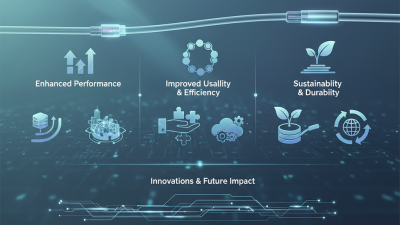
As we enter 2025, the landscape of fiber network cable technology is evolving rapidly, driven by a need for faster and more reliable connectivity solutions. Innovations in cable design are at the forefront, focusing on materials that enhance performance while reducing signal loss and interference. The use of advanced optical fibers, such as those incorporating new polymer blends, allows for greater flexibility and speed. These materials not only ensure durability but also enable the cables to be used in a wider range of environments, from urban installations to remote locations.

Fiber Cable Technology In addition to materials, structural design innovations are transforming how fiber cables are deployed. Techniques such as improved shielding and enhanced jacket designs are being employed to protect fiber strands from external factors, which can degrade performance. These enhancements are especially crucial for high-density applications where many cables are bundled together.

Furthermore, the integration of smart technology into cable design is becoming more prevalent, allowing for real-time monitoring of performance and proactive maintenance, ensuring optimal functionality in demanding network conditions. Overall, these key innovations in cable design are vital for supporting the increasing demand for high-speed internet and improved connectivity across various platforms.

Emerging Materials Revolutionizing Fiber Network Cables

In the rapidly evolving landscape of telecommunications, emerging materials are playing a pivotal role in the development of fiber network cables designed to enhance connectivity. Novel materials such as low-loss optical fibers and advanced polymer coatings are not only improving signal transmission but also reducing overall latency, which is essential for high-speed internet demands. A recent report from the Fiber Broadband Association highlights that the global demand for fiber network solutions is projected to grow by 12% annually, driven by the increasing need for bandwidth across residential and commercial sectors.

Innovations such as hollow-core photonic crystal fibers and bend-insensitive cables are also leading the charge in revolutionizing fiber optics. These advancements allow for greater flexibility and efficiency in data transmission, making them ideal for urban environments where space is at a premium. According to a market analysis by Research and Markets, investments in fiber infrastructure are expected to surpass $100 billion by 2026, underscoring the critical role of these new materials in shaping the future of connectivity.

**Tip: When considering upgrades to your fiber network infrastructure, pay attention to the material composition of cables. Modern materials can significantly enhance bandwidth and reduce maintenance costs over time.** Additionally, ensure that the installation is carried out by professionals familiar with the latest innovations to maximize performance and longevity.

2025 Top Fiber Network Cable Innovations for Faster Connectivity Solutions

Innovation Material Type Data Rate (Gbps) Distance (km) Deployment Year
Ultra Low Loss Fiber Silica-based Composite 400 100 2025
Photonic Crystal Fiber Microstructured Glass 1000 50 2026
High Capacity Multi-core Fiber Plastic Optical Fiber 200 10 2025
Self-Healing Fiber Smart Polymer 100 20 2025
UV Resistant Fiber Coated Glass Fiber 600 30 2025

Impact of AI and Machine Learning on Fiber Connectivity Solutions

Advancements in artificial intelligence (AI) and machine learning are set to revolutionize fiber connectivity solutions by enhancing network efficiency and speed. According to a recent report by MarketsandMarkets, the AI in telecommunications market is projected to grow from $1.6 billion in 2020 to over $7.3 billion by 2025, indicating a significant shift towards automation and intelligent systems.

These technologies are increasingly being employed to monitor network performance, predict failures, and optimize bandwidth allocation in real-time, ultimately leading to faster and more reliable connectivity for users.

The integration of AI-driven analytics into fiber network management allows for proactive maintenance and rapid incident response, minimizing downtime and ensuring robust connections. For instance, utilizing machine learning algorithms can analyze historical data and identify patterns that predict network congestion before it occurs.

A study from Gartner highlights that organizations implementing AI-enhanced solutions can expect a 30% improvement in operational efficiency. As a result, businesses are empowered to connect with their clients through seamless, high-speed networks that cater to the demands of modern applications such as 4K streaming, online gaming, and real-time collaboration tools, solidifying the role of AI and machine learning as essential components in the future of fiber connectivity solutions.

Future Trends in Fiber Network Deployment for Faster Connectivity

As we look toward 2025, the deployment of fiber network cables is set to undergo significant transformations aimed at enhancing connectivity solutions. One of the most notable trends is the shift towards utilizing advanced materials and manufacturing processes that not only improve the bandwidth but also reduce latency. Innovations such as bend-insensitive fiber and low-loss materials will facilitate smoother data transmission, making it easier to meet the increasing demand for high-speed internet in both urban and rural areas. This evolution in fiber technology is pivotal as it enables service providers to expand their reach while maintaining high-quality performance.

Additionally, the approach to fiber network deployment is evolving with the integration of smart technologies. The use of Artificial Intelligence (AI) and machine learning algorithms will optimize network management and predictive maintenance, ensuring minimal downtime and efficient resource allocation. Moreover, the trend towards modular and flexible network designs allows for quicker and more cost-effective installations. This adaptability is crucial in an era where user demands are continually changing, and rapid scalability of infrastructure is essential to accommodate future growth. The advancements in both materials and technologies will play a crucial role in shaping the connected world of tomorrow.