2026 Best Networking Solutions for Global Buyers How to Choose?
In the rapidly evolving landscape of networking solutions, selecting the right option is critical for global buyers. Experts like John Smith, a renowned consultant in the tech industry, stress this importance. He states, "Choosing the right networking solution can make or break business success in today's digital age." This highlights the weight of informed decision-making.
Understanding your specific needs is vital. Not all solutions fit every business. Some may require robust performance, while others prioritize affordability. The challenge lies in assessing these factors effectively. Different vendors offer varying levels of support and features. It can be overwhelming to navigate through the options.
Real-world experience often reveals that many businesses underestimate the nuances of networking solutions. They may rush decisions, leading to dissatisfaction later. This requires reflection on past choices. Take time to evaluate potential vendors, understanding that a singular approach might not work universally. Balancing performance, cost, and scalability is essential for long-term success.

2026 Networking Solutions: A Comprehensive Overview for Global Buyers
When considering networking solutions in 2026, global buyers must evaluate a variety of factors. Start by understanding your specific needs. Are you focusing on speed, reliability, or security? Each buyer’s requirements will differ based on their industry and scale. For instance, a tech startup might prioritize fast cloud access, while a manufacturing leader may need robust on-site connections.
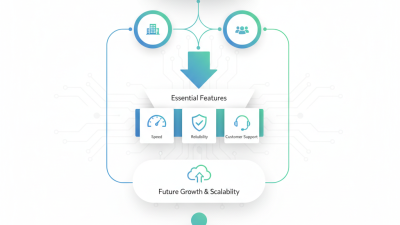
It's crucial to weigh the features of each solution available. Look for options that offer scalability, allowing your network to grow with your business. Customization is another key aspect. Not every solution will fit all business models, so ensure you explore flexible options. Seek expert opinions or case studies to gauge reliability. Peer reviews can provide insights, but be wary of unverified claims.
Networking technology is constantly evolving, so stay informed about trends. Some solutions may become obsolete quickly. Innovation is a double-edged sword; it presents opportunities but also risks. Disruptive technologies can often lead to overpromising capabilities. Thus, thorough research is essential. Connecting with industry peers can offer practical perspectives on the recent advancements and their applications.
Key Factors in Evaluating Networking Solutions for Global Procurement
When evaluating networking solutions for global procurement, several key factors must be considered. The first is scalability. According to a 2022 report by Grand View Research, the global networking market is projected to grow at a CAGR of 13.5% from 2023 to 2030. Solutions should easily adapt to increasing demands as businesses expand. If a solution cannot scale, it may hamper long-term growth.
Another critical aspect is security. In today’s interconnected world, a strong security framework is vital. A study by Cybersecurity Ventures estimates that global cybercrime will cost $10.5 trillion annually by 2025. Solutions that don't prioritize security can expose organizations to significant risks. It’s essential to assess the technologies and safeguards in place to protect sensitive data.
Finally, user experience plays a crucial role. A complex interface can lead to frustration, resulting in poor adoption rates. According to a report by Forrester, companies with a strong focus on user experience see a 400% increase in customer satisfaction. Thus, solutions should be intuitive and user-friendly, accommodating various skill levels within the workforce. Making the wrong choice can lead to inefficiencies and increased operational costs.
Emerging Networking Technologies to Consider for Future-readiness
Emerging networking technologies are reshaping the landscape for global buyers. Understanding these innovations is crucial for future-readiness. The rise of software-defined networking (SDN) enables dynamic control of data flows. This technology offers flexibility and efficiency. Companies can adapt their networks quickly, responding to changing needs.
Another technology to consider is network function virtualization (NFV). It separates network services from hardware, allowing applications to run on standard servers. This approach reduces costs and increases scalability. Organizations can deploy new services rapidly, enhancing responsiveness to market demands.
Tips for choosing the right solutions: look for adaptability. A flexible network can evolve with your business. Assess the integration capabilities of technologies. They should work seamlessly with existing systems. Evaluating your team's expertise is vital. Ensuring they are well-versed in emerging technologies can drive successful implementation. Always question the long-term viability of your tech partners. Not every advancement will suit your needs. Engage in continuous learning to stay updated on trends. This will empower your business to leverage the most relevant and impactful networking solutions.
Market Trends and Growth Projections in Global Networking Solutions
As the global demand for networking solutions continues to rise, understanding market trends is crucial. The industry is evolving rapidly. Businesses need to stay ahead by recognizing shifts in technology and customer needs. The increasing reliance on cloud services is a notable trend. Companies must adapt by implementing robust networking infrastructures to support these innovations.
Growth projections highlight significant opportunities. More organizations seek reliable connectivity and enhanced security features. The increasing complexity of networks demands specialized solutions. However, not all options are created equal. Buyers should consider scalability, ease of use, and the vendor's reputation. Many solutions fall short in delivering true reliability. This presents a chance for buyers to evaluate their choices more carefully.
Emerging technologies, such as AI and IoT, are reshaping the landscape. The integration of these technologies can enhance networking efficiency. Yet, implementing them requires careful planning. A miscalculation can lead to substantial setbacks. Companies should engage with knowledgeable professionals to navigate these challenges effectively. The quest for optimal networking solutions is ongoing and requires an informed approach.
Best Practices for Selecting Reliable Networking Vendors and Partners
When selecting networking vendors and partners, it is crucial to focus on reliability. The global market for networking solutions is expected to surpass $500 billion by 2026, highlighting the importance of choosing the right partner. Research indicates that 65% of organizations prioritize vendor reliability when evaluating solutions. This metric underscores the need for rigorous assessments.
Evaluating a vendor's track record is essential. Look for companies with at least five years of experience in the industry. Over 70% of businesses report that experienced vendors provide better support during deployment. It is also wise to review client testimonials and case studies to understand the vendor’s success stories and challenges. Transparency in their approach indicates a willingness to engage and adapt.
Additionally, consider the scalability of the solution. A report from a leading IT research firm notes that 60% of companies struggle with growth due to inadequate network capacity. It is crucial to ensure that your selected vendor can accommodate future demands. Reliable partners often provide insights into industry trends, helping you make informed decisions as your organization evolves. Balancing experience, references, and scalability can pave the way for a successful networking environment.
2026 Best Networking Solutions for Global Buyers - Evaluation Criteria
| Criteria |
Description |
Rating (1-5) |
Comments |
| Scalability |
Ability to scale networking infrastructure based on growth |
4 |
Adequate scalability for most medium to large enterprises |
| Reliability |
Network uptime and redundancy measures |
5 |
High reliability with minimal downtime |
| Security |
Implementation of security protocols and measures |
4 |
Strong security features are in place |
| Support |
Customer service and support availability |
3 |
Support could be improved in response times |
| Cost-Effectiveness |
Value provided relative to pricing |
4 |
Offers good value for the features provided |
| Integration |
Ease of integration with existing systems |
5 |
Seamless integration with existing infrastructure |