Top Benefits of Using Cat 6a Cable for Your Network Needs?
In today's fast-paced digital world, choosing the right network cable is essential. The Cat 6a cable stands out for its advanced capabilities. John Smith, a renowned technology expert, once stated, "Cat 6a cables offer exceptional performance for high-speed data transfer." This is especially true in environments demanding more from their networks.
Cat 6a cables support speeds up to 10 Gbps and distances of 100 meters. This makes them ideal for various applications, including data centers and enterprise networks. However, not all users recognize their true potential. Investing in superior cables can significantly enhance network reliability. Yet, some may not see the value initially and opt for cheaper alternatives.
It is important to reflect on long-term benefits versus immediate costs. Poor choices in cabling can lead to slower connections and more downtime. While the initial investment in Cat 6a cable may seem high, the durability and speed gains often justify the expense. Understanding the comprehensive advantages of Cat 6a cables can truly transform network performance.
Overview of Cat 6a Cable Features and Specifications
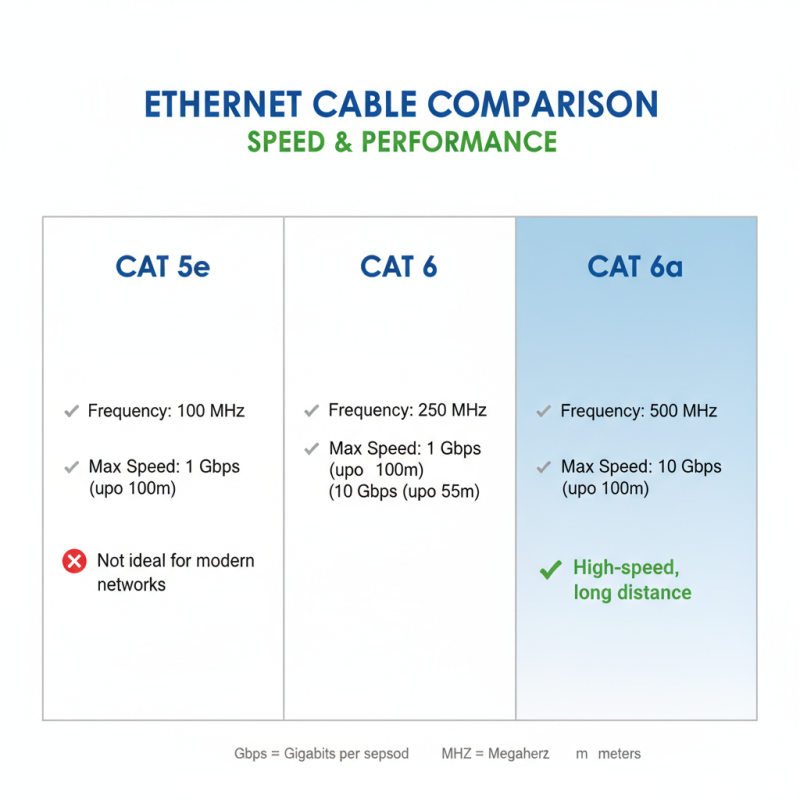
Cat 6a cable is an excellent choice for modern network requirements. It supports data transfer rates up to 10 Gbps over a distance of 100 meters. This makes it ideal for high-bandwidth applications. Additionally, Cat 6a provides enhanced performance thanks to its improved shielding.
When considering installation, note that Cat 6a cables are thicker and less flexible than standard Cat 6. This can make installation more challenging in tight spaces.
Tips: Avoid sharp bends during setup. This will help prevent signal degradation.
Moreover, the cable's specifications include a frequency of 500 MHz, doubling that of Cat 6. This higher frequency enables better signal integrity. However, remember that the total installation environment matters.
Tips: Keep cables away from heavy electronic devices. This reduces interference and maintains performance levels. Always plan your layout well to optimize performance.
Comparison of Cat 6a Cable with Previous Ethernet Standards
When comparing Cat 6a cable to previous Ethernet standards like Cat 5e and Cat 6, notable improvements emerge. Cat 6a supports higher frequencies, up to 500 MHz. This capability allows for faster data transmission rates, reaching up to 10 Gbps over longer distances. In contrast, Cat 5e struggles with speed and distance, making it less effective for modern networks.
Another key difference lies in crosstalk reduction. Cat 6a reduces interference significantly due to its improved shielding. This feature enables clearer signals and a more stable connection. Older cables like Cat 5e experience more interference, causing network disruptions. For anyone looking to upgrade, this is a vital consideration.
Tips for choosing cable types involve assessing your network's current and future needs. If you plan to run high-bandwidth applications, Cat 6a is a wise choice. Think about your usage frequency; poor choices can result in slower speeds. Also, evaluate installation environments. Humidity or electronic interference can impact performance, so choose cables with appropriate shielding.
Key Advantages of Using Cat 6a for High-Speed Networking
Cat 6a cable offers significant advantages for high-speed networking. It supports data rates of up to 10 Gbps over a distance of 100 meters. This is crucial for businesses that demand fast and reliable connections. According to a report by IEEE, networks using Cat 6a experience a 50% reduction in crosstalk compared to Cat 6 cables. This means a clearer signal and better performance during peak usage times.
In practical terms, using Cat 6a can enhance productivity. Employees can upload and download large files quickly. Video conferencing runs smoothly, minimizing interruptions. In fact, industry studies suggest that delays can cost businesses thousands annually due to lost productivity. Despite its benefits, some installations may face challenges with cable management. The thicker nature of Cat 6a can make it harder to route in tight spaces.
While Cat 6a shows promise, there’s uncertainty about future-proofing. As technology evolves, will it still meet upcoming standards? Some experts argue that investing in higher category cables might be a better long-term solution. Still, for many businesses, the immediate advantages of Cat 6a make it an attractive choice for current networking demands.
Top Benefits of Using Cat 6a Cable for Your Network Needs
| Benefit |
Description |
| Higher Bandwidth |
Cat 6a supports bandwidths up to 500 MHz, allowing for faster data transmission rates. |
| Improved Performance |
Designed for 10 Gigabit Ethernet, ensuring smooth performance for high-demand applications. |
| Reduced Crosstalk |
Features enhanced shielding that minimizes interference, leading to more reliable connections. |
| Longer Distances |
Supports data transmission up to 100 meters without significant loss of quality. |
| Future-Proofing |
Cat 6a is a smart investment for future advancements in networking technology. |
| Cost-Effective |
Provides excellent performance without the higher costs associated with fiber optics. |
Installation Considerations for Cat 6a Cable in Various Environments
When installing Cat 6a cable, it's essential to consider the environment. This cable supports speeds up to 10 Gbps. It operates effectively over distances of 100 meters, making it ideal for most office setups. However, installation in high-interference areas can be problematic. For example, avoiding proximity to electrical devices is crucial to prevent performance degradation.
In industrial settings, cable shielding becomes vital. Cat 6a offers shielded twisted pairs, which significantly reduce electromagnetic interference (EMI). According to a report by Allied Market Research, the demand for shielded cables is projected to increase by 9.5% annually due to their enhanced reliability. However, it’s important to note that installation in harsh environments can lead to wear and tear over time. Regular checks and maintenance should not be overlooked.
Furthermore, the installation process requires attention to cabling standards. Poor practices can lead to signal loss and reduced bandwidth. Compliance with standards like TIA/EIA-568 is critical. The intricacies of proper termination cannot be ignored. A wrong connection can cause issues, reducing cable performance significantly. Balancing the need for speed with proper installation techniques is essential for long-term reliability.
Top Benefits of Using Cat 6a Cable for Your Network Needs
This bar chart illustrates the key benefits of using Cat 6a cables in network installations, highlighting their performance in various environments.
Future-Proofing Your Network with Cat 6a Technology
Future-proofing your network is essential in today’s fast-paced digital world. Cat 6a cable offers speed and reliability, making it a great choice for modern networks. With data transfer rates of 10 Gbps, it supports bandwidth for high-definition streaming and online gaming. This capability is crucial as we move toward more data-intensive applications.
Investing in Cat 6a technology can enhance your network's performance. It features improved insulation and shielding, reducing interference. This means a more stable connection for multiple devices. However, it’s important to consider installation costs and compatibility with existing hardware. Not all networks will easily adapt to this new standard without upgrades.
While Cat 6a is a long-term solution, not every situation requires it. Smaller setups may not benefit from the higher capacities. Analyze your specific needs. Ensure that the investment aligns with your actual network demands. Balancing current needs with future expectations is key in making the right choice.