2026 Best Cabling Solutions for Effective Networking and Connectivity?
In the ever-evolving world of networking, effective connectivity relies heavily on quality cabling solutions. Recent industry reports indicate that up to 70% of network failures stem from inadequate cabling systems. This highlights the importance of investing in reliable infrastructure. With the rise of IoT and high-bandwidth applications, the demand for superior cabling is more pressing than ever.
The global market for cabling solutions is projected to reach $XX billion by 2026, fueled by the growing need for faster data transfer speeds. However, many organizations still overlook the necessity of proper cable management. Poorly designed systems can lead to increased downtime and security vulnerabilities. It's crucial to assess both current and future needs when choosing cabling options.
Companies are challenged to adapt to emerging technologies. This means evaluating existing infrastructure and embracing innovative cabling techniques. Ignoring these factors can lead to significant setbacks. In an environment where flexibility and speed are vital, organizations must prioritize smart cabling solutions for seamless connectivity.

Overview of Cabling Solutions in Networking
In today's digital age, efficient networking relies heavily on effective cabling solutions. As per a recent industry report, nearly 70% of network failures stem from inferior cabling systems. This statistic highlights the importance of choosing the right cabling infrastructure. Fiber optic cables are becoming increasingly popular due to their high-speed capabilities and greater bandwidth. They can transmit data over long distances with minimal loss, making them ideal for businesses undergoing rapid digital transformation.
However, the implementation of cabling systems requires careful planning. A survey revealed that almost 40% of organizations do not conduct regular cabling assessments. These overlooked evaluations can lead to significant operational issues. Poor installations can cause slow data transfers and increased downtime, which ultimately affects productivity. Poor documentation and inadequate training for staff on cabling systems further complicate network management.
It's essential to reflect on the balance between cost and quality when selecting cabling solutions. While budget constraints may drive organizations to cheaper options, they should consider long-term consequences. A robust cabling infrastructure is a foundational investment. Ultimately, prioritizing high-quality cabling solutions can lead to more reliable and efficient networking experiences in the long run.
2026 Best Cabling Solutions for Effective Networking and Connectivity
Types of Cabling: Copper vs. Fiber Optic
When it comes to networking, the choice between copper and fiber optic cabling is crucial.
Copper cabling has been the traditional choice for many years. It is cost-effective and easy to install. According to industry reports, approximately 75% of existing networks still use copper.
However, copper has its limitations, especially in terms of speed and distance. Data transmission speed typically caps at 1 Gbps over long distances.
On the other hand, fiber optic cabling offers significant advantages. Fiber can transmit data over much greater distances without loss of quality.
Speeds can reach up to 100 Gbps, making it the go-to choice for modern enterprises. In fact, a study indicated that over 90% of new network installations favor fiber optics.
This shift reveals a growing acknowledgment of their bandwidth capabilities.
Yet, fiber optics come with challenges. Installation is complex and costs are higher upfront. Many businesses hesitate to switch, fearing the disruption of their operations. It's essential to evaluate these factors.
Each cabling type has unique qualities and drawbacks, shaping the future of connectivity. The decision requires careful consideration.
Factors to Consider When Choosing Cabling Solutions
Choosing the right cabling solution is crucial for any effective networking setup. Different environments require different types of cabling. For instance, a data center demands more robust cabling compared to a typical office space. According to recent industry reports, more than 70% of connectivity issues arise from improper cabling choices. This highlights the importance of understanding specific needs before making a decision.
Factors to consider include the bandwidth requirements. An organization with high data transfer needs might lean toward fiber optic cables. These cables can provide up to 1 Gbps and higher speeds. On the other hand, traditional copper cables may suffice for lower demands. Additionally, the distance that data needs to travel is critical. Fiber optic solutions can transmit data over longer distances without significant loss.
Another aspect to reflect upon is installation complexity. Some cabling systems can be difficult to install, requiring professional help. While this can lead to a steeper initial cost, the benefits often outweigh these expenses. Considering scalability is essential too. The best solutions should support future expansion and technology upgrades. Identifying these factors leads to a more effective network infrastructure.
Emerging Technologies in Cabling for 2026
In 2026, cabling technologies will undergo significant changes to enhance networking and connectivity. Fiber optics will dominate with faster data transmission speeds. This advancement will cater to the growing demand for high-bandwidth applications. The emergence of advanced connectors will further improve efficiency. However, challenges like installation complexities and costs persist.
Another exciting development is the integration of artificial intelligence in cabling systems. AI can help optimize network performance in real-time. It can predict failures before they happen, offering considerable benefits. Yet, depending too heavily on technology might lead to oversights. Balancing human intervention with smart systems is crucial.
Sustainability will also be a key focus. Eco-friendly materials will be integral in new cabling solutions. This shift may involve a trade-off between performance and environmental impact. Users will need to consider both options carefully. Understanding these nuances is essential as the industry evolves.
2026 Best Cabling Solutions for Effective Networking and Connectivity
| Cabling Type |
Max Data Rate (Gbps) |
Distance (Meters) |
Applications |
Emerging Technology |
| Fiber Optic |
400 |
100 |
Data Centers, Internet Backbone |
Passive Optical Networks (PON) |
| Cat 6A |
10 |
100 |
Enterprise Networking |
Augmented Reality (AR) Support |
| Cat 7 |
10 |
100 |
Data Centers, High-Speed Offices |
HDBaseT Technology |
| Cat 8 |
25-40 |
30 |
Server Rooms, Data Centers |
Multi-Gig Ethernet |
| Coaxial |
1 |
500 |
Television, Surveillance |
DOCSIS 4.0 |
Best Practices for Installation and Maintenance of Cables
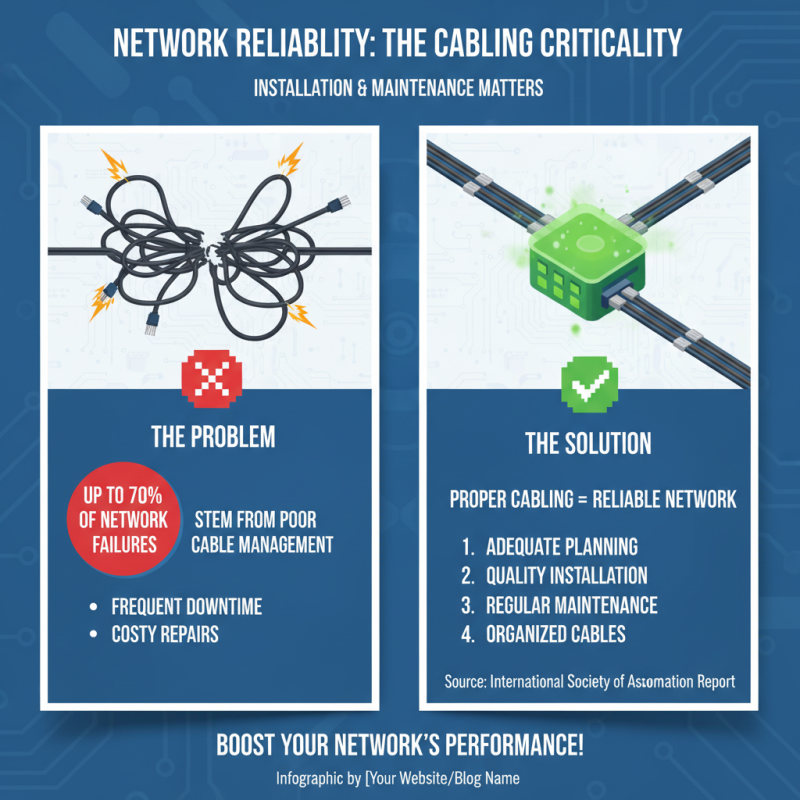
Proper installation and maintenance of cabling systems is crucial for effective networking. According to a report by the International Society of Automation, up to 70% of network failures stem from poor cable management. Organizations often overlook this, leading to frequent downtime and costly repairs. Adequate planning can mitigate these issues significantly.
Utilizing color coding and labeling can improve organization and maintenance efforts. A study by the Telecommunications Industry Association suggests that structured cabling can reduce troubleshooting time by up to 30%. However, many teams still use outdated methods, making identification difficult. Regular audits of cable installations can reveal hidden issues and ensure compliance with industry standards.
Cables should be inspected regularly for signs of wear and tear. Over time, bending and physical stress can compromise performance. The NECA (National Electrical Contractors Association) recommends periodic testing to identify potential failures before they escalate. However, many neglect this practice, risking significant operational disruptions. Taking proactive steps pays off long-term, creating a reliable network environment.