2026 Best Fiber Network Cable Options for Global Buyers?
In the fast-evolving digital landscape, choosing the right fiber network cable is crucial for connectivity. The demand for high-speed internet is soaring globally. As businesses and homes upgrade their networks, understanding the best options becomes essential.
Fiber network cables offer superior performance compared to traditional copper cables. They transmit data faster and are more reliable over long distances. However, not all cables are created equal. Factors such as installation ease, durability, and cost play a significant role in making the right choice.
While some buyers may lean towards well-known brands, exploring lesser-known manufacturers can yield surprising benefits. Assessing value involves scrutinizing various specifications. Potential buyers should also reflect on their unique needs and budgets. A misinformed decision can lead to wasted resources. Ultimately, understanding fiber network cables is key, but it requires careful consideration and ongoing research to navigate the options effectively.

Overview of Fiber Network Cables and Their Importance in Modern Connectivity
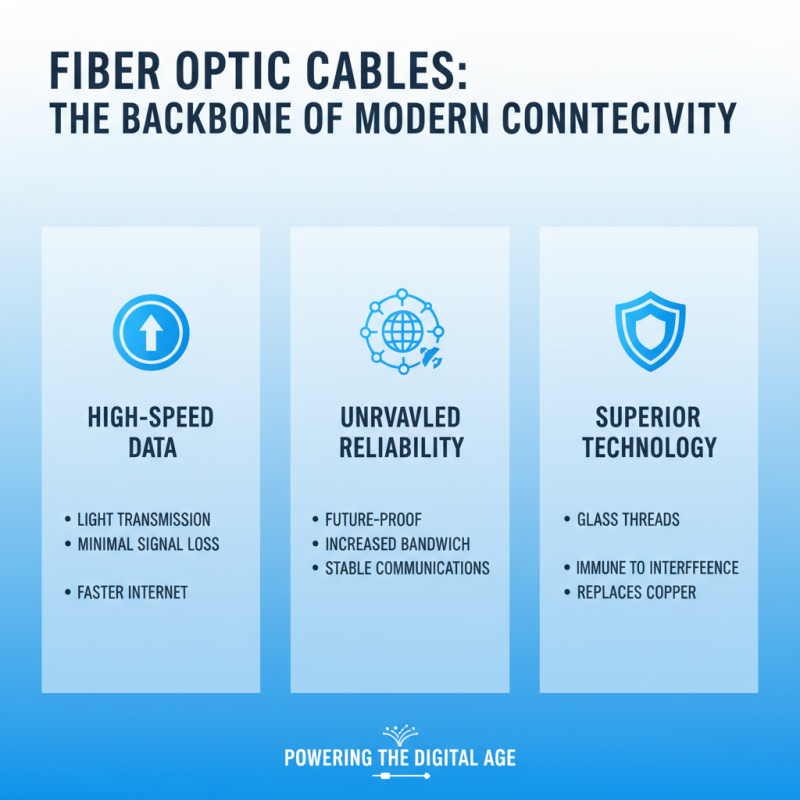
Fiber network cables are essential in modern connectivity. They offer high-speed data transmission with minimal signal loss. This technology supports the increasing demand for faster internet and more reliable communications. Fiber optics use light to transmit data, which makes them superior to traditional copper cables.
The importance of fiber network cables cannot be overstated. They provide backbone infrastructure for internet service providers and large enterprises. In crowded environments, like cities, the ability to handle high bandwidth is crucial. Yet, the cost and complexity of installation can be hurdles for many users. Some might find it hard to choose the right type of fiber cable.
As technology evolves, fiber cables will continue to be relevant. Understanding their capabilities is critical. While they are not perfect, their benefits far outweigh the drawbacks. Reliable connectivity is vital for both personal and professional environments. This growing reliance on fiber optics underscores their importance in our connected world.
Key Considerations for Choosing the Best Fiber Network Cable
When selecting the best fiber network cables, several key aspects must be considered. The type of fiber—single-mode or multi-mode—plays a crucial role. Single-mode fibers are known for long-distance communication, transmitting signals over 40 kilometers with minimal loss. Multi-mode fibers are suitable for shorter distances, typically within a few hundred meters. According to industry reports, single-mode fibers account for approximately 80% of the global fiber optic market due to their efficiency and high bandwidth capabilities.
Connector types also significantly influence performance. Common types include LC, SC, and ST connectors. Each has its application areas and advantages. For instance, LC connectors are compact and provide high-density connectivity. A survey showed that 75% of network engineers prefer LC connectors for data centers. Cable ratings are essential too. Look for cables with ratings like OFNR (riser-rated) or OFNP (plenum-rated), as they meet safety standards for various installations.
Lastly, cost and compatibility with existing infrastructure shouldn't be overlooked. Cheaper options often lead to issues such as higher attenuation rates. In a marketplace where more than 40% of organizations report suboptimal network performance, investing in quality fiber is critical. Reflecting on choices made in network infrastructure can reveal gaps that impact service delivery. Assessing these factors carefully ensures better performance in the long term.
Comparison of Single-mode vs. Multi-mode Fiber Cables for Global Buyers
When considering fiber optic cables for global applications, the choice between single-mode and multi-mode cables is crucial. Single-mode fibers are designed for long-distance communication. They transmit data over greater distances with minimal loss. These cables have a smaller core diameter, allowing only one mode of light to pass through. This results in higher bandwidth capabilities. However, they can be more expensive and require precise alignment.
Multi-mode fibers, on the other hand, are suitable for shorter distances. They have a larger core, allowing multiple light modes to transmit data simultaneously. This could cause modal dispersion, affecting performance. However, they are generally more cost-effective and easier to install. Their capabilities are often adequate for local area networks and data centers.
Tips: Choose single-mode fiber for long-range applications, especially in telecommunication. Multi-mode fiber is ideal for environments with less distance but still requires quality performance. Check compatibility with existing systems before making a decision. Always consider future needs; upgrading later can be costly. Remember that both types have their own benefits and drawbacks, depending on specific project requirements. Taking time to assess needs helps avoid costly mistakes.
Comparison of Single-mode vs. Multi-mode Fiber Cables
This chart illustrates the key differences in performance and application between Single-mode and Multi-mode Fiber Cables based on typical parameters such as bandwidth, distance, and cost. Single-mode cables are more suitable for long-distance and high-bandwidth applications, whereas Multi-mode cables are ideal for shorter distances with lower bandwidth requirements.
Top Manufacturers of Fiber Network Cables in 2026: A Market Analysis
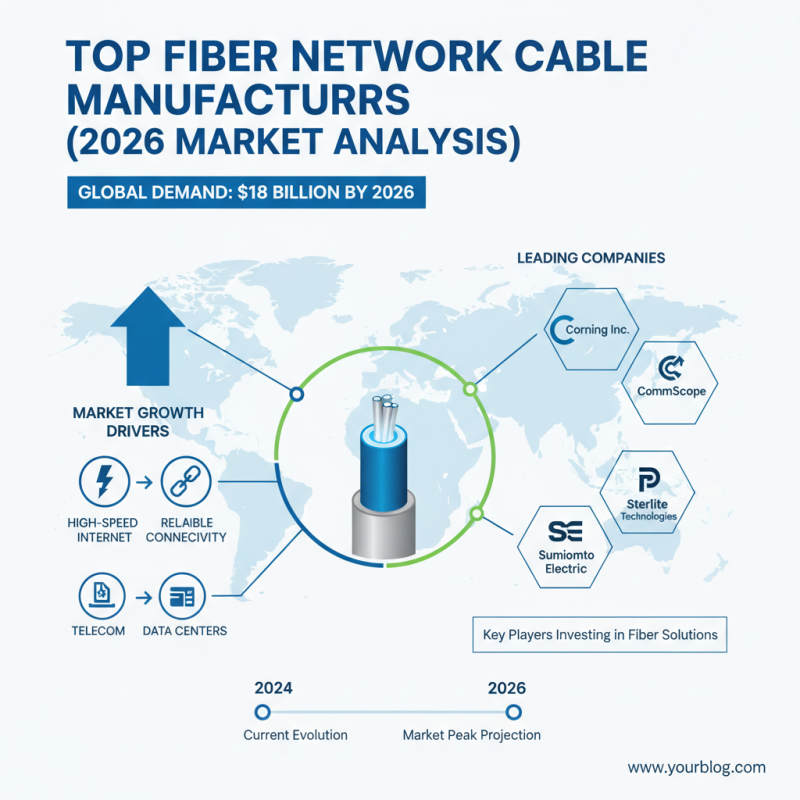
The fiber network cable market is rapidly evolving. Recent reports project that the global demand for fiber optic cables will reach $18 billion by 2026. This growth is driven by the increasing need for high-speed internet and reliable connectivity. Industries such as telecommunications and data centers heavily invest in fiber network solutions.
Top manufacturers play a crucial role in this landscape. They offer various fiber cable options designed for different applications. According to market analysts, the Asia-Pacific region holds the largest share of this market, indicating a strong manufacturing presence. Additionally, North America is witnessing increased investment in next-generation fiber technologies.
Tip: When selecting fiber network cables, consider both the performance specifications and environmental factors. It’s crucial to assess factors like temperature, moisture, and installation conditions. This will ensure optimal performance and longevity. Recognizing compatibility with existing infrastructure can minimize costs and enhance efficiency. Always keep an eye out for certifications and compliance standards, as they reflect reliability and safety.
Future Trends and Innovations in Fiber Network Cable Technology
The evolution of fiber network cable technology is rapidly transforming global communication infrastructure. As of 2023, the fiber optics market is projected to reach $11.9 billion. This growth is driven by increasing demand for high-speed internet across various sectors. An industry report by MarketsandMarkets highlights that the demand for fiber cables in urban areas will rise by 15% annually.
Technological advancements are reshaping the design and efficiency of fiber optic cables. Innovations like bend-insensitive fibers allow for more flexible installations. This flexibility addresses challenges in densely built environments. Furthermore, companies are exploring new materials to enhance durability and reduce signal loss. Research indicates that these innovations can increase the transmission distance by up to 40%.
However, challenges remain. Many existing infrastructures struggle to keep pace with these advancements. The integration of new technologies often reveals compatibility issues. Organizations must assess the cost versus long-term benefits of upgrading their systems. Continuous monitoring of industry trends is essential for making informed decisions. Addressing these hurdles will be crucial for maximizing the potential of fiber network technology.