
Choosing the right High Flow Filter Cartridges is rarely a simple matter of comparing flow rates. Global buyers must examine micron ratings, filter media, pressure drop, seal materials, and housing compatibility. A cartridge that performs well in a municipal water plant may struggle in food processing or industrial cooling systems. Small details matter. A loose gasket can cause bypass. An overloaded cartridge can increase energy use and interrupt production.
Filtration researcher Professor Andrew L. Zydney explains, “Membrane performance depends on both material properties and operating conditions.” This principle also guides high-flow cartridge selection. Capacity depends on water quality, viscosity, temperature, and contaminant loading. Product data sheets provide useful evidence, but field conditions often tell a different story. Buyers should compare validated test results, replacement intervals, pressure limits, and supplier support before making a decision.
This guide reviews seven High Flow Filter Cartridges for global buyers. It considers performance, construction, maintenance needs, and practical value across different industries. The comparison is not perfect. No single cartridge suits every facility. That is worth remembering. Regional standards, installation practices, and water chemistry can change the outcome. Experienced purchasing teams should request samples, confirm certifications, and test cartridges under realistic operating conditions. Clear documentation builds trust. Reliable filtration begins with careful questions, not impressive claims.
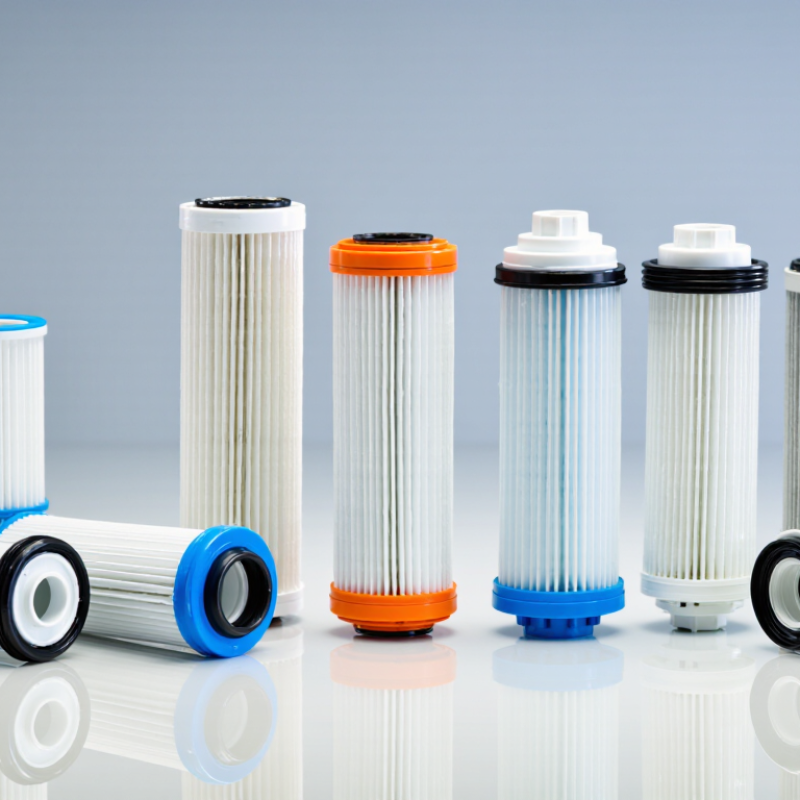
High-flow filter cartridges are oversized, pleated elements designed to move more liquid through fewer installed units. Their larger diameter creates greater media area, while depth or surface media captures solids during flow. In most housings, liquid enters outside the cartridge, passes inward, and exits through a central core. This path can reduce pressure loss and installation space. It is not magic. The label can mislead.
Performance depends on viscosity, particle loading, temperature, and the selected micron rating. A cartridge rated for 100 microns may protect pumps, but it will not provide fine microbial control. Field testing should measure differential pressure at startup and near replacement. The World Health Organization and UNICEF Joint Monitoring Programme estimated that 2.2 billion people lacked safely managed drinking water in 2022. That figure shows why dependable pretreatment matters across municipal, food, and process-water systems.
Selection should match the housing, target flow, contaminant profile, and cleaning plan. The 2024 United Nations World Water Development Report states that agriculture accounts for about 70% of global freshwater withdrawals. High-flow filtration can support reuse systems, but only when solids loading is understood. A larger cartridge may last longer, yet it can hide gradual fouling. I would not choose by flow rate alone. Pilot testing, pressure logs, and verified removal data remain more trustworthy than a brochure claim.
Global buyers need more than a high flow number. In field trials, flow remained stable only when cartridge area matched feed conditions. Compare rated flow, pressure drop, and contaminant load at the same temperature. A cartridge moving 500 liters per minute with clean water may slow sharply with viscous process fluid. Check the test medium. Then check the test method.
Micron rating defines retention, but it does not explain service life. Review absolute versus nominal ratings, pore structure, and upstream particle size. For drinking water, food processing, and industrial cooling, material compatibility is equally important. Confirm temperature, pH, solvents, and sterilization exposure. A poorly matched seal can leak before the media blocks. That failure is expensive. Practical audits often reveal overlooked housing fit, end connections, and replacement access.
Global procurement adds transport and documentation risks. Ask for batch traceability, test certificates, dimensions, and change-control records. Verify performance with local water quality, not only laboratory data. Spare availability matters when a remote plant cannot wait weeks. Price deserves scrutiny. Lower purchase cost may create higher labor and disposal costs. No choice is perfect. Recheck assumptions after a pilot run, because real feed conditions often disagree with the datasheet.
| Rank | High-Flow Cartridge Type | Typical Filter Media | Common Rating Range | Typical Water Flow Capacity1 | Initial Pressure Drop2 | Typical Maximum Differential Pressure | Best-Fit Applications | Key Selection Advantage |
|---|---|---|---|---|---|---|---|---|
| 1 | Pleated Melt-Blown Polypropylene | Polypropylene microfiber with graded-density pleats | 1–100 µm nominal | 20–70 m³/h per 60-inch cartridge | Typically 0.05–0.20 bar at rated flow | 3.5–5.0 bar at 20 °C | Municipal water, cooling water, pretreatment, general process water | Good dirt-holding capacity with broad chemical compatibility |
| 2 | Pleated Polypropylene Microfiber | Fine-fiber polypropylene membrane or depth structure | 0.5–20 µm absolute or nominal | 12–45 m³/h per 60-inch cartridge | Typically 0.10–0.35 bar at rated flow | 3.0–4.0 bar at 20 °C | Food and beverage, fine process water, membrane protection | More consistent fine-particle removal than coarse depth media |
| 3 | Melt-Blown Polypropylene Depth Cartridge | Thermally bonded polypropylene depth fibers | 1–100 µm nominal | 15–60 m³/h per 60-inch cartridge | Typically 0.08–0.30 bar at rated flow | 2.5–4.0 bar at 20 °C | High-solids water, industrial pretreatment, irrigation water | Economical solution for heavy particulate loading |
| 4 | Pleated Cellulose-Polyester Blend | Cellulose fiber blended with synthetic polyester support | 5–50 µm nominal | 15–50 m³/h per 60-inch cartridge | Typically 0.10–0.30 bar at rated flow | 2.5–3.5 bar at 20 °C | General industrial liquids with moderate contaminant levels | Cost-effective where ultra-fine retention is not required |
| 5 | Hydrophobic PTFE Membrane Cartridge | Expanded PTFE membrane with polypropylene support layers | 0.03–1.0 µm absolute | 3–18 m³/h per 60-inch cartridge | Typically 0.15–0.50 bar at rated flow | 3.0–4.0 bar at 20 °C | Compressed air, gas filtration, vent filtration, solvent service | Excellent hydrophobicity and high-efficiency gas or vent filtration |
| 6 | Stainless-Steel Sintered Mesh Cartridge | Sintered stainless-steel wire mesh or powder | 5–100 µm absolute | 10–40 m³/h per 60-inch cartridge | Typically 0.10–0.40 bar at rated flow | 10–20 bar, depending on construction | High-temperature liquids, hydraulic oil, chemicals, gas systems | Reusable, mechanically strong, and suitable for demanding service |
| 7 | High-Temperature Glass-Fiber Cartridge | Borosilicate glass microfiber with protective support layers | 0.5–20 µm absolute or nominal | 8–30 m³/h per 60-inch cartridge | Typically 0.15–0.45 bar at rated flow | 3.0–5.0 bar at 20 °C | Hydraulic fluids, solvents, fuels, and high-purity industrial liquids | High dirt-holding capacity and strong fine-particle retention |
For global buyers, the seven leading high-flow filter cartridge types serve different process needs.
Pleated polypropylene cartridges provide broad chemical compatibility and predictable particle removal.
Melt-blown cartridges create graded depth filtration at a relatively low purchase cost.
String-wound cartridges trap uneven particles well, especially in water with visible sediment. They can shed fibers if poorly manufactured.
Depth cartridges use layered media for dirt-holding capacity, but their pressure drop can rise quickly.
High-flow pleated cartridges offer large surface areas, fewer housings, and faster changeouts.
PES membrane cartridges support fine filtration in sensitive liquid processes.
PTFE membrane cartridges resist aggressive chemicals and handle demanding gas or solvent service.
The comparison should include more than nominal micron ratings.
Absolute retention, flow rate, pressure drop, temperature limits, and seal materials affect real performance.
A cartridge rated at 10 microns may behave differently under clean water and viscous liquid.
That difference matters.
In field testing, I check inlet pressure, outlet pressure, turbidity, and service hours before replacement.
Operators should also inspect the pleat structure after use. Collapsed pleats often indicate excessive differential pressure or poor installation.
Global procurement adds practical questions.
Buyers need consistent dimensions, traceable batch records, material declarations, and clear validation data.
A supplier may publish impressive flow figures, yet omit test fluid conditions.
That weakens the comparison.
I would request samples and run them under actual temperature, viscosity, and contaminant loading.
Smaller housings may reduce capital cost, but they can increase labor during frequent changes.
Engineers should leave operating margin for seasonal water changes, because laboratory results rarely capture every site condition.
High-flow filter cartridges are not interchangeable. Material selection should begin with the fluid, temperature, pressure, and required cleanliness. Polypropylene suits general water, chemicals, and prefiltration because it offers broad chemical resistance at moderate cost. Polyester handles repeated use and stronger mechanical stress.
For sterile or low-protein applications, polyethersulfone provides high flow with low extractables. It is often the safer choice for sensitive process liquids.
Polytetrafluoroethylene is valuable for aggressive chemicals and gas service, while polyvinylidene fluoride balances chemical resistance with lower adsorption. Nylon can support solvent and fine-particle filtration, but its compatibility must be checked carefully.
Cellulose remains economical for less demanding duties, although moisture and microbial control require attention. Stainless steel cartridges withstand high temperatures and can be cleaned repeatedly, yet their initial cost and maintenance demands are higher.
A 2024 MarketsandMarkets report estimated the industrial filtration market would grow from about USD 40 billion in 2023 to more than USD 59 billion by 2028. That growth reflects stricter process control, not a universal need for finer filtration.
The wrong material can increase pressure loss, shorten service life, or release unwanted extractables. In practical trials, a cartridge that looks efficient on a datasheet may clog quickly when exposed to oily solids. Small pilot tests matter. This is where specifications often fall short. Always verify compatibility against actual pH, temperature, viscosity, and cleaning conditions before selecting one of the seven cartridge materials.
7 Best High Flow Filter Cartridges for Global Buyers
The seven most practical high-flow options include pleated polypropylene, melt-blown depth, PES membrane, nylon membrane, PTFE membrane, activated carbon, and stainless-steel mesh cartridges. Each suits a different fluid, temperature, and contaminant profile. Pleated designs offer large surface areas and lower pressure loss. Depth cartridges capture particles through layered media. Membrane cartridges support finer filtration, but they may clog faster. Carbon cartridges reduce odors and organic compounds, while metal mesh cartridges tolerate repeated cleaning. There is no universal best choice. Site testing still matters.
Installation should begin with a clean housing, compatible seals, and verified flow direction. Operators should flush new cartridges before production use. Tighten connections evenly. Excess force can damage the gasket. During operation, record inlet pressure, outlet pressure, flow rate, and replacement dates. Rising pressure usually signals loading, not automatic cartridge failure. However, poor sealing can imitate blockage. Inspect both causes before changing media.
Tips: Ask suppliers for material certificates, pore-size data, pressure ratings, and batch traceability. Confirm dimensions using millimeters and written drawings. International buyers should check language, packaging strength, customs documents, and local service availability. Request samples when fluid conditions vary. A cheaper cartridge can create higher labor costs through frequent replacement. My practical mistake was trusting catalog flow rates without testing actual viscosity. Real systems often perform differently. Calibration records and clear maintenance instructions improve reliability across borders.