Why Choose Cat 6a Cable for Your Network Needs?
When designing a robust network, the choice of cables is crucial. Experts highlight the importance of high-quality options like Cat 6a cable. According to Mike Anderson, a leading network engineer, “Cat 6a cable can ensure faster speeds and greater bandwidth.” This insight reveals why many are turning to Cat 6a for modern networking needs.
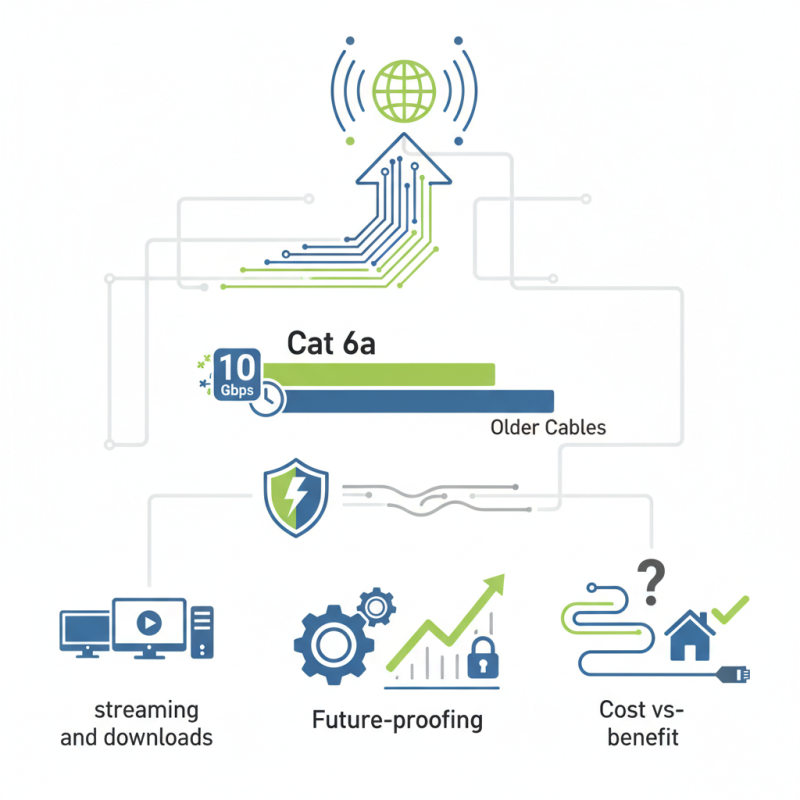
Cat 6a cable supports data rates up to 10 Gbps, enabling efficient streaming and downloads. It also offers better shielding against interference. This means fewer disruptions and consistent performance over long distances. However, the higher cost might make some hesitate. It's worth considering if the benefits align with your needs.
In a world where technology evolves rapidly, selecting the right cable can feel overwhelming. Cat 6a may not be the simplest option, but its advantages could greatly enhance network reliability. Reflecting on this choice invites questions about future-proofing your infrastructure. Overall, Cat 6a cable stands out as a reliable contender for today’s demanding networks.
Benefits of Cat 6a Cable for High-Speed Networking
Cat 6a cable offers notable advantages for high-speed networking. This advanced cabling solution supports up to 10 Gbps data rates, making it ideal for modern networks. According to industry reports, 10 Gbps is becoming the standard for data centers and enterprises. The ability of Cat 6a to handle these speeds extends up to 100 meters, which provides flexibility in network design.
One key benefit of Cat 6a is reduced crosstalk. Improved shielding minimizes interference, which is crucial in densely populated network environments. As network demands grow, the need for minimal signal degradation becomes more significant. A study shows that using Cat 6a can result in up to 30% better performance over its predecessor, Cat 6.
**Tip:** When installing Cat 6a cable, ensure proper termination and testing. This will help maintain signal integrity and speed.
It's important to consider future-proofing your network. As applications become more data-intensive, Cat 6a can adapt to changing needs. However, cabling layout and infrastructure should be carefully evaluated. Poor planning can lead to costly upgrades down the line.
**Tip:** Regularly review your network performance. This can help identify areas needing improvement.
Why Choose Cat 6a Cable for Your Network Needs? - Benefits of Cat 6a Cable for High-Speed Networking
| Feature |
Description |
Benefits |
| Bandwidth |
Supports bandwidth up to 500 MHz |
Allows for higher data rates and improved performance |
| Data Transfer Rate |
Data rates of up to 10 Gbps |
Ideal for high-speed applications and reducing latency |
| Distance |
Effective for distances up to 100 meters |
Ensures reliable connections over long distances |
| Shielding |
Improved shielding against interference |
Reduces crosstalk and enhances signal quality |
| Compatibility |
Backward compatible with Cat 6 and Cat 5e |
Ease of integration into existing networks |
Comparison of Cat 6a Cable with Other Cable Types
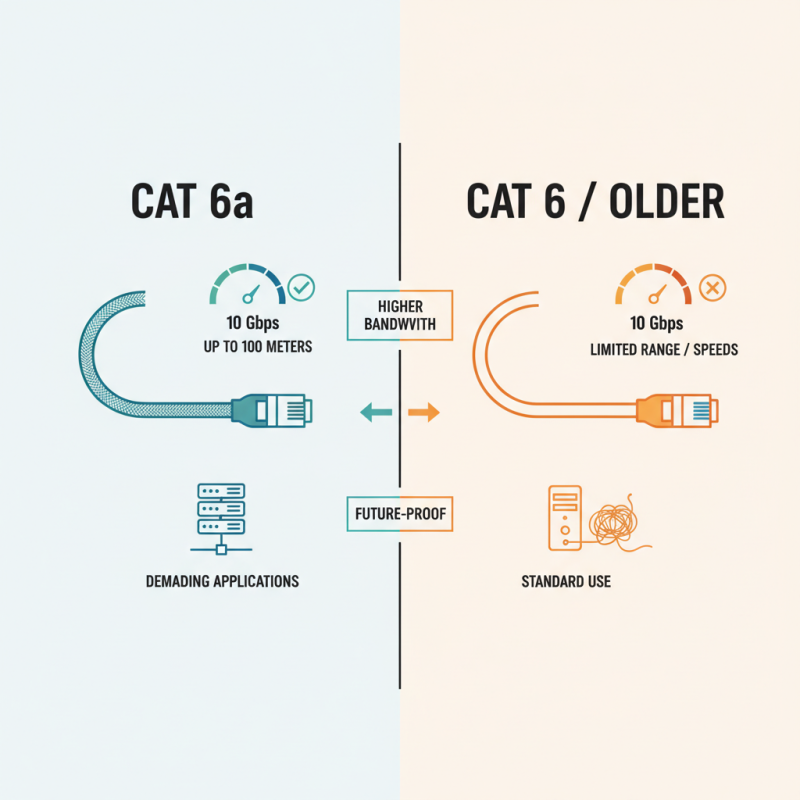
When considering network cabling, comparing Cat 6a with other types is essential. Cat 6a cable offers higher bandwidth, supporting speeds up to 10 Gbps for distances up to 100 meters. In contrast, Cat 6 cable is limited to 1 Gbps at the same range. This advantage makes Cat 6a suitable for demanding applications.
However, Cat 5e cable, while cheaper, can only handle speeds of 1 Gbps. It may work for basic tasks but falls short for higher data needs. Often, businesses underestimate their future network demands. This can lead to costly upgrades later.
Tips for choosing cables: assess your bandwidth requirements first. Think about how many devices you will connect. Sometimes, overestimating needs can waste money. Investing in Cat 6a might seem pricey now, but it could save hassle in the future.
Additionally, installation plays a crucial role. Poorly installed cables can degrade performance, regardless of type. Be careful with cable management; don’t bend them too tightly. Avoid these pitfalls to ensure a smooth network operation.
Installation Considerations for Cat 6a Cable
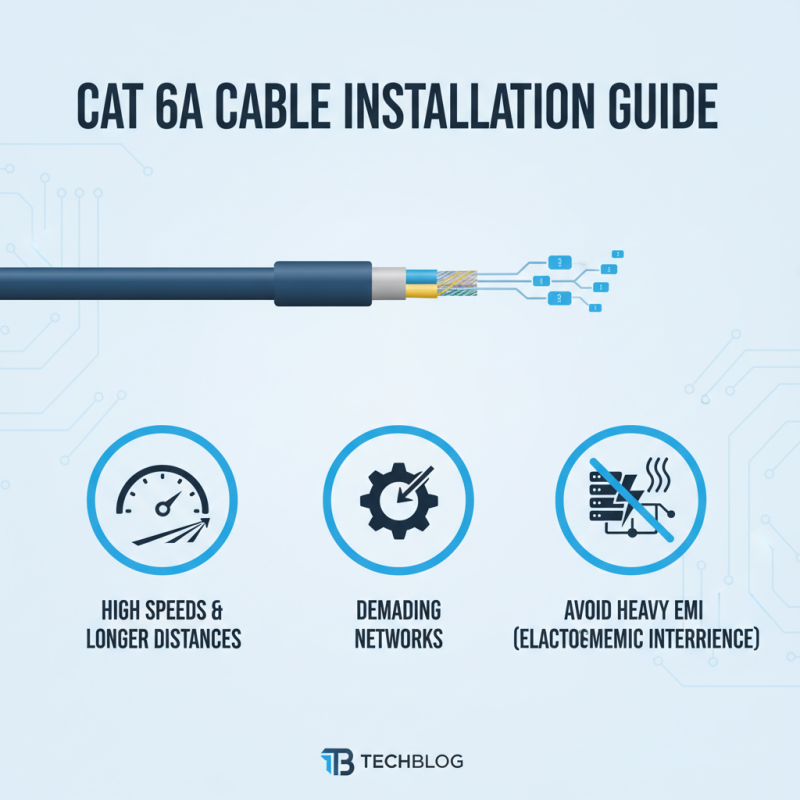
When considering Cat 6a cable installation, various factors come into play. This cable type can handle high speeds and greater distances, making it suited for demanding networks. The installation environment is crucial. It’s best to avoid areas with heavy electromagnetic interference. Such interference can degrade the cable's performance.
Proper cable management is essential. Ensure the cables are not tightly coiled or pinched. This can lead to signal loss. Also, use appropriate tools for cutting and terminating the cables. A wrong cut can result in wasted material and time.
Moreover, think about future expansions. Plan the layout wisely. This will save you hassle later. Labeling each cable can help during troubleshooting. Small mistakes in labeling can lead to confusion. In the end, pay attention to details. A little preparation can prevent many problems down the line.
Cost-Effectiveness of Cat 6a Cable in the Long Run
When considering network infrastructure, Cat 6a cable stands out for its cost-effectiveness in the long run. It can support data transfer speeds up to 10 Gbps over 100 meters. This performance is crucial as businesses increasingly rely on high-speed connections for core operations.
A report by the Telecommunications Industry Association indicates that upgrading to Cat 6a can reduce overall maintenance costs by about 30% over five years. Many companies initially hesitate, fearing higher upfront costs. However, long-term savings often prove beneficial. Installing Cat 6a cables decreases the need for frequent replacements. The durability can sometimes surpass 10 years with proper installation.
Additionally, Cat 6a cables help future-proof networks. With increasing internet demands, the ability to handle higher frequencies becomes essential. An investment today can avoid significant expenses tomorrow, making it a wise choice. Proper planning and installation are key; overlooking these aspects can lead to inefficiencies. Embracing Cat 6a is not just about speed; it's about long-term value in a rapidly evolving digital landscape.
Future-Proofing Your Network with Cat 6a Cable
As networks evolve, future-proofing becomes essential.
Cat 6a cable has emerged as a reliable solution for this challenge. With the capability to support
10 Gbps speeds over a distance of up to 100 meters, it stands out in a competitive market.
The increased bandwidth and improved performance are crucial for data-heavy applications.
According to the Telecommunications Industry Association, the demand for higher data rates continues to rise, driven by cloud computing and multimedia streaming.
But not all environments are optimal for performance. Cat 6a has better shielding than previous standards,
reducing crosstalk and external interference. This shielding helps maintain signal integrity, which is often an overlooked aspect in home and office setups.
Statistics show that 50% of network issues stem from poor cabling practices. Many users still use outdated cabling systems, risking their network's efficiency.
Implementing Cat 6a cable isn’t without its challenges.
Installation can be more complicated than its predecessors. Costs may deter some users,
even as the long-term benefits often outweigh the initial investment. Furthermore, as technology jumps forward, will these cables remain relevant?
Assessing future needs is vital. Every decision should involve careful consideration of
current and anticipated requirements.