Why Choose Network Fiber Optic Cable for Your Connectivity Needs?
In today's digital world, connectivity is vital. Many options are available, but few match the reliability of network fiber optic cable. This technology stands out because of its impressive speed and bandwidth capabilities. It allows for efficient data transmission over long distances without significant loss.
Network fiber optic cable is not just about speed. It provides enhanced security as well, making it harder for outsiders to tap into the network. Many businesses choose fiber optics to future-proof their infrastructure. However, there are considerations to ponder. The installation process can be complex and costly.
Choosing network fiber optic cable means investing in quality. Yet, potential users might face challenges during the transition. Research is crucial before making a decision. With the right information, businesses can harness the true power of fiber optics for their connectivity needs.
Understanding the Basics of Fiber Optic Cable Technology
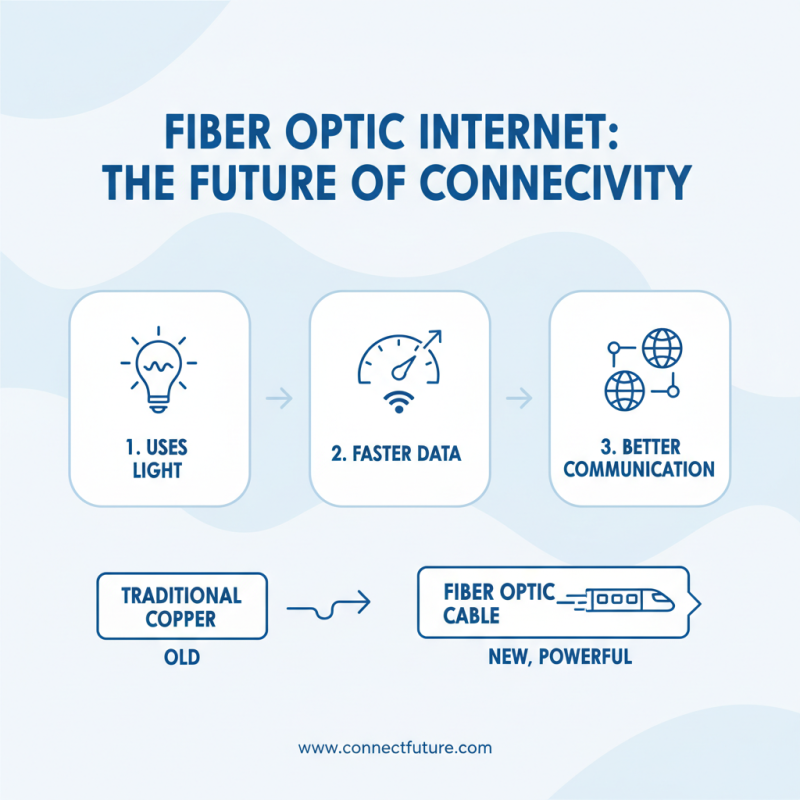
Fiber optic cable technology is transforming how we connect. At its core, fiber optics use light to transmit data. This method allows for faster communication than traditional copper wires.
Light travels through glass fibers, creating a low-loss transmission medium. The data is sent in pulses, representing ones and zeros. This process is efficient, enabling high-speed internet access. Yet, installing fiber can be more complex. It often requires specialized skills and equipment. Many people find it hard to understand the installation process.
Another critical aspect is the durability of fiber optic cables. They are less prone to interference and environmental factors, such as weather. However, despite their advantages, fiber cables can be fragile. Handling them requires care. Users may overlook maintenance needs. This can lead to future challenges. Understanding these fundamentals helps users make informed choices for their connectivity needs.
The Advantages of Fiber Optic Cables Over Traditional Copper Wires
Fiber optic cables offer significant advantages over traditional copper wires. They transmit data as light signals, allowing for much higher speeds. With fiber optics, data can travel over long distances without losing quality. This is a key benefit for businesses and institutions that depend on fast internet. Moreover, fiber optic cables are less susceptible to interference. Unlike copper wires, they are not affected by electrical signals or other external factors, resulting in a more stable connection.
Another notable plus is durability. Fiber optic cables are made from glass or plastic, making them more resistant to environmental factors. They are less prone to corrosion and can withstand harsher conditions. This longevity reduces maintenance costs over time. However, installation can be challenging and may require specialized technicians. The fragility of the glass fibers also means careful handling is necessary.
One must also consider the initial investment. Fiber optics tend to be more expensive to install than copper. Yet, the long-term benefits and savings often compensate for the initial costs. It’s crucial to evaluate both immediate and future connectivity needs before making a choice. This reflection can lead to better decisions for enhancing connectivity in various settings.
Key Applications of Fiber Optic Cables in Modern Connectivity
Fiber optic cables have become vital in modern connectivity. Their ability to transmit data at extremely high speeds makes them ideal for various applications. According to industry reports, global fiber optic cable demand is predicted to grow by over 10% annually through 2025. This growth is driven by the increasing need for high-speed internet and improved telecommunications.
In telecommunications, fiber optics are essential. They facilitate vast data transmission over long distances without significant signal loss. This makes them perfect for backbone networks and telecommunications infrastructure. Hospitals and educational institutions utilize fiber optics for telemedicine and online learning. As noted in a recent study, hospitals using fiber optic networks report improved patient data access by 30%.
However, installation and maintenance can be challenging. Technicians often face obstacles such as difficult terrain and existing infrastructure. Additionally, some companies may overlook the need for regular maintenance, leading to potential networking issues. Awareness about these challenges is crucial for maximizing the benefits of fiber optics. Understanding these factors can enhance the effectiveness of fiber optic systems in various applications, addressing both potential pitfalls and opportunities.
Why Choose Network Fiber Optic Cable for Your Connectivity Needs? - Key Applications of Fiber Optic Cables in Modern Connectivity
| Application |
Description |
Advantages |
| Telecommunications |
Used for high-speed data transmission over long distances. |
High bandwidth, low signal loss, immunity to electromagnetic interference. |
| Internet Connectivity |
Provides backbone connections for ISPs and local networks. |
Faster data transfer rates and reduced latency. |
| Data Centers |
Interconnects servers and storage equipment within large facilities. |
Scalable, efficient cooling, and increased bandwidth for large data handling. |
| Medical Applications |
Enables high-speed networks for medical devices and imaging. |
Enhanced reliability and secure data transmission. |
| Broadcasting |
Transmits audio and video content over long distances. |
Superior quality and reduced latency in media delivery. |
Factors to Consider When Choosing Fiber Optic Cables for Your Needs
When selecting fiber optic cables, several key factors come into play. First, consider the type of fiber: single-mode or multi-mode. Single-mode fibers provide higher bandwidth over longer distances. According to the Fiber Optic Association, single-mode cables can transmit data up to 40 kilometers without significant loss. Multi-mode fibers are ideal for shorter distances, typically within a single building. Understanding your distance needs will guide your choice.
Another critical factor is the cable's environment. Some cables are designed for indoor use, while others can withstand outdoor conditions. For instance, outdoor cables are built with rugged jackets to resist moisture and temperature fluctuations. It’s vital to choose the right protective features. A study by the International Electrotechnical Commission shows that environmental stress can reduce the lifespan of outdoor cables by up to 30%.
Lastly, budget considerations are essential. Fiber optic installation can be costly. Installation costs vary widely based on complexity and labor. Not all environments will benefit equally from fiber optics. Some users may experience diminishing returns if switching from copper in short runs. Therefore, a thoughtful evaluation of these factors will lead to a more informed decision.
Future Trends in Fiber Optic Technology and Connectivity Solutions
The landscape of fiber optic technology is evolving rapidly. As demand for high-speed connectivity increases, so do innovations in fiber optics. Companies are now exploring new materials and designs to enhance performance. These advancements aim to reduce latency and increase bandwidth. For instance, hollow-core fiber optics could revolutionize the way data travels. They promise faster speeds by minimizing light loss.
Sustainability is another key focus. Future fiber optic solutions are looking to incorporate eco-friendly materials. This shift towards green technology is not just beneficial for the planet but also appealing to consumers. As connectivity becomes ubiquitous, issues like data privacy must be addressed. Not every solution guarantees security, which can deter potential users.
In addition to speed and sustainability, adaptability is crucial. Fiber optic systems need to remain flexible for future advancements. Users desire systems that can evolve with changing needs. However, changing standards can lead to compatibility issues. This may confuse both consumers and providers. Reflection on these challenges can lead to better solutions in the fiber optic space.
Future Trends in Fiber Optic Technology and Connectivity Solutions
This chart illustrates the projected advancements in fiber optic technology over the next few years, highlighting expected improvements in bandwidth capacity, reduced latency, lower costs, and faster installation times. As industries increasingly rely on high-speed connectivity, these trends are set to enhance telecommunications and internet services significantly.