2025 How to Choose the Right Network Racks for Your Business Needs
In the rapidly evolving landscape of IT infrastructure, selecting the right network racks is a critical decision that impacts the efficiency and scalability of any business operation. According to a recent report by MarketsandMarkets, the global network rack market is expected to grow from $2.9 billion in 2020 to $5.4 billion by 2025, highlighting an increasing reliance on organized and efficient data management solutions. The rise in data storage needs, driven by the explosion of cloud computing and data analytics, underscores the necessity for businesses to invest in high-quality network racks that cater to specific operational requirements.

Additionally, a study by Research and Markets emphasizes that the proliferation of IoT devices and smart technologies has further amplified the demand for reliable rack systems. As companies seek to optimize their IT environments, understanding the different types of network racks available—such as open frame racks, wall-mounted racks, and enclosed racks—becomes vital. Each type possesses unique attributes designed to accommodate varying equipment, cooling solutions, and floor space constraints. In 2025, making informed choices about network racks will not only enhance operational efficiency but also support an agile IT infrastructure that can adapt to future technological advancements.
Understanding Different Types of Network Racks and Their Applications
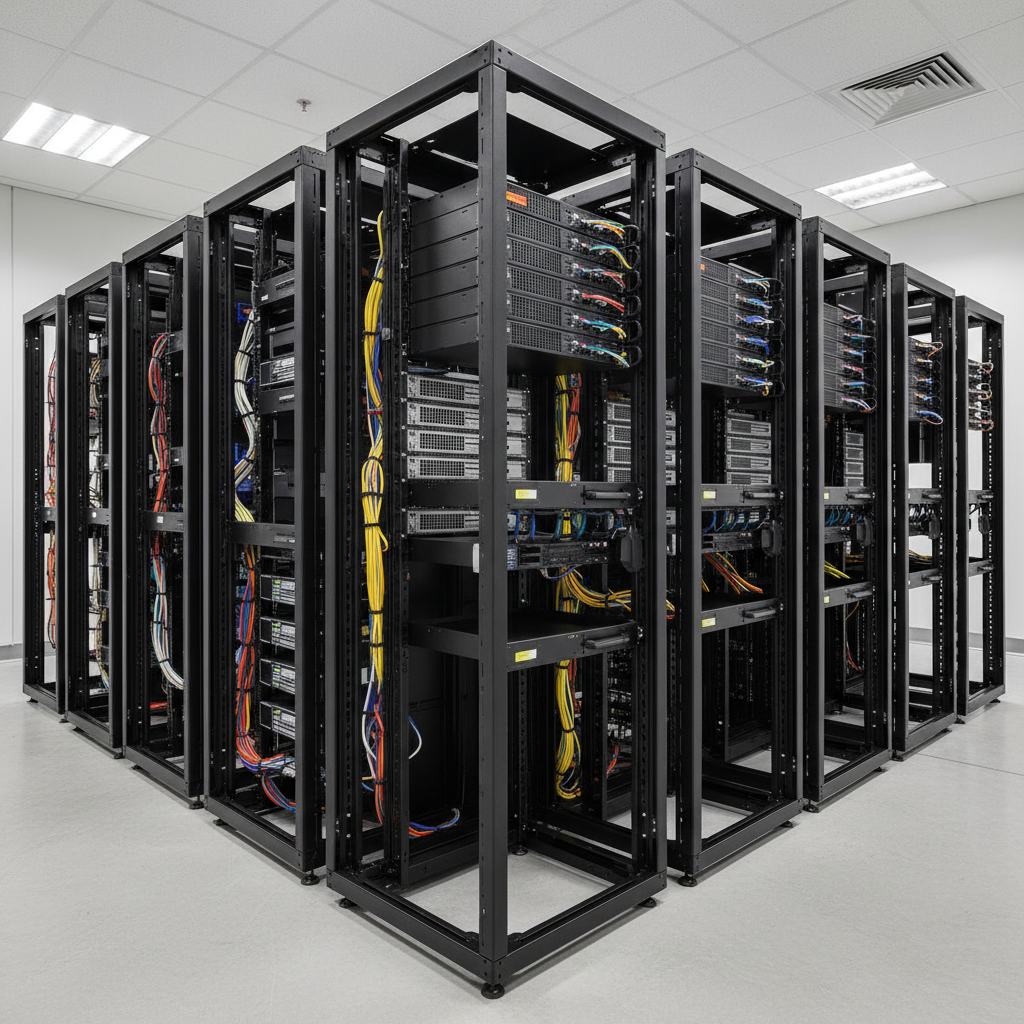
When selecting network racks for your business, it’s crucial to understand the various types available and their applications. Server racks, for instance, are designed specifically for housing servers, providing adequate ventilation and support for heavy equipment. They typically feature a standardized size, such as 19-inch or 23-inch width, and come in different heights measured in rack units (U). These racks enhance organization and accessibility, making them a popular choice for businesses with significant computing needs.
On the other hand, wall-mounted racks are ideal for smaller spaces or when floor space is at a premium. These racks are typically used for networking equipment like switches and patch panels, and they help to keep cables organized and off the floor. Additionally, open-frame racks allow for improved airflow and easier access to equipment, which can be invaluable in data centers where equipment may need to be frequently adjusted or maintained. By understanding these different types of network racks, businesses can make more informed decisions that align with their specific operational requirements.
Network Rack Types and Their Applications
Key Factors to Consider When Choosing Network Racks for IT Infrastructure
When choosing network racks for your IT infrastructure, it's essential to consider several key factors that can significantly impact your operations. Firstly, assess your space and requirements—ensure the rack dimensions fit your layout while accommodating your current and future equipment.
**Tips:** Always opt for adjustable racks if you anticipate changes in your hardware. This flexibility can save you from costly redesigns later. Also, consider the airflow and cooling capabilities of the rack. A well-ventilated rack protects your equipment from overheating, which is increasingly vital as data centers handle more data and run demanding applications like AI and big data analytics.
Furthermore, evaluate the weight capacity of the racks, especially if you're planning to install high-density servers. With projections indicating rapid growth in data center demands, investing in robust and durable racks is crucial. Ensure that the racks you select support the weight and are compatible with your setup to maintain efficiency and security in your IT infrastructure.
2025 How to Choose the Right Network Racks for Your Business Needs - Key Factors to Consider When Choosing Network Racks for IT Infrastructure
| Factor |
Description |
Recommendations |
| Size and Capacity |
Evaluate the size and weight of the equipment that will be housed in the rack. |
Choose a rack that supports the total weight and has adequate space for future expansion. |
| Ventilation |
Ensure proper airflow to prevent overheating of the equipment. |
Select racks with adequate ventilation panels or consider additional cooling solutions. |
| Material and Build Quality |
Consider the durability and strength of materials used in the rack. |
Opt for racks made of sturdy materials like steel for long-term use. |
| Accessibility |
Evaluate how easily you can access the equipment in the rack for maintenance. |
Choose racks with removable side panels or open frame designs. |
| Cable Management |
Look for features that allow for organized cable routing. |
Select racks with built-in cable management systems or hooks. |
| Security Features |
Consider racks that offer security features to protect sensitive equipment. |
Choose racks with lockable doors and side panels. |
| Mobility |
Think about whether the rack needs to be moved frequently. |
Look for racks with wheels for easier mobility. |
Industry Trends: The Growing Demand for Customized Network Racks
The demand for customized network racks is on the rise in 2025, driven by the need for flexibility and efficiency in modern business environments. According to a recent market report by Mordor Intelligence, the global network racks market is projected to grow at a CAGR of 6.2% from 2023 to 2028, indicating an increasing reliance on tailored solutions for data centers and IT infrastructures. Businesses are recognizing that off-the-shelf solutions often fall short in meeting specific operational needs, leading to a significant shift towards customized options that enhance both performance and space utilization.
As enterprises scale their operations, the importance of modular and adaptable network racks cannot be overstated. The latest data from MarketsandMarkets highlights that nearly 70% of IT professionals prefer network racks that can easily integrate with various equipment and support rapid changes in technology. This growing trend is not just about enhancing capacity but also improving energy efficiency in cooling and power management systems. In this context, customized network racks emerge as a critical component in maintaining an agile IT environment, ultimately contributing to increased productivity and cost savings for businesses.
Comparing Fixed and Adjustable Network Racks: Making the Right Choice
When selecting network racks for your business, a crucial decision lies in choosing between fixed and adjustable racks. Fixed racks offer a stable structure, often pre-configured to house a specific number of equipment. They are ideal for businesses with a set infrastructure, providing ease of installation and reliable support. The drawback, however, is their lack of flexibility; once the equipment is housed, it can be challenging to accommodate future upgrades without a complete overhaul.
On the other hand, adjustable network racks present a versatile solution that can be tailored to your evolving needs. These racks usually come with customizable shelving and mounting options, allowing businesses to adapt to changing technology and equipment sizes. This flexibility can ultimately save costs in the long run, as they can accommodate new hardware without requiring a full replacement. Companies anticipating growth or those with varying equipment size may find adjustable racks to be the better investment, making it important to assess your current and future networking demands before making a final decision.
Analyzing Load Capacity and Space Efficiency in Network Rack Selection
When selecting the right network racks for your business, understanding the load capacity is paramount. Each network rack is designed to accommodate a specific weight limit, which includes the combined weight of servers, networking equipment, and cables.
It's essential to assess your current and future equipment needs to ensure that the chosen rack can support the load without compromising structural integrity. Consideration of material quality and design can also greatly influence the load-bearing capacity.
Another critical aspect in the selection process is space efficiency. As data centers expand, maximizing the use of vertical and horizontal space becomes increasingly important. High-density racks allow for more equipment to be housed within a limited footprint, improving overall operational efficiency.
Companies should evaluate their layout preferences, cooling requirements, and accessibility needs to determine which type of rack will provide the best space utilization. With the global data center rack market projected to grow significantly, focusing on load capacity and space efficiency will be vital for businesses looking to optimize their infrastructure in the coming years.