How to Choose the Best Networking Solutions for Your Business Needs
In the ever-evolving landscape of business technology, selecting the most effective networking solutions has become crucial for companies striving to enhance their operational efficiency and connectivity. According to a recent report by MarketsandMarkets, the global networking solutions market is projected to reach $151 billion by 2025, reflecting a compound annual growth rate (CAGR) of 10% from 2020. This growth underscores the increasing reliance on robust network infrastructures that can support digital transformation initiatives.
Expert in network architecture, Dr. Jane Smith, emphasizes the importance of aligning networking solutions with specific business needs, stating, “Organizations must not only consider their current requirements but also anticipate future demands to ensure their networking infrastructure can scale accordingly.” This insight highlights the necessity for businesses to adopt a forward-thinking approach when evaluating their networking strategies, ensuring that they are equipped to handle ongoing technological advancements.
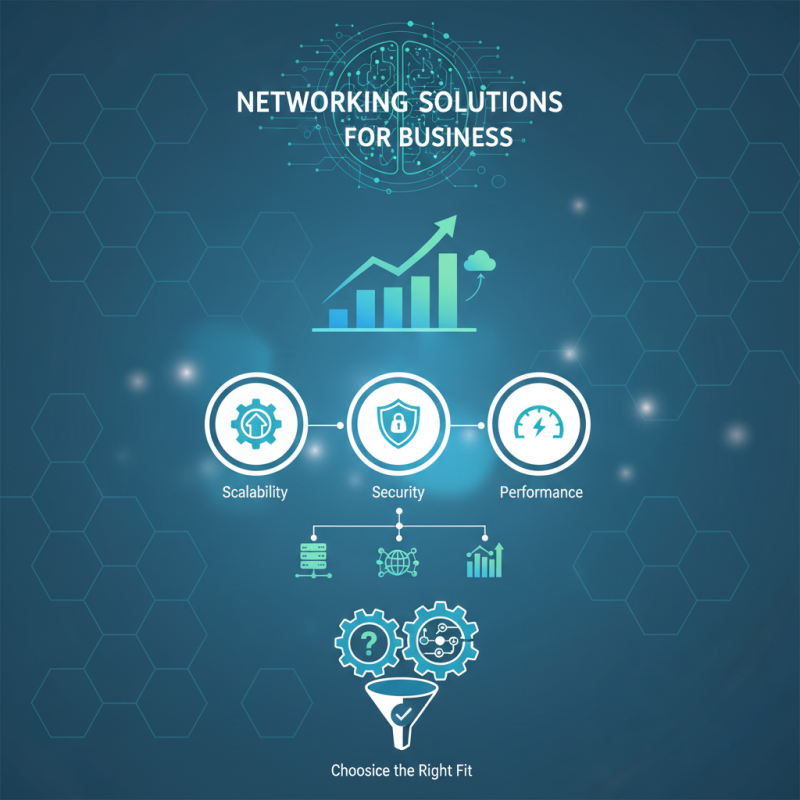
As businesses leverage these networking solutions, understanding how to choose the right options becomes paramount. By prioritizing scalability, security, and performance, organizations can create a resilient network that not only meets today’s demands but also paves the way for future growth and innovation. With the right guidance, companies can navigate the multitude of available options to find the best fit for their unique operational needs.
Understanding Your Business Requirements for Networking Solutions
When selecting networking solutions for your business, the first step is to thoroughly understand your organization's specific requirements. According to a report by Gartner, around 60% of businesses identify their networking needs based on scalability, reliability, and security, making these key factors in decision-making. Businesses must evaluate their size, growth projections, and the critical applications they rely on to ensure that the chosen networking infrastructure can accommodate current and future demands.
Additionally, the increasing trend towards remote work necessitates robust networking solutions that facilitate seamless connectivity for distributed teams. A study from Cisco reveals that 85% of companies have adopted some form of remote working, emphasizing the need for reliable VPNs, cloud-based solutions, and other networking technologies that support collaboration and maintain productivity. By assessing these business-specific requirements, organizations can tailor their networking choices to enhance performance, reduce downtime, and support their overall operational goals.
How to Choose the Best Networking Solutions for Your Business Needs
| Networking Solution Type |
Key Features |
Ideal for |
Estimated Cost |
| LAN (Local Area Network) |
High-speed connectivity, file sharing |
Small to medium-sized businesses |
$2,000 - $10,000 |
| WAN (Wide Area Network) |
Long-distance communication, VPN |
Large enterprises, remote offices |
$10,000 - $50,000 |
| Cloud Networking |
Scalability, pay-as-you-go model |
Startups, flexible businesses |
$500 - $5,000/month |
| Wireless Networking |
Mobility, ease of installation |
Companies with mobile workforce |
$1,000 - $20,000 |
| SD-WAN (Software-Defined WAN) |
Cost-efficiency, improved performance |
Branch offices, remote locations |
$5,000 - $15,000 |
Evaluating Different Types of Networking Solutions Available in the Market
When evaluating different types of networking solutions available in the market, it’s essential to consider the specific needs of your business. Each organization has unique requirements influenced by factors such as size, industry, and operational goals. Common options include wired networks, wireless solutions, and cloud-based services. Wired networks offer reliability and stability for large data transfers, while wireless solutions provide flexibility and ease of access for mobile devices. In recent years, cloud-based networking has gained popularity due to its scalability and cost-effectiveness.
Tips for Choosing Networking Solutions:
- Assess Your Infrastructure: Before making any decisions, evaluate your current infrastructure to determine what upgrades or changes are necessary. Identify bandwidth usage and potential bottlenecks that could impact performance.
- Consider Scalability: As your business grows, your networking needs will evolve. Choose solutions that can easily scale with your business, whether it means adding more users, devices, or locations.
- Security Measures: Prioritize solutions that offer robust security features. With increasing cyber threats, it’s vital to implement networking solutions that include encryption, firewalls, and secure access protocols.
By focusing on these aspects, businesses can better navigate the array of networking solutions available and find the right fit for their operational needs.
Analyzing Cost vs. Performance Metrics for Networking Solutions
When selecting networking solutions for your business, analyzing
cost versus performance metrics is essential for making an informed decision.
Cost can encompass various factors, including initial setup expenses, ongoing maintenance fees, and potential upgrades.
It's important to evaluate both the direct costs associated with different networking options and the
indirect costs, such as downtime or decreased productivity resulting from poor performance.
A comprehensive understanding of your budget will allow you to align your financial resources with the necessary
networking capabilities.
On the performance side, consider the specific needs of your organization—such as speed,
reliability, and scalability.
Performance metrics should be assessed based on how they align with your business objectives. For instance, if your company
requires high data transfer speeds for large files, opting for a solution that provides faster throughput
may justify a higher upfront cost. Similarly, a robust network performance during peak times is crucial for ensuring
continuous operation and customer satisfaction. By meticulously balancing the cost implications with performance benefits,
you can identify networking solutions that not only fit your budget but also support your business growth and efficiency.
Considering Scalability and Future Growth in Networking Solutions
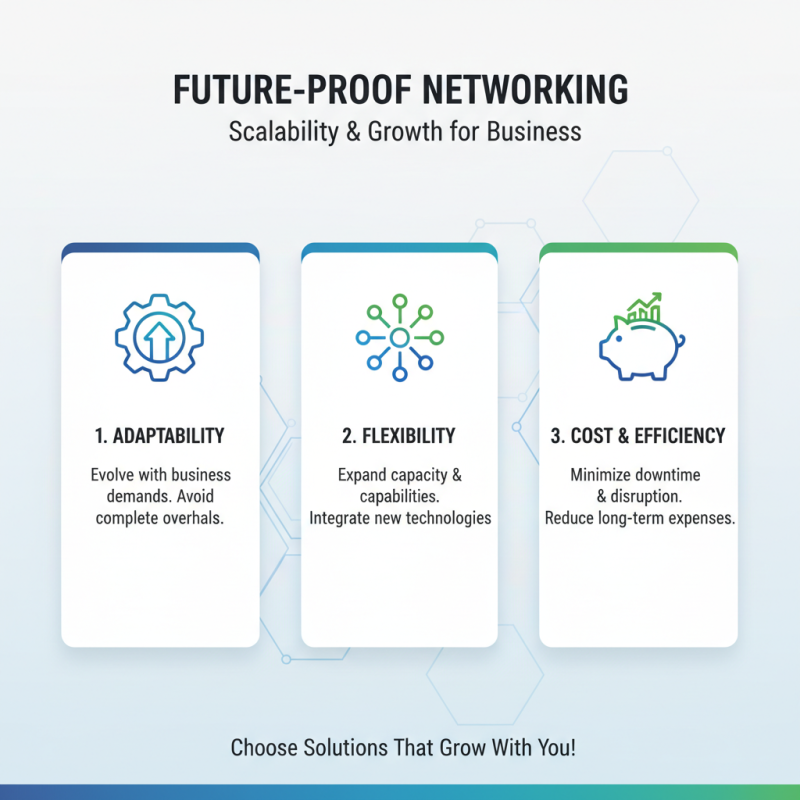
When selecting networking solutions for your business, scalability and future growth are critical factors to consider. As your business evolves, the demand for more robust and flexible network infrastructure will increase. It's essential to choose solutions that can adapt and expand without requiring a complete overhaul of existing systems. This adaptability not only saves costs in the long run but also minimizes downtime and disruption to operations.
Furthermore, analyzing your business model and growth projections can guide your networking decisions. Consider whether your needs will increase due to expanded locations, a growing workforce, or the integration of new technologies. Solutions that offer cloud capabilities, for example, allow for on-demand resources that can scale up or down based on real-time needs, promoting efficiency and responsiveness. Ultimately, ensuring that your networking infrastructure is equipped for future demands lays a solid foundation for sustained growth and improved operational effectiveness.
Assessing Security Features in Networking Solutions for Business Safety
When choosing networking solutions for your business, assessing security features is paramount to ensure the safety and integrity of your operations. According to a report by Cybersecurity Ventures, global cybercrime damages are projected to reach $10.5 trillion annually by 2025, highlighting the critical need for robust security measures. Businesses must evaluate solutions that prioritize security features such as firewalls, encryption protocols, and intrusion detection systems. A well-rounded networking solution should include multi-layered security to protect sensitive data and prevent unauthorized access, as 60% of small and medium-sized businesses that experience a cyberattack go out of business within six months.
Moreover, the implementation of secure networking solutions not only protects against external threats but also fortifies internal networks. A study from the Ponemon Institute revealed that 50% of businesses reported experiencing at least one data breach due to a lack of adequate security controls. As companies consider their networking options, they should seek solutions that offer comprehensive monitoring tools and regular security updates, ensuring that their networks are agile and responsive to evolving cyber threats. By prioritizing strong security features in their networking choices, businesses can significantly reduce their risk of falling victim to increasingly sophisticated cyberattacks.
Assessing Security Features in Networking Solutions for Business Safety