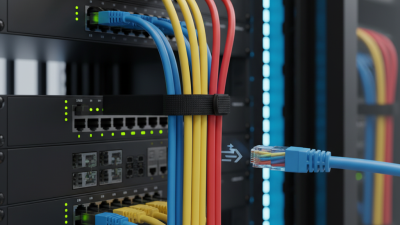
How to Choose the Right Fiber Patch Cable for Your Needs?
Choosing the right fiber patch cable is essential for optimizing your network’s performance. With various types available, it can be overwhelming to select the best one. Fiber patch cables play a vital role in ensuring effective data transmission and connectivity.
When selecting a fiber patch cable, consider your specific needs. Factors like length, connector type, and fiber mode contribute significantly to performance. For example, multimode cables are ideal for short distances. In contrast, single-mode cables offer superior performance over longer distances. These details can greatly impact your overall satisfaction with the cable.
It’s important to assess your environment as well. Are there potential interference sources? Understanding your setting will help you make a more informed decision. Don’t underestimate the significance of quality. A reliable fiber patch cable can enhance your network’s efficiency. Investing time in research can prevent costly mistakes later on.
Understanding Different Types of Fiber Patch Cables Available
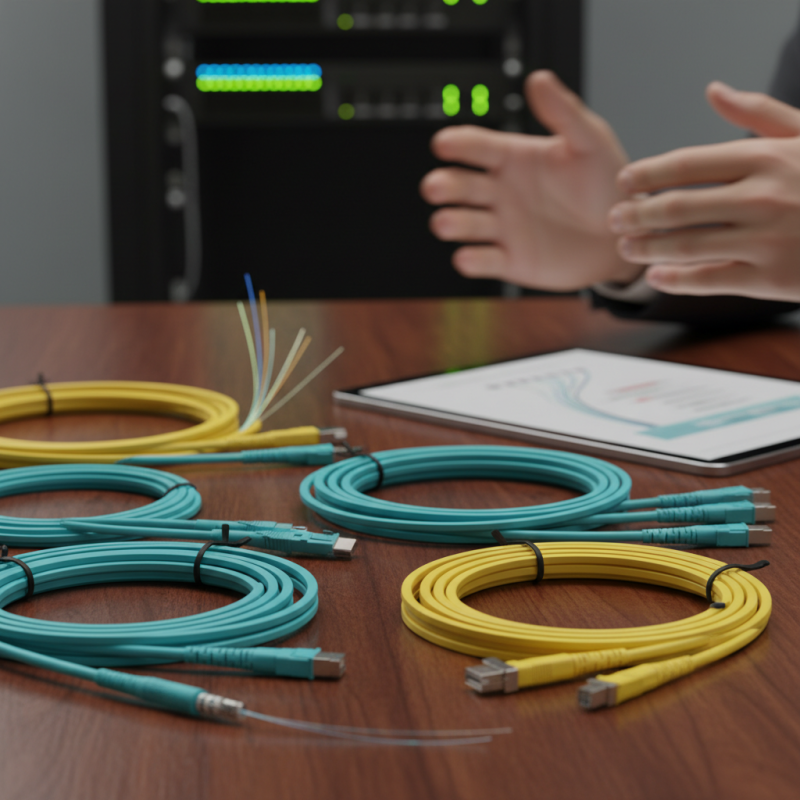
When choosing a fiber patch cable, it's essential to understand the different types available. The most common types are single-mode and multi-mode cables. Single-mode cables are ideal for long-distance transmissions. They transmit signals using a single light wave, reducing signal loss. Multi-mode cables, on the other hand, support shorter distances. They use multiple light waves, which can lead to higher internal dispersion.
Additionally, fiber patch cables come in various connector types. Common connectors include SC, LC, and ST. Each type has its unique design and application. Selecting the correct connector is crucial for ensuring compatibility with existing network equipment. Cable ratings also matter. For instance, OFNR-rated cables are suitable for riser applications. These are not ideal for plenum spaces, which require OFNP-rated cables that are fire-resistant.
In practical scenarios, both cable types have their pros and cons. While single-mode cables provide better distance performance, they are often more expensive. Multi-mode cables are less costly but might not offer the same clarity over long stretches. Users should reflect on their specific environment and future needs. Adapting to changing technology can be challenging, and clear communication about cable specifications is vital for a successful implementation.
How to Choose the Right Fiber Patch Cable for Your Needs?
| Cable Type |
Core Size |
Use Case |
Connector Type |
Max Distance |
| Single-Mode Fiber |
9/125 µm |
Long-Distance Communication |
LC, SC, ST |
Up to 40 km |
| Multi-Mode Fiber |
50/125 µm |
Data Centers, LANs |
LC, SC, MTP/MPO |
Up to 300 m |
| Armored Fiber |
9/125 µm or 50/125 µm |
Rugged Environments |
LC, SC |
Varies by type |
| Plenum Rated Fiber |
50/125 µm |
Indoor Installations |
LC, SC |
Up to 300 m |
| Patch Cord |
Various |
Connecting Equipment |
LC, SC, ST, MTP/MPO |
Depends on the environment |
Evaluating Cable Length Requirements for Your Setup
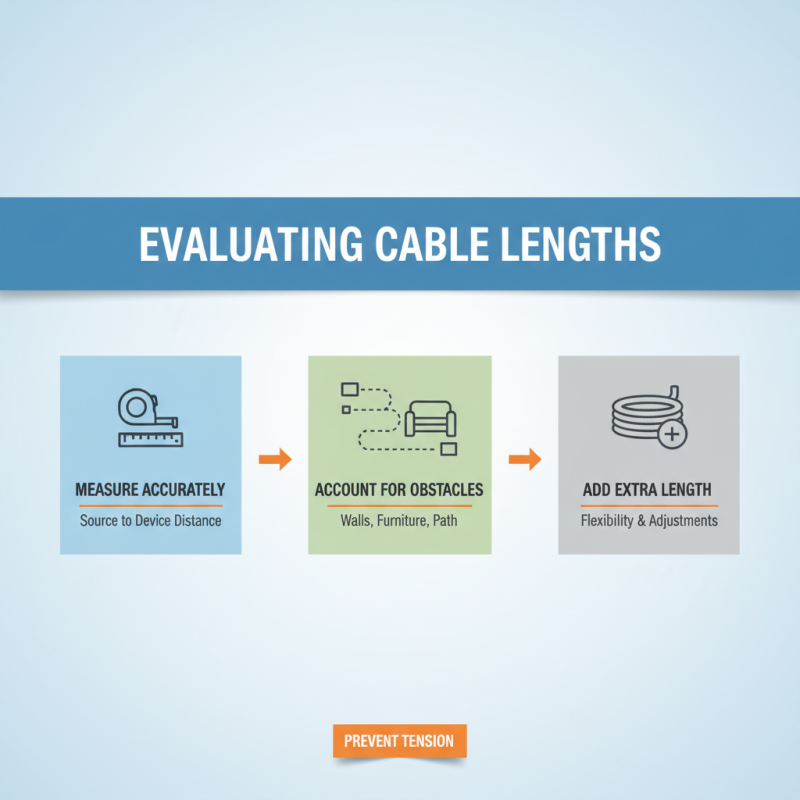
When evaluating cable length requirements for your setup, it’s crucial to understand your space. Measure the distance from the source to the device accurately. Many users underestimate this length. Often, the path for the cable is not straightforward. Walls, furniture, and other obstacles can complicate things. Always add some extra length for flexibility. This prevents tension on the cable and gives room for adjustments.
Consider different scenarios in your setup. If you plan to rearrange the layout in the future, longer cables might be wise. However, avoid going excessively long. Overly long cables can lead to signal degradation. It's essential to balance neatness and functionality. Consider where the cable will run. You might want to use cable management tools to avoid a tangled mess.
Take time to reflect on your cable management strategy. Will the cable be visible? If so, aesthetics matter. You might prefer shorter lengths for a cleaner look. But remember, functionality comes first. Evaluate your future needs. Will you add or replace devices? Adapting to future changes can determine the right length for you.
Choosing the Right Fiber Type: Single-Mode vs. Multi-Mode
When selecting a fiber patch cable, understanding the type of fiber is crucial. Single-mode fiber is ideal for long-distance transmissions. It uses a narrow core, allowing light to travel straight down the fiber. This design reduces attenuation and increases bandwidth over vast distances, making it suitable for telecommunication networks. However, it is often more expensive and less flexible during installation.
On the other hand, multi-mode fiber has a larger core, which allows multiple light paths. This design suits shorter distances, typically under 600 meters. Multi-mode cables can be less costly and easier to work with. They are optimal for data centers and local area networks. However, they face higher signal loss over longer distances.
In practical applications, consider your specific needs. Assess your installation environment and future growth. The choice shouldn't solely rely on cost. Think about the longevity and performance of the network. Reflect on how scalability factors into your decision, as this can impact your investment in the long run.
Identifying Connector Types and Compatibility for Your Devices
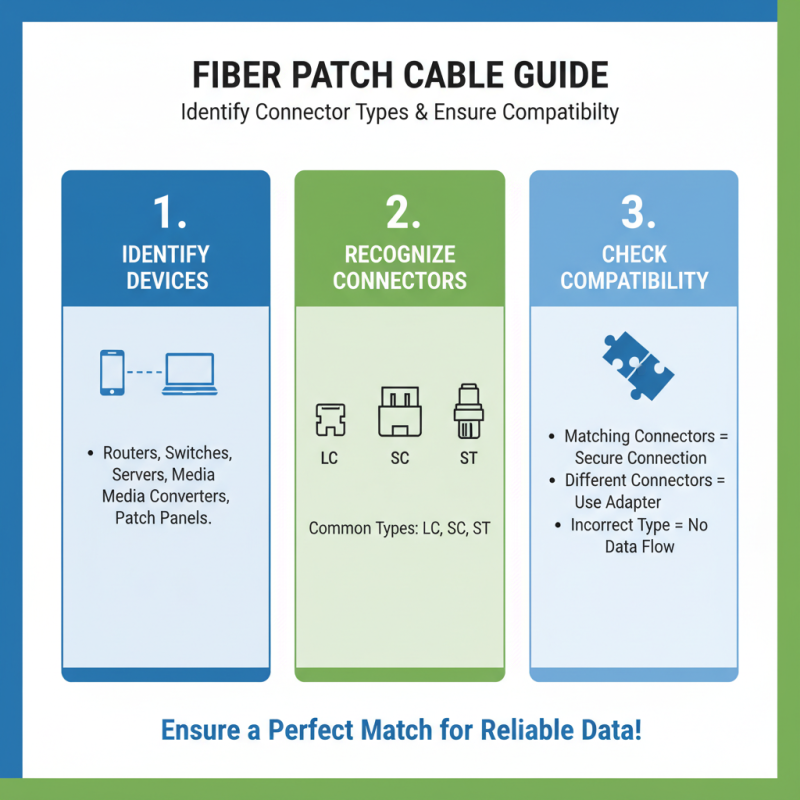
Choosing the right fiber patch cable starts with identifying connector types. Different devices have specific connectors. Common types include LC, SC, and ST. Understanding these connectors helps ensure compatibility.
When selecting cables, consider the device you are using. For example, if your equipment requires LC connectors, choose cables designed for that type. Mismatched connectors can render your cables useless. Check the device specifications or user manuals to confirm your needs.
Tips: Always verify the fiber mode as well. Single-mode and multi-mode fibers are not interchangeable. Using the wrong mode may lead to signal loss or poor performance. If uncertain, consult an expert or supplier. Keeping track of your specific requirements is essential to avoid potential operational issues. Consider future device upgrades as well. Select cables that can accommodate your evolving needs.
Assessing Environmental Factors for Fiber Cable Durability and Performance
When selecting a fiber patch cable, environmental factors play a crucial role in its durability and performance. Different environments impose unique challenges. For example, in areas with high humidity, moisture can compromise the integrity of a cable. In contrast, temperatures below freezing can make materials brittle. According to industry reports, over 30% of fiber optic failures occur due to environmental conditions.
Assessing factors such as UV exposure is critical. Prolonged exposure can degrade cables that are not rated for outdoor use. Many experts recommend cables with UV-resistant jackets for outdoor installations. A report by the Fiber Optic Association indicates that proper cable selection based on environmental assessment can boost lifespan by over 50%. It is worth noting that many users often overlook these environmental factors, leading to unexpected failures.
Consideration of mechanical stressors is also essential. A cable may be strong but can still suffer from wear and tear when subjected to bending and pulling. The Fiber Optic Industry's research shows that nearly 20% of installation issues stem from improper handling of cables. Understanding these environmental influences can guide users to make better choices. Striking a balance between performance, durability, and environmental factors is key to ensuring reliable connections.