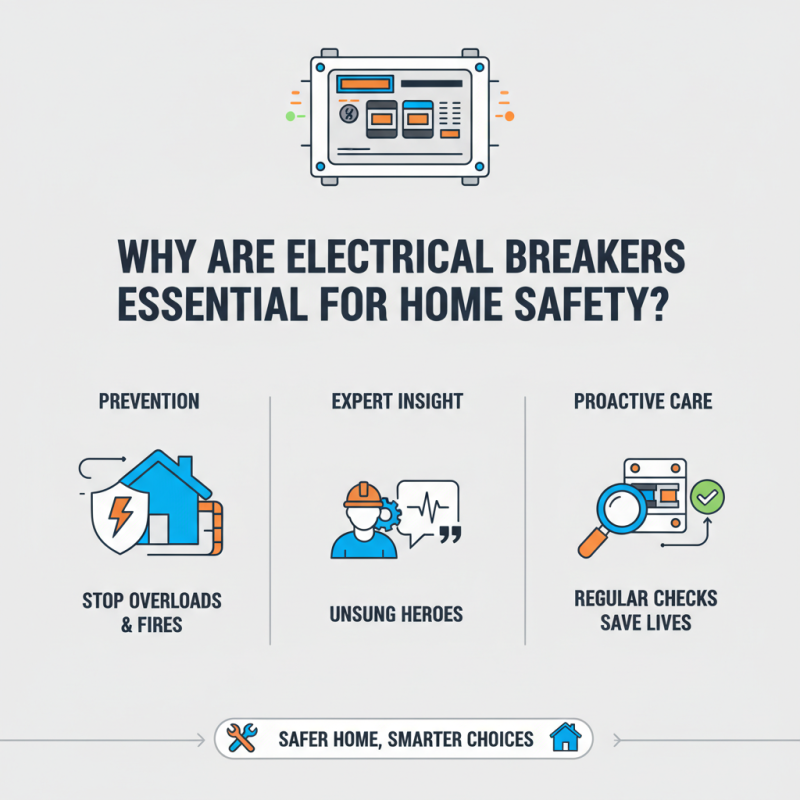
Why Are Electrical Breakers Essential for Home Safety?
Electrical Breakers play a critical role in maintaining home safety. These devices automatically disconnect electrical circuits, preventing overloads and electrical fires. As John Smith, a noted electrical engineer, states, “Electrical breakers are the unsung heroes of home safety.” Their function is vital, yet often underestimated.
While most homeowners may not think about their electrical breakers regularly, awareness of their importance is crucial. An overloaded circuit can lead to significant danger. Therefore, understanding electrical breakers’ role could mean the difference between safety and disaster. Regular inspections and maintenance of these devices are necessary for optimal protection.
Issues with electrical breakers can arise unexpectedly. Often, homeowners ignore signs of malfunctioning, like frequent tripping. Proactive steps can prevent costly damage and ensure safety. Informed homeowners are better prepared to recognize when a breaker needs attention, establishing a safer living environment. The conversation about electrical breakers must continue to emphasize their importance for all households.
Importance of Electrical Breakers in Modern Homes
Electrical breakers play a critical role in modern homes. They not only protect against overloads but also ensure safety in daily living. Breakers act as gatekeepers, stopping electrical currents when something goes wrong. This prevents potential hazards, such as fires or electrical shocks. Many homes have outdated systems, increasing the risk. Regular inspections are necessary to ensure that breakers function properly.
In addition to basic safety, breakers also enhance convenience. They allow homeowners to easily reset circuits without calling an electrician. However, many homeowners overlook this feature. It’s important to understand how to operate these devices. Without proper knowledge, a simple power outage can become a major issue. Some people may even ignore the signs of failing breakers. This reflects a need for greater awareness about home electrical systems.
Ultimately, maintaining electrical breakers requires attention and care. Regular checks can prevent many problems. Homeowners should consult professionals for periodic evaluations. Ignoring these essential tools could lead to serious consequences. A safe home is not just about having the right fixtures; it’s about understanding how they work together.
Importance of Electrical Breakers in Modern Homes
This bar chart illustrates the importance rating of various functions provided by electrical breakers in modern homes. The ratings range from 1 to 10, with higher values indicating greater importance for home safety.
How Electrical Breakers Prevent Electrical Overloads
Electrical breakers play a crucial role in safeguarding our homes from electrical overloads. They act as a front-line defense, detecting excess current flow and interrupting power within milliseconds. According to the National Fire Protection Association (NFPA), electrical malfunctions are the leading cause of home fires, contributing to approximately 51,000 reported incidents annually. Breakers help prevent these dangerous situations by automatically shutting off power when an overload occurs.
The design of circuit breakers allows them to handle different types of electrical loads. For instance, a standard breaker will trip if it detects a current over its rated capacity, often found in residential settings ranging from 15 to 30 amps. Inaccurate estimations of household energy needs can lead to under-rated breakers, creating potential hazards. A study from the Electrical Safety Foundation International (ESFI) indicates that 37% of homeowners are unaware of their breaker ratings, which can contribute to dangerous conditions.
Furthermore, regular inspections can enhance the reliability of these devices. Homeowners should periodically check for signs of wear, such as discoloration or tripping issues. Being proactive is essential for safety; about 25% of electrical injuries stem from faulty equipment. Awareness can reduce risks and ensure that breakers function effectively, potential flaws considered. Every household should prioritize understanding their electrical systems and protect against the unthinkable.
Why Are Electrical Breakers Essential for Home Safety? - How Electrical Breakers Prevent Electrical Overloads
| Dimension | Description | Impact on Safety |
| Overload Protection | Breakers detect and interrupt electrical currents that exceed safe levels. | Prevents overheating and potential fire hazards due to excessive current. |
| Short Circuit Protection | Automatically disconnects the circuit when a short circuit occurs. | Minimizes risks of sparks and electrical fires. |
| Ground Fault Protection | Breakers monitor for unintended current flow to ground. | Protects against shocks and electrocutions. |
| Resettable Feature | Can be easily reset after tripping without need for replacement. | Convenient and cost-effective safety solution. |
| Voltage Regulation | Helps maintain a stable voltage within the electrical system. | Protects sensitive electronics from damage due to voltage spikes. |
Key Functions of Circuit Breakers in Home Safety
Circuit breakers play a crucial role in maintaining home safety. They act as the first line of defense against electrical faults. When excess current flows through a circuit, breakers cut off the electricity. This prevents overheating and potential fires. Without them, faulty wiring could lead to serious accidents.
Another key function of circuit breakers is protecting appliances. They regulate the flow of electricity, ensuring devices receive the right amount of power. If a surge occurs, the breaker responds instantly, avoiding damage. Yet, some homeowners overlook the importance of regular inspections. Failing to check circuit breakers can lead to unnoticed wear and tear.
In addition, these devices are designed to be user-friendly. Many homeowners can reset them after an incident. However, relying solely on this convenience can foster complacency. It’s essential to understand when a breaker trips and address underlying issues. Awareness and regular maintenance can enhance safety and reliability in any home’s electrical system.
Types of Electrical Breakers and Their Uses
Electrical breakers are crucial components in safeguarding our homes from electrical hazards. Understanding the different types can help homeowners make informed decisions. One common type is the standard circuit breaker. This device automatically shuts off electricity when it detects overloads. It prevents overheating and potential fires that may arise from too much current.
Another important type is the Ground Fault Circuit Interrupter (GFCI). GFCIs monitor electrical current and shut off power when they detect a ground fault. They are commonly found in areas with moisture, like kitchens and bathrooms. They provide extra protection against electrical shocks, especially in wet conditions.
A third type worth noting is the Arc Fault Circuit Interrupter (AFCI). AFCIs protect against electrical fires caused by arc faults. These occur when there are loose connections or damaged wires. Homeowners often overlook this risk, but using AFCIs can significantly enhance safety. Each type of breaker has its specific use, and knowing when to deploy them is key. Do you have the right breakers for your home?
Maintaining Electrical Breakers for Optimal Performance
Electrical breakers play a crucial role in maintaining home safety. Regular maintenance ensures they perform well and prevent electrical hazards. According to the National Fire Protection Association (NFPA), electrical failures or malfunctions are responsible for around 13% of home structure fires. Keeping breakers in top condition can significantly reduce this risk.
Visual inspections are vital. Check for any signs of wear, such as discoloration or rust. If you notice frequent tripping, it might signal an overload or internal damage. Remember, breakers age and can fail unexpectedly. The U.S. Consumer Product Safety Commission reports that aged breakers have a higher likelihood of malfunctioning. Routine checks can catch issues before they escalate.
**Tips:**
- Test your breakers monthly by flipping them off and on.
- Clean dust and debris around the breaker box regularly.
- If you’re unsure of any signs, consult a licensed electrician.
A proper understanding of how these devices function is equally important. Most breakers are designed to handle a specific load, and overloading them can lead to serious problems. Household circuits may have been installed years ago, so ensure they align with today's demands. Always maintain an awareness of your electrical needs and adjust as necessary.