Why is Networking Certification Important for Your Career?
Networking certification plays a crucial role in advancing your career in the tech industry. Experts agree on its value. John Smith, a renowned networking specialist, once stated, “Certification in networking opens doors to opportunities.” This highlights the significance of gaining verified skills.
In today's fast-paced world, networking certification proves your expertise. It gives you credibility among peers and employers. Many professionals find it challenging to keep their skills updated. Some may even question their own knowledge. The certification process helps address these insecurities. It enforces a structured learning path.
Moreover, having a networking certification can set you apart in a competitive job market. Many roles require verified skills, and certifications can be deciding factors. However, people sometimes overlook the effort involved in obtaining certifications. The journey can be daunting. Embracing the challenge may lead to significant personal growth and career breakthroughs.

Importance of Networking Certifications in Today's Job Market
In today's fast-paced job market, networking certifications are crucial for your career growth. They validate your skills and knowledge. Employers often prefer candidates with certifications over those without. This preference can make a significant difference in landing job interviews.
Having a networking certification sets you apart. It demonstrates your commitment to the field. Additionally, it shows that you have the technical skills needed. Many jobs require specific certifications as a baseline qualification. Without them, you may not even be considered for an interview.
Tips: Focus on certifications that align with your career goals. Research the certifications that are most valued in your industry. Connecting with professionals in your field can provide valuable insights. Networking with peers can sometimes lead to mentorship opportunities. Remember, certifications are just one piece of the puzzle. Gaining hands-on experience is equally important.
Importance of Networking Certifications in Today's Job Market
The chart below illustrates the importance of various networking certifications in the job market, showcasing the percentage of employers who value each certification when hiring candidates.
Key Benefits of Obtaining Networking Certifications
Networking certifications can significantly boost your career. They demonstrate knowledge and skills in a field that’s always evolving. Many employers look for these credentials as proof of expertise. They want someone who can manage complex networks efficiently.
Obtaining networking certifications opens doors to job opportunities. It often makes candidates more appealing to employers. Furthermore, certifications can lead to higher salaries. Individuals with these credentials are frequently considered for advanced positions. They reflect a commitment to professional growth and mastery of networking principles.
However, the journey to certification can be challenging. The study material can feel overwhelming. There are various topics to cover, from protocols to troubleshooting techniques. Not everyone passes on their first attempt. Sharing experiences can help others navigate this demanding path. Many find that connecting with peers during the process is invaluable. Reflecting on these challenges can lead to a deeper understanding of the field.
Why is Networking Certification Important for Your Career? - Key Benefits of Obtaining Networking Certifications
| Benefit |
Description |
Impact on Career |
| Enhanced Knowledge |
Gain comprehensive understanding of networking concepts and technologies. |
Increases your value as an employee and prepares you for more advanced roles. |
| Career Advancement |
Certifications can open doors to promotions and new job opportunities. |
Leads to higher salaries and better positions in the job market. |
| Credibility |
Demonstrates commitment to the profession and mastery of skills. |
Builds trust with employers and clients, enhancing professional reputation. |
| Networking Opportunities |
Access to a community of certified professionals and potential mentors. |
Expands your professional network, facilitating job referrals and collaborations. |
| Job Security |
Staying updated with the latest technologies can minimize the risk of job loss. |
Keeps you relevant in a rapidly changing industry, increasing employability. |
Impact of Networking Certifications on Professional Development
Networking certifications play a critical role in professional development. They provide tangible proof of a person's skills and expertise. This is particularly important in an industry where technology evolves rapidly. These certifications can open doors to new job opportunities and career advancement. Recruiters often look for specific credentials when considering candidates.
Having a certification can enhance credibility. However, it also requires continuous learning and adaptation. Some may feel overwhelmed by the amount of knowledge needed. This pressure can lead to stress, causing some to doubt their abilities. It’s essential to embrace the learning journey, despite the challenges.
Additionally, networking certifications can foster connections. Meeting peers and industry leaders can be a game-changer. Yet, not everyone maximizes these networking opportunities. Many feel shy in group settings. The key is to practice and engage with others, pushing beyond one’s comfort zone. Building relationships is as important as gaining knowledge.
Essential Networking Certifications for Career Advancement
Networking certifications serve as a vital boost for your career growth. These qualifications demonstrate expertise in a competitive field. They show employers that you have the skills needed to manage networks effectively. Whether you pursue basic or advanced certifications, each one adds value to your résumé.
Essential certifications include those focused on network fundamentals. Topics range from security protocols to troubleshooting techniques. Each certification has its own prerequisites and learning curve. Preparing for these can be challenging. Many find themselves overwhelmed by technical jargon and complex concepts. However, this struggle can lead to deeper knowledge and skill.
Networking certifications often open doors to new job opportunities. They can lead to roles in network administration or cybersecurity. Some may receive job offers they never expected. But earning these credentials requires time and commitment. Balancing preparation with other responsibilities can be tough. Despite these obstacles, the rewards of professional growth can be well worth the effort.
How to Choose the Right Networking Certification for Your Goals
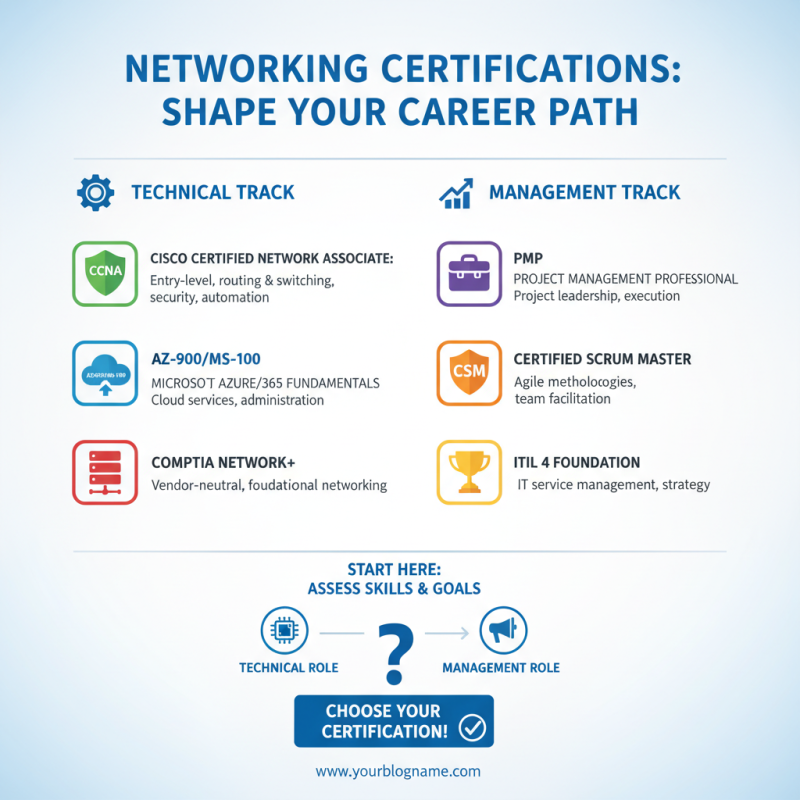
Choosing the right networking certification can shape your career path significantly. Consider your current skills and future goals. What do you want to achieve? Are you aiming for a technical role, or management? Reflect on these questions before diving into options.
Research various certifications available. Each offers unique benefits and focuses. Some emphasize practical skills, while others lean toward theory. Check which topics resonate with you. Project management might be your interest, or perhaps security protocols. Different paths require different credentials, so be mindful.
Talk to professionals in the field. Their insights can guide your decision. Listen to their experiences with certifications. Some may tell you that certain ones opened doors for them, while others might have felt unprepared despite certifications. This feedback is invaluable. It's also crucial to reassess your career goals regularly, as they may evolve over time. Your chosen certification should align with your growth trajectory.