How to Optimize Enterprise Networking for Business Success?
In today's fast-paced business landscape, optimizing enterprise networking is crucial for success. According to renowned expert, Dr. Michael Johnstone, "Efficient enterprise networking can transform an organization's potential." His insights highlight the significance of robust networking solutions in achieving business goals.
Many companies struggle to align their networking strategies with their overall objectives. This creates gaps in communication and slows down operations. A well-designed enterprise networking infrastructure ensures seamless connectivity among teams and departments. However, organizations often overlook the need for continuous assessment and adaptation.
Moreover, businesses may become complacent with their existing networking systems, failing to innovate or upgrade them. This stagnation can lead to inefficiencies. To fully leverage enterprise networking, companies must regularly invest in emerging technologies and evaluate their needs.

Understanding the Importance of Enterprise Networking for Business
Enterprise networking plays a crucial role in driving business success. According to a recent report by the International Data Corporation (IDC), a well-optimized network can boost productivity by up to 30%. This is a significant increase that businesses can't afford to overlook. A robust network allows faster data transfer and seamless communication among employees. Collaboration improves with the right tools in place.
Yet, many organizations face challenges. Cisco's annual Cybersecurity Report indicates that 30% of companies experience network downtime each year. This loss can lead to decreased morale and a drop in revenue. Ensuring network reliability must be a priority. Regular audits and updates can help detect vulnerabilities before they become issues.
Moreover, the rise of remote work has altered networking needs. A study by Gartner shows that 47% of organizations plan to allow remote work permanently. This shift requires networks to support diverse locations and devices. Flexibility is important, but it often exposes companies to security risks, which must be managed carefully.
Enterprise Networking Optimization Impact on Business Success
Identifying Key Components of an Efficient Network Infrastructure
Creating an efficient network infrastructure is crucial for business success. Key components include hardware, software, and strategic practices. To start, assess your existing network. Are there bottlenecks? Understanding current limitations helps identify areas for improvement.
Investing in high-quality routers and switches can enhance performance. Reliable hardware ensures smooth data flow. Don't overlook the importance of cybersecurity. A secure network protects sensitive information. Regular updates and monitoring help mitigate risks.
**Tips:** Regularly evaluate your network traffic. This will help discover patterns and potential issues. Additionally, training your staff on best practices is vital. They must understand how to use the network responsibly. Sometimes, slowdowns are due to user error, not equipment failure. Addressing these factors can lead to better efficiency.
Implementing Best Practices for Network Design and Management
Implementing best practices in network design and management is crucial for optimizing enterprise networking. A well-structured network ensures efficient communication and data flow. Start by assessing the current infrastructure. Identify bottlenecks that slow down operations. Regularly reviewing network performance is key. Faulty configurations or outdated hardware can hinder growth.
Monitoring tools can provide insights into network usage. They help detect unusual patterns or outages. Relying solely on manual fixes may lead to errors. Automated solutions can streamline troubleshooting. Consider segmenting the network to improve security and performance. This strategy helps in isolating issues when they arise.
However, not all plans will succeed on the first attempt. Adjustments are often necessary. For example, a redesigned layout may still experience latency issues. Continuous feedback from users can guide improvements. Embrace an adaptive approach. Explore new technologies, but assess their relevance. All changes require careful evaluation to prevent disruptions. Consider the impact on team efficiency as well. Balancing innovation with stability is essential for long-term success.
How to Optimize Enterprise Networking for Business Success?
| Best Practice |
Description |
Benefits |
Implementation Challenges |
| Network Segmentation |
Dividing a network into smaller sub-networks to improve performance and security. |
Enhanced security and performance; reduced broadcast traffic. |
Requires careful planning and management; potential complexity. |
| Regular Network Audits |
Periodic checks to assess network performance and security vulnerabilities. |
Proactive identification of issues; better compliance with standards. |
Time-consuming; may require specialized tools and skills. |
| Quality of Service (QoS) |
A mechanism to manage network resources by setting priorities on data flows. |
Improved application performance; better user experience. |
Complex configuration; monitoring needs to be consistent. |
| Redundancy and Failover |
Implementing backup systems to ensure continuous network availability. |
Increased reliability; minimized downtime during network failures. |
Higher costs; more complex infrastructure. |
| Network Monitoring Tools |
Utilizing software to track network traffic and performance metrics in real-time. |
Immediate detection of issues; improved operational efficiency. |
Requires budget allocation; potential information overload. |
Utilizing Advanced Technologies to Enhance Network Performance
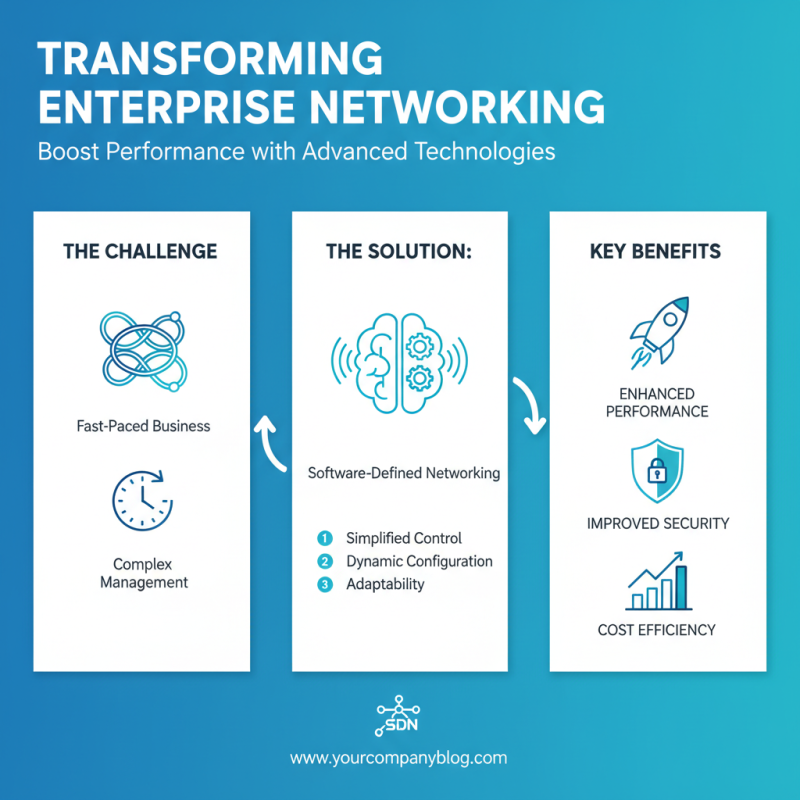
In the fast-paced business world, enhancing network performance is crucial. Advanced technologies can transform enterprise networking. By implementing software-defined networking (SDN), companies can simplify network management. SDN allows for dynamic configuration, making the network adaptable to changing needs.
Another promising approach is utilizing artificial intelligence (AI) for network performance monitoring. AI can analyze traffic patterns and detect anomalies. This proactive method helps prevent network disruptions. Companies can respond swiftly to potential issues. However, reliance on AI may lead to overconfidence. Teams must remain vigilant, ensuring they don’t overlook critical signs of trouble.
Moreover, integrating advanced cybersecurity measures is essential. Protecting network integrity should never be an afterthought. Organizations must regularly update their security protocols. A breach can have significant repercussions. Balancing performance enhancement with security requires careful planning. Emphasizing one may compromise the other, leading to potential vulnerabilities. As businesses navigate this landscape, critical reflection on their strategies is necessary.
Measuring Network Effectiveness for Continuous Improvement
Effective network measurement is crucial for any business looking to thrive in today’s digital landscape. According to a report by Gartner, organizations that utilize performance metrics see a 30% increase in operational efficiency. Regularly assessing network performance leads to actionable insights. Metrics like bandwidth usage, latency, and error rates can reveal areas needing improvement.
However, measuring network effectiveness is not without challenges. Many companies struggle to track all the necessary data points consistently. A Network Performance Optimization study indicated that 40% of organizations failed to analyze their network's end-to-end performance. Ignoring these gaps can result in downtime and lost revenue. The key lies in establishing a routine check on performance metrics and utilizing the right tools for visualization.
Additionally, the importance of user experience cannot be understated. A survey revealed that 70% of employees felt their productivity was affected by network issues. This highlights the need to constantly measure and adjust to enhance user experience. Businesses should aim for periodic reviews and stay alert to changing requirements. Effective improvement hinges on recognizing weaknesses and adapting quickly to changes in technology and user needs.