10 Tips for Choosing the Right Cat 6 Network Cable for Your Network
Selecting the right cat 6 network cable is crucial for optimal network performance. According to industry reports, around 90% of home users experience slow internet due to inadequate wiring. A quality cat 6 network cable can significantly enhance data transfer speeds. It supports gigabit internet and reduces interference, which is essential for modern applications.
In choosing a cat 6 network cable, consider the environment where it will be used. Indoor cables may differ from those intended for outdoor use. For example, outdoor-rated cables are designed to withstand harsh weather conditions. Additionally, the length of the cable matters; longer cables can lead to signal degradation. It's important to remain aware of the implications of poor selection.
Many users overlook essential factors like shielding and bandwidth. A poorly shielded cable can expose your network to interference. Remember, not all cat 6 cables are created equal. Investing in the right cable is a reflection of your commitment to maintaining a high-performing network.

Understanding the Different Categories of Cat 6 Network Cables
When choosing Cat 6 network cables, understanding their categories is essential. Cat 6 cables are classified into different standards, mainly Cat 6 and Cat 6a. Cat 6 cables support speeds up to 1 Gbps over 100 meters. They are suitable for home and small office networks. However, they have limitations in handling interference compared to newer categories.
Cat 6a, on the other hand, is designed for higher performance. It supports 10 Gbps speeds over shorter distances, around 55 meters. According to a report by the Industry Network Association, using Cat 6a can improve data transmission by 50% in environments with high interference. This makes it ideal for data centers and enterprise networks, where performance is crucial.
While selecting the right cable, consider the installation environment. Factors like electromagnetic interference can affect performance. Not every situation demands upper-tier Cat 6a cables. Sometimes, Cat 6 cables can suffice. It's worth investigating the specific needs before making a purchase. Overlooking these details can lead to unsatisfactory network performance. Choose wisely.
10 Tips for Choosing the Right Cat 6 Network Cable for Your Network - Understanding the Different Categories of Cat 6 Network Cables
| Tip |
Description |
Category |
Maximum Length |
Typical Use |
| 1 |
Choose a cable with sufficient bandwidth for your needs. |
Cat 6 |
Up to 100 meters |
Home networking |
| 2 |
Consider the installation location and potential interference. |
Cat 6a |
Up to 100 meters |
Data centers |
| 3 |
Check the construction materials for durability. |
Cat 6 STP |
Up to 100 meters |
Industrial environments |
| 4 |
Look for cables with good shielding to minimize crosstalk. |
Cat 6 U/FTP |
Up to 100 meters |
Office settings |
| 5 |
Ensure compatibility with existing network equipment. |
Cat 6a S/FTP |
Up to 100 meters |
High-speed internet |
| 6 |
Choose the right length to prevent signal loss. |
Cat 6 |
Up to 100 meters |
Home office |
| 7 |
Check for certifications and standards compliance. |
Cat 6 |
Up to 100 meters |
General networking |
| 8 |
Evaluate warranty options from suppliers. |
Cat 6 STP |
Up to 100 meters |
Security systems |
| 9 |
Consider future-proofing your network with higher capacity cables. |
Cat 6a |
Up to 100 meters |
Data centers |
| 10 |
Consult with network professionals if uncertain. |
All Categories |
Variable |
All environments |
Key Features to Look for in Cat 6 Network Cables
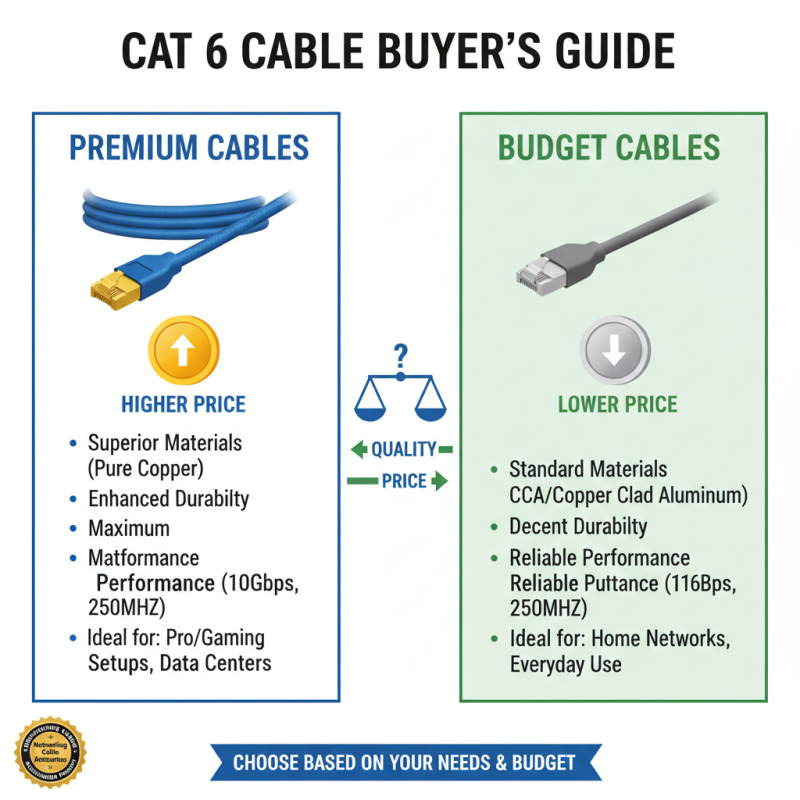
Choosing the right Cat 6 network cable can be tricky. It's important to look for specific features that will enhance your network performance. First, consider the cable's construction. Twisted pairs are essential. They reduce interference and increase speed. Look for cables with a solid copper core, as they perform better than those with copper-clad aluminum.
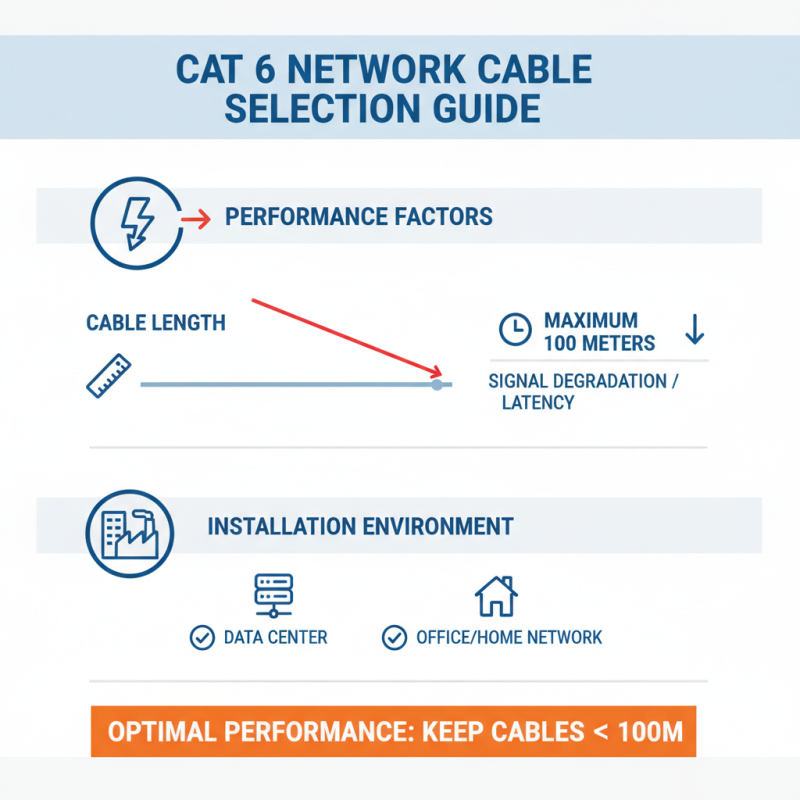
Next, you should examine the cable's overall length. Longer cables can result in signal degradation. It’s best to keep cables under 100 meters for optimal performance. Additionally, check for the bandwidth rating. A good Cat 6 cable should support up to 250 MHz, ensuring adequate speed for data transfer. Pay attention to its insulation as well; high-quality jackets can prevent damage and prolong the cable's life.
Consider the cable's shield type too. There are options like unshielded twisted pair and shielded twisted pair. Each offers different levels of protection against interference. This can affect your network's stability. You might also want to think about the flexibility of the cable. A stiff cable can be hard to install in tight spaces. Sometimes, a little extra flexibility can make the difference during installation.
10 Tips for Choosing the Right Cat 6 Network Cable
This bar chart illustrates the key features to consider when selecting a Cat 6 network cable, based on critical attributes and their importance ratings.
Assessing Your Network Speed and Distance Requirements
When choosing a Cat 6 network cable, understanding your speed and distance requirements is paramount. The performance of your network relies heavily on how well the cable can transmit data. If you're streaming videos in 4K or gaming online, you’ll need a cable that supports high speeds. Cat 6 cables can handle speeds up to 10 Gbps over short distances. Consider how far your cable will run. Over 55 meters, speed may drop significantly. This drop can affect your online activities.
It's also crucial to assess your environment. If you’re in a noisy area, signals can be disrupted. Using shielded cables might help here. But there’s more to think about. Not all installations are straightforward. Some homes have walls or other obstacles that can hinder performance. So, evaluating the installation route is essential. You might find unexpected challenges that could slow down your network. Perhaps your current setup isn’t optimized. Reflecting on these details can lead to a better purchasing decision.
Evaluating Cable Length and Installation Environment
Choosing the right Cat 6 network cable requires careful consideration of cable length and installation environment. Length impacts network performance significantly. According to industry reports, data transmission speeds can degrade beyond 100 meters. For optimal results, keeping cables under this limit is essential. Longer cables can introduce latency and reduce overall efficiency. Therefore, measuring your installation area accurately helps in selecting the appropriate cable length.
Installation environments also play a crucial role. Cables should be placed away from electromagnetic interference sources. This includes motors, fluorescent lights, and routers. A report from the Networking Industry Association highlights that improper installation can reduce performance by up to 40%. Inadequate planning can lead to cable damage over time, resulting in unexpected costs. Many underestimate the importance of environmental factors. Selecting a cable that meets the environment’s demands can prevent future issues. Consider physical obstructions and temperature fluctuations as well—they can affect cable integrity.
Comparing Brands and Prices for Quality and Affordability
When selecting a Cat 6 network cable, comparing brands and prices is crucial. The market offers a mix of options, but quality varies significantly. A report from the Networking Cable Association shows that high-priced cables often feature superior materials. However, affordable alternatives can provide reasonable performance for everyday use.
Consider the specifications. Look for cables that support gigabit speeds. Many budget options meet this need. Yet, performance drops when dealing with longer lengths. Research indicates that, at distances over 50 feet, cheaper cables may not deliver optimal signal quality. This can lead to frustrating slowdowns or frequent disconnects.
Warranties also matter. Some brands offer robust warranties on their cables. This reflects confidence in their products. However, many low-cost cables lack such guarantees. This might raise questions about their longevity. The balance between cost and reliability requires careful thought. Investing a little more can ensure a stable network connection, saving time and hassle in the long run.