China Top 10 Air Jack Hammer Manufacturers 2026
China’s Air Jack Hammer market is expanding through construction, mining, quarrying, and infrastructure projects. This guide examines ten leading Chinese manufacturers expected to attract attention in 2026.
The evaluation considers more than factory scale. It reviews impact energy, air consumption, tool weight, shank compatibility, vibration control, and service support. These details matter on a crowded jobsite, where a compressor may run continuously and operators may handle the tool for several hours. Product consistency matters too. One strong sample does not prove reliable mass production.
Liang Chen, an independent pneumatic-tool engineer with field experience in quarry maintenance, observes, “A dependable Air Jack Hammer must balance striking power, manageable weight, and stable performance under imperfect air supply.” That balance is often overlooked. A powerful model may consume excessive air. A lighter hammer may struggle against dense rock. No ranking is perfect. Supplier data can also change faster than published specifications. Therefore, this selection combines available technical information, manufacturing capability, application feedback, and after-sales evidence. Readers should still request current test reports, warranty terms, spare-parts lists, and noise or vibration data before purchasing. The best manufacturer is not always the largest one. It is the supplier that matches the hammer to the compressor, material, operator, and working conditions. Some comparisons remain difficult, especially when brands disclose limited long-term failure data. That gap deserves attention in 2026.
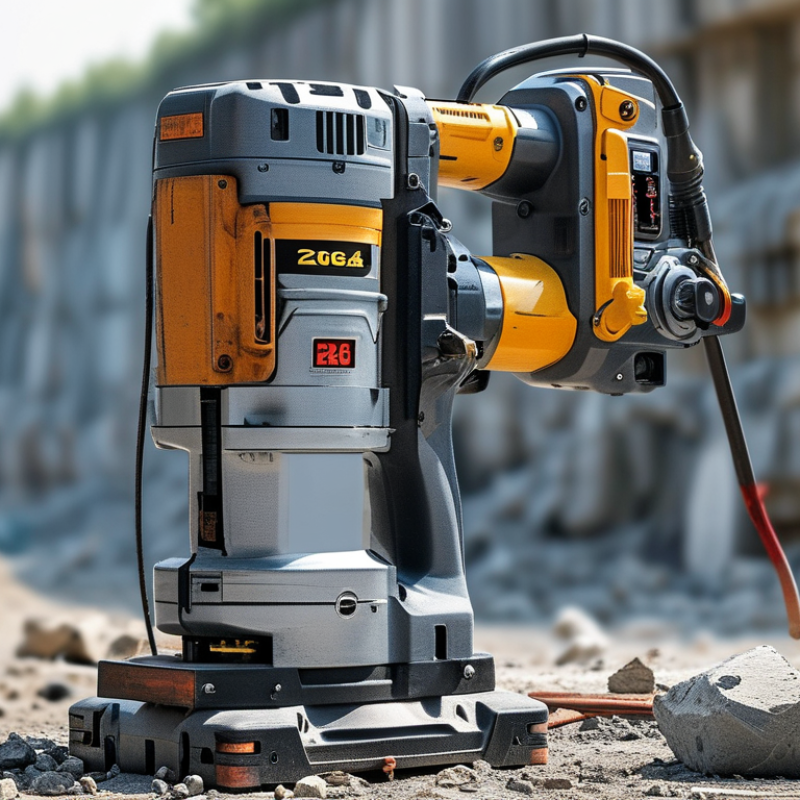
Industry Overview: China’s Air Jack Hammer Market in 2026
China’s air jack hammer market is entering 2026 with steady, practical demand. Construction, quarrying, road repair, and underground projects remain key users. Public reports rarely separate air jack hammers from broader pneumatic tools. That limits precision. Grand View Research reported continued growth in the global power tools market, supported by infrastructure spending and industrial maintenance. China’s manufacturing base adds another advantage: short supply chains, dense component networks, and flexible production volumes.
Market competition is shifting beyond price. Buyers now examine impact energy, air consumption, vibration control, cylinder durability, and repair access. The China Construction Machinery Industry Association has repeatedly highlighted replacement demand and equipment efficiency as important industry themes. In field use, operators often prefer a hammer that starts reliably in dusty conditions, even if its catalogue output is slightly lower. That choice is easy to overlook. Export suppliers also face stricter documentation, noise expectations, and changing workplace safety requirements in different markets. Actual performance can vary between test benches and wet, uneven job sites.
Tips: Ask for measured air consumption at working pressure, not only maximum power. Request test records, spare-part availability, and a clear warranty process. Compare total operating cost over twelve months. A cheaper tool may consume more compressed air, increasing compressor costs. Buyers should also verify local compliance requirements before shipment. Reported market figures are useful, but operator interviews and maintenance records often reveal the harder truth.
How to Evaluate Air Jack Hammer Manufacturers in China
When comparing China’s top 10 air jack hammer manufacturers in 2026, evaluate evidence, not attractive rankings. A reliable supplier should show factory capacity, quality controls, and recent test records. Ask for air consumption, impact frequency, shank dimensions, noise data, and recommended working pressure. These figures must match the actual model. Photos alone prove little. During supplier visits or video inspections, examine machining surfaces, hose fittings, seals, and assembly cleanliness. Small burrs can signal weak process control. That is not always decisive, but it deserves questions.
Experience matters in harsh quarry, road repair, and foundation work. Request references from comparable applications, not generic testimonials. Check how quickly the manufacturer handles worn valves, broken springs, and warranty claims. A professional technical team should explain maintenance intervals clearly. They should also provide inspection reports, material specifications, and traceable batch information. Independent sampling is useful before a large order. Even good factories may show inconsistent results between batches. Treat this as a risk to measure, not a reason to exaggerate.
Tips: Compare at least three quotations using identical specifications. Calculate total cost, including spare parts, packaging, training, and delivery protection. Test several units under controlled conditions. Record vibration, temperature, oil use, and output changes. Confirm inspection standards in writing. Avoid suppliers promising unusually high performance without test evidence. Also assess communication during technical discussions. Slow or vague answers may become costly after shipment.
China’s Top 10 Air Jack Hammer Manufacturers for 2026
China’s Top 10 Air Jack Hammer Manufacturers for 2026
China’s air jack hammer industry is entering 2026 with stronger engineering practices and broader export experience. The leading ten manufacturers are being assessed through performance, production consistency, and after-sales support. Buyers should examine impact frequency, air consumption, tool weight, and vibration control. These details affect drilling speed, operator fatigue, and compressor costs on real job sites.
Experienced manufacturers usually maintain controlled machining, heat treatment, and assembly procedures. They may also provide test records for cylinder wear, valve movement, and handle durability. A reliable supplier should explain its quality checks clearly, not hide behind attractive catalog images. Factory audits, sample testing, and spare-part availability remain practical ways to verify technical claims. Small differences in steel hardness can become serious after months of daily use.
Field conditions still expose weaknesses. Dust, cold mornings, and unstable air pressure can change tool behavior quickly. Some manufacturers respond well with sealing improvements and simpler maintenance designs. Others offer promising specifications but limited service guidance. That gap deserves attention. I would not judge the top ten by price alone, because cheap tools can create higher downtime and repair costs. Even experienced buyers may overlook noise exposure or hose compatibility. A careful comparison should include operator feedback, warranty terms, delivery reliability, and independent performance testing before procurement decisions are made.
China Top 10 Air Jack Hammer Manufacturers 2026 - China’s Top 10 Air Jack Hammer Manufacturers for 2026
Representative industry capability profiles based on commonly published air jack hammer specification ranges. Figures are indicative and should be verified against current manufacturer quotations and technical datasheets. | Rank | Anonymous Manufacturer Profile | Primary Product Class | Working Pressure | Air Consumption | Impact Rate | Approx. Weight | Common Shank Size | Typical Applications | Export Readiness |
| 1 | Profile A | Heavy-duty handheld air jack hammer | 0.63 MPa | 1.2–1.5 m³/min | 16–18 Hz | 28–30 kg | 32 mm | Road maintenance, concrete demolition, quarrying | High |
| 2 | Profile B | Medium-duty pneumatic breaker | 0.63 MPa | 1.0–1.3 m³/min | 17–20 Hz | 20–24 kg | 30 mm | Utility trenching, masonry removal, general construction | High |
| 3 | Profile C | Mining-grade air pick and breaker | 0.63 MPa | 1.1–1.4 m³/min | 15–18 Hz | 18–26 kg | 30 or 32 mm | Coal mining, rock scaling, underground maintenance | High |
| 4 | Profile D | Compact construction air hammer | 0.63 MPa | 0.8–1.1 m³/min | 18–22 Hz | 12–18 kg | 25 or 30 mm | Brickwork, tile removal, light concrete work | Medium–High |
| 5 | Profile E | Long-life industrial pneumatic breaker | 0.63 MPa | 1.2–1.6 m³/min | 15–17 Hz | 25–30 kg | 32 mm | Foundry maintenance, heavy repair, reinforced concrete | High |
| 6 | Profile F | Low-vibration pneumatic breaker | 0.63 MPa | 0.9–1.2 m³/min | 16–20 Hz | 18–23 kg | 30 mm | Urban repair, indoor demolition, maintenance projects | Medium–High |
| 7 | Profile G | Portable quarrying air hammer | 0.63 MPa | 1.1–1.5 m³/min | 14–18 Hz | 24–29 kg | 32 or 38 mm | Stone cutting, quarry work, surface rock breaking | Medium–High |
| 8 | Profile H | General-purpose air pick | 0.63 MPa | 0.7–1.0 m³/min | 18–22 Hz | 10–16 kg | 25 or 30 mm | Surface preparation, brick removal, small-scale breaking | Medium |
| 9 | Profile I | Heavy-duty anti-corrosion air hammer | 0.63 MPa | 1.0–1.4 m³/min | 15–19 Hz | 20–27 kg | 30 or 32 mm | Shipyards, bridge repair, industrial maintenance | Medium–High |
| 10 | Profile J | Entry-level pneumatic concrete breaker | 0.63 MPa | 0.8–1.2 m³/min | 16–21 Hz | 15–22 kg | 30 mm | Rental fleets, small contractors, light demolition | Medium |
Product Strengths, Technologies, and Manufacturing Capabilities
China Top 10 Air Jack Hammer Manufacturers 2026
China’s leading air jack hammer manufacturers compete through practical engineering, not appearance alone. Experienced buyers examine impact frequency, air consumption, vibration control, and service life under continuous workshop use. Reliable models often use heat-treated steel bodies, reinforced piston assemblies, and precision-machined cylinders. Small dimensional errors can create noticeable air leakage and unstable impact force.
Manufacturing strength depends on process discipline. Established factories commonly combine CNC machining, controlled assembly, pressure testing, and random performance checks. Some also use vibration measurement equipment to reduce operator fatigue. Traceable batch records help engineers identify material changes or recurring defects. That matters during large orders. A low unit price means little if replacement parts arrive late.
Field feedback remains essential. Technicians often test hammers against concrete, metal fixtures, or compacted surfaces before approving production changes. Good manufacturers adjust valve design, handle insulation, and exhaust direction based on these observations. No factory is flawless. Some published performance figures are difficult to verify without independent testing. Buyers should request sample inspections, test reports, warranty terms, and spare-part lead times. The strongest suppliers accept technical questions and explain limitations clearly. That honesty is sometimes more valuable than another impressive specification.
Buying Considerations for Global Air Jack Hammer Buyers
China Top 10 Air Jack Hammer Manufacturers 2026
Global buyers should assess performance beyond impact force. Grand View Research’s 2024 pneumatic tools report estimates steady market growth through 2030, driven by construction and mining demand. However, air jack hammers vary sharply in air consumption, vibration, and service life.
Check the required working pressure first. A compressor producing 0.63 MPa may still fail under continuous load. Compare measured air consumption, not only catalogue figures. ISO 28927-10 provides a useful method for evaluating hand-held rock-drilling vibration. OSHA also warns that repeated hand-arm vibration can create serious occupational risks. Ask for test records, noise data, and operating instructions in English. Weight matters underground. A two-kilogram difference becomes noticeable after several hours.
Tips: Request a sample test before bulk purchasing. Measure blows per minute, penetration speed, air use, and operator fatigue. Confirm spare valves, pistons, hoses, and delivery times. CE documentation may support European trade, but it does not replace local compliance checks. Buyers in Australia, Canada, and Southeast Asia should verify their own import and workplace requirements.
Factory audits deserve practical attention. Review machining tolerances, heat treatment records, assembly checks, and warranty response procedures. Independent inspection can reveal inconsistent sealing or excessive vibration. The weakness is simple: many published performance figures use ideal laboratory conditions. Field results may be lower. Build a comparison sheet using the same compressor and rock type. That small discipline prevents an expensive decision.