Top 5 Forklift Collision Detection Systems You Need to Know?
In today's fast-paced industrial environments, safety is a top priority. The risk of forklift accidents can lead to severe injuries and costly damages. This is where a Forklift Collision Detection System comes into play. These systems serve as a crucial safeguard, helping to prevent collisions between forklifts and obstacles or personnel.
Many warehouses and factories have adopted these technologies to enhance safety measures. The systems employ sensors that detect nearby objects and alert operators. However, not all collision detection systems are created equal. Some lack precision, potentially leading to false alarms. This can cause frustration for operators and may lead to complacency in safety practices.
Understanding what systems are available is essential for making informed decisions. In the following sections, we will explore the top five Forklift Collision Detection Systems you need to know. Each offers unique features and potential drawbacks. By examining these options, we can move toward a safer work environment where efficiency does not compromise safety.
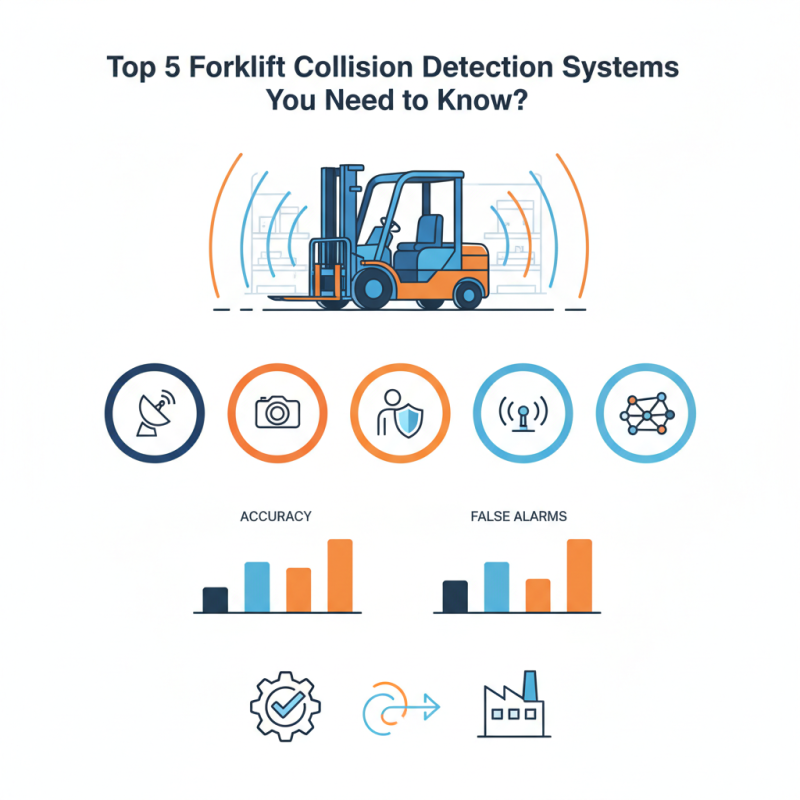
Top 5 Forklift Collision Detection Systems You Need to Know
Forklift collision detection systems are essential for enhancing workplace safety. According to a recent report by the Occupational Safety and Health Administration (OSHA), about 25% of forklift accidents occur due to collisions. These incidents can lead to serious injuries and costly damages. A robust collision detection system can significantly reduce these risks.
Modern systems utilize sensors and cameras to monitor surroundings. They provide real-time alerts when obstacles are nearby. Some advanced models even deploy predictive analytics to foresee potential hazards. Implementing such systems can reduce accidents by up to 70%, as reported by industry studies. However, it’s vital to note that relying solely on technology is not enough. Regular training and maintenance are equally important.
In many cases, workers feel overwhelmed by technology. They may not fully trust these systems, leading to complacency. This is a critical area for improvement. Integrating human factors into safety programs could enhance system effectiveness. Regular feedback sessions could also identify gaps in understanding and usage. Addressing these issues can lead to a safer working environment for all employees.
Understanding the Importance of Forklift Collision Detection in Warehousing
Forklifts play a crucial role in warehousing operations. However, they also pose significant risks. Every year, many accidents occur due to collisions. This often results in injury or property damage. Effective collision detection systems can reduce these incidents. They alert operators to potential hazards and help prevent collisions.
These systems use various technologies. Some rely on sensors that detect proximity to objects. Others use cameras for better visibility. This technology is beneficial in busy environments where visibility is limited. Yet, not all systems function perfectly. Some might produce false alarms, which can cause frustration. Training operators to interpret alerts can take time.
Implementing collision detection in a warehouse is essential. It enhances safety and boosts efficiency. Workers feel more secure when they know risks are minimized. Even so, adoption can be a challenge. Companies may hesitate due to costs or lack of understanding. However, the long-term benefits often outweigh these concerns, paving the way for safer operations.
Key Features of Effective Collision Detection Systems for Forklifts
Effective collision detection systems for forklifts are essential in modern warehouses. These systems increase safety and efficiency by preventing accidents. Key features include real-time monitoring, obstacle detection, and alerting mechanisms. According to a report by the National Safety Council, nearly 100,000 forklift-related injuries occur each year in the U.S. alone. Implementing better collision detection can significantly reduce this number.
In real-time monitoring, systems use sensors to track movement. This ensures immediate detection of nearby obstacles. Some systems employ cameras to provide visual alerts, making it easier for operators. Simple audio alerts can also notify workers of potential dangers. A study indicates that facilities using advanced detection systems see a 30% decrease in accidents.
Tips: Regularly test the system’s functionality. Maintenance can’t be ignored. Even the best systems may fail if not properly maintained. Training is key. Ensure operators are familiar with the system features. New hires should have hands-on training to reinforce safety practices. Distracted operators can overlook alerts, leading to hazards. Make safety a priority through consistent awareness programs.
Top 5 Forklift Collision Detection Systems You Need to Know
| System Name | Key Features | Detection Range | Response Time | Compatibility |
| System A | Real-time alerts, Laser detection, Multiple vehicle support | Up to 30 meters | Less than 200 ms | Forklifts, Pallet jacks |
| System B | Camera-based, Object recognition, Low-light capability | Up to 25 meters | 150 ms | Electric forklifts, Reach trucks |
| System C | Radar technology, 360-degree detection, Automatic braking | Up to 40 meters | 100 ms | All forklift types |
| System D | Ultrasonic sensors, Adjustable sensitivity, Intuitive interface | Up to 20 meters | 250 ms | Customized for specific models |
| System E | GPS integration, Route monitoring, Operator feedback | Up to 50 meters | 300 ms | Industrial trucks, Order pickers |
Industry Statistics on Forklift Accidents and the Need for Safety Solutions
Forklift accidents are alarmingly common in various industries. Statistics reveal that thousands of accidents occur each year, leading to severe injuries or fatalities. These incidents often result from inadequate visibility, operator error, or lack of proper safety measures. It’s crucial for companies to prioritize safety solutions. Many workers operate forklifts in crowded spaces, increasing collision risks. In such environments, even minor distractions can have serious consequences.
The need for effective collision detection systems has never been greater. Not only can these systems help prevent accidents, but they can also save organizations money. However, some businesses still hesitate to invest in these safety technologies. They often underestimate risks and overlook the long-term benefits. Without proper solutions in place, the potential for accidents increases. Employees, management, and safety teams must work together to create a safer workplace.
Adopting collision detection systems is a step in the right direction. But it's not just about technology. Training and operational protocols are also vital. Companies should consistently assess their safety measures. Regular reviews can identify potential gaps. This reflective approach is necessary to enhance safety continuously and protect lives on the job.
Comparative Analysis of Leading Collision Detection Technologies in 2023
In 2023, workplace safety remains a critical concern, especially in environments with forklifts. Collision detection systems are essential for minimizing accidents. These systems can be classified based on sensors, algorithms, and response mechanisms. There are several noteworthy technologies that stand out this year.
One popular technology utilizes ultrasonic sensors. These sensors detect nearby obstacles and alert operators. They are effective in crowded spaces but can sometimes have limited range. Another emerging option is vision-based systems. Cameras analyze the surroundings and provide real-time feedback. However, they can struggle in low-light conditions.
RFID technology also plays a role. It uses tags to monitor positions and prevent collisions. This approach is precise but requires thorough implementation. As companies continue to adopt these systems, there are still challenges. Integration and training are critical. Many organizations find adapting to new technologies difficult. Effective solutions must balance technology with practical user needs.
Conclusion
In the fast-paced environment of warehousing, the implementation of effective Forklift Collision Detection Systems has become critical to ensuring safety and preventing accidents. These systems play a crucial role in minimizing risks by providing real-time alerts and enhancing the situational awareness of operators. Key features to consider in these technologies include precision in detection, ease of integration with existing machinery, and the ability to offer comprehensive analytics for continuous improvement.
Recent industry statistics highlight a concerning number of forklift-related accidents, underscoring the urgent need for robust safety solutions. A comparative analysis of leading collision detection technologies reveals significant advancements in the field, with a focus on increasing reliability and reducing response times. Looking ahead, future trends indicate a surge in innovation, with upcoming systems promising enhanced capabilities and integration with automated processes to further elevate safety standards in warehouses.