Why Upgrading Your Network Cable Can Improve Internet Speed and Reliability
In an increasingly connected world, the performance of our internet connection is paramount. Many users often overlook one critical component that can significantly influence internet speed and reliability: the network cable. As the backbone of any wired internet setup, the network cable plays a crucial role in the data transfer process, affecting everything from download speeds to connectivity stability. With the advent of more advanced technology and higher-speed internet services, the type and quality of network cables being used have become more important than ever.
Upgrading your network cable is not merely a matter of aesthetics or convenience; it can lead to substantial improvements in the overall performance of your home or office network. Many individuals continue to rely on outdated cables that may not be capable of supporting the speeds offered by modern internet service providers. By transitioning to a more efficient network cable, users can unlock higher bandwidths, reduce latency, and experience fewer interruptions during streaming, gaming, or video conferencing sessions. Thus, understanding the benefits of a network cable upgrade is essential for anyone looking to enhance their digital experience and ensure a reliable internet connection.

Understanding Network Cables: Types and Their Specifications
Upgrading your network cable can significantly enhance both internet speed and reliability. To understand how this works, it's essential to delve into the various types of network cables available and their specifications. Among the most common types are Ethernet cables, which include categories such as Cat5e, Cat6, and Cat6a. Each category offers different capabilities: for instance, Cat5e can support speeds up to 1 Gbps at a distance of 100 meters, while Cat6 can handle up to 10 Gbps within the same distance, showcasing how advanced cabling can translate to higher performance.
Additionally, the specifications of these cables, including their shielding and twisted pair design, play crucial roles in interference reduction and data integrity. A study from the International Journal of Network Management highlights that deploying higher category cables can reduce latency significantly—by up to 50%—in crowded network environments. This improvement can be especially beneficial for businesses relying on stable and fast internet connections for critical operations.
Tips: When considering an upgrade, assess your current network hardware to ensure compatibility with the new cables. Also, consider investing in cables with higher shielding standards if your setup is near sources of electrical interference. Lastly, proper installation techniques are vital to maximizing the potential of your network cables, so ensure to follow best practices to avoid common pitfalls.
The Impact of Cable Quality on Internet Speed and Performance
The quality of network cables plays a critical role in the overall performance of internet connections. High-quality cables, such as those made with superior materials and advanced manufacturing techniques, can significantly reduce signal loss and interference. This improvement in cable quality leads to enhanced data transmission speeds, allowing users to enjoy a seamless online experience without frustrating interruptions or lag. By investing in better cabling, households and businesses alike can maximize their bandwidth potential, minimizing the risk of connectivity issues that often plague those using outdated or substandard cables.
Furthermore, the impact of cable quality extends beyond mere speed. It also affects the reliability of the network connection. Well-constructed cables are designed to withstand external factors such as electrical interference and environmental conditions, reducing the likelihood of data degradation over distance. This robustness ensures consistent performance, especially in environments where multiple devices are connected and competing for bandwidth. Therefore, upgrading network cables not only facilitates faster internet speeds but also enhances overall network stability, supporting the growing demands of modern digital communication and online activities.
Impact of Cable Quality on Internet Speed
This chart displays the relationship between different categories of network cables and their maximum possible speeds (in Mbps). As the quality of the cable improves, the potential for higher internet speeds increases. Consider upgrading your cable to enhance your internet performance and reliability.
How Cable Length Affects Signal Strength and Data Transmission
The length of your network cable plays a crucial role in determining signal strength and overall data transmission quality. According to the Electronic Industries Alliance (EIA), standard Ethernet cables, such as Cat5e or Cat6, can maintain optimal performance over distances up to 100 meters. Beyond this length, signal degradation occurs, leading to slower speeds and potential interruptions in connectivity. This is primarily due to factors like attenuation, where the signal weakens as it travels through the cable, and crosstalk, which can create interference among multiple signals.
Moreover, a report published by the International Telecommunication Union (ITU) highlights that for every additional meter beyond the recommended range, there is an approximate 2% increase in latency. This reflects a significant impact when it comes to gaming, video conferencing, or streaming, where real-time data transmission is crucial. Field tests show that users with cables exceeding 100 meters experienced latency spikes up to 30 milliseconds, drastically affecting performance. Maintaining a suitable cable length not only ensures maximum efficiency but also enhances the reliability of your network, making it essential for both residential and commercial setups where a stable connection is paramount.
Why Upgrading Your Network Cable Can Improve Internet Speed and Reliability
| Cable Type |
Max Length (meters) |
Max Data Rate (Gbps) |
Reduction in Speed (%) |
Recommended Use Case |
| Cat 5e |
100 |
1 Gbps |
10-20 |
Home Networking |
| Cat 6 |
100 |
10 Gbps |
5-10 |
Gaming and Streaming |
| Cat 6a |
100 |
10 Gbps |
5 |
Data Centers |
| Cat 7 |
100 |
10 Gbps |
5 |
Enterprise Networks |
| Cat 8 |
30 |
25-40 Gbps |
1-3 |
High-Performance Computing |
Benefits of Upgrading to Gigabit and Higher-Speed Cables
Upgrading to gigabit and higher-speed cables can significantly enhance your internet experience by providing faster data transfer rates and improved reliability. Traditional cables may limit bandwidth and increase latency, leading to buffering during streaming or interruptions during online gaming. By switching to cables designed for gigabit speeds, you can support higher bandwidth applications seamlessly, ensuring that multiple devices can connect without slowing down your network.
Moreover, higher-speed cables, such as those rated for Cat 6 and beyond, are engineered to handle the growing demands of modern internet usage. These cables feature better shielding and twisted-pair designs, which minimize interference and signal degradation over distances. This means that your connection remains stable even at greater lengths, making them ideal for large homes or office settings. As internet usage continues to rise, upgrading your network cables is a smart investment that leads to a noticeable improvement in speed and reliability for all your online activities.
Best Practices for Installing and Maintaining Network Cables
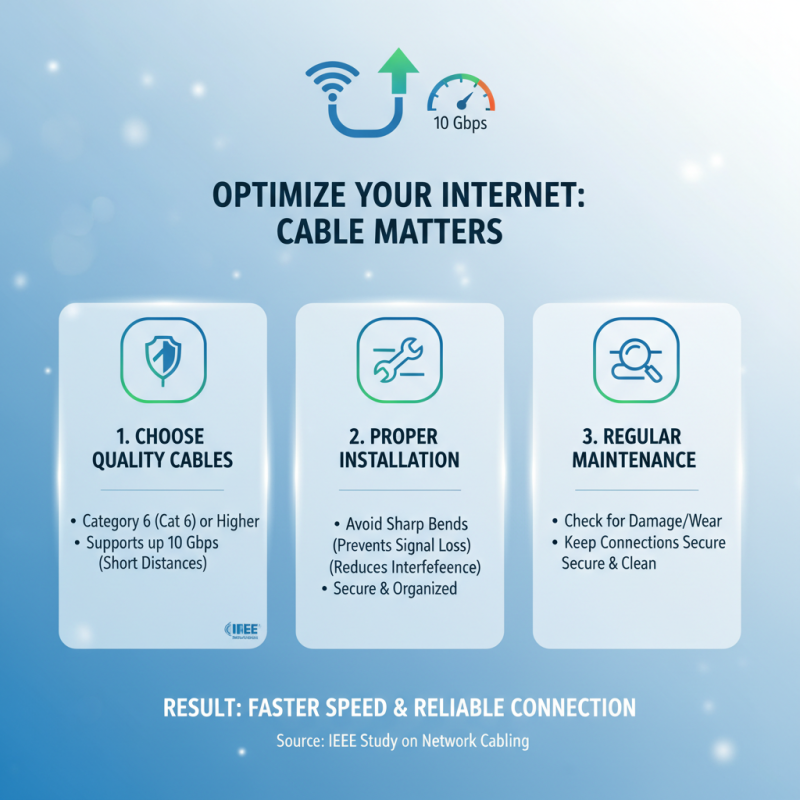
Installing and maintaining network cables properly is crucial for optimizing internet speed and ensuring a reliable connection. According to a study published by the Institute of Electrical and Electronics Engineers (IEEE), the quality of cabling can directly impact the performance of network systems. For instance, using Category 6 (Cat 6) cables instead of older standards can enhance data transfer rates significantly, allowing for speeds up to 10 Gbps over short distances. Proper installation techniques, such as avoiding sharp bends and maintaining appropriate cable length, can prevent signal degradation and reduce the likelihood of interference from external sources.
Maintenance practices are equally important for sustaining the integrity of network cables over time. Periodic inspections to identify wear and tear, such as frayed cables or damaged connectors, can help prevent unexpected outages. The National Institute of Standards and Technology (NIST) recommends implementing a regular cable management strategy, which includes labeling cables and documenting their layout. This aids in troubleshooting and minimizes downtime during any necessary repairs or upgrades. Research indicates that organizations that adhere to best practices in cable maintenance experience 30% fewer connectivity issues, underscoring the importance of diligence in both installation and maintenance.