In the realm of networking, understanding the intricacies of UTP cables is essential for both professionals and enthusiasts alike. According to John Smith, a renowned telecommunications expert at Tech Innovations, "UTP cables are the backbone of modern data communication, providing a robust solution for both speed and efficiency." These cables, known as Unshielded Twisted Pair, serve a pivotal role in connecting devices within local area networks, allowing for reliable transmission of data with minimal interference.
As technology continues to advance, the demand for faster and more reliable networking solutions has led to an increased reliance on UTP cables. With various types available, each designed for specific applications, it is crucial to understand the differences among them to make informed decisions for your networking needs. In this article, we will delve into the various types of UTP cables, explore their uses in different scenarios, and clarify the distinctions that set them apart. By equipping yourself with this knowledge, you can enhance your networking capabilities and ensure optimal performance in your data transmission endeavors.
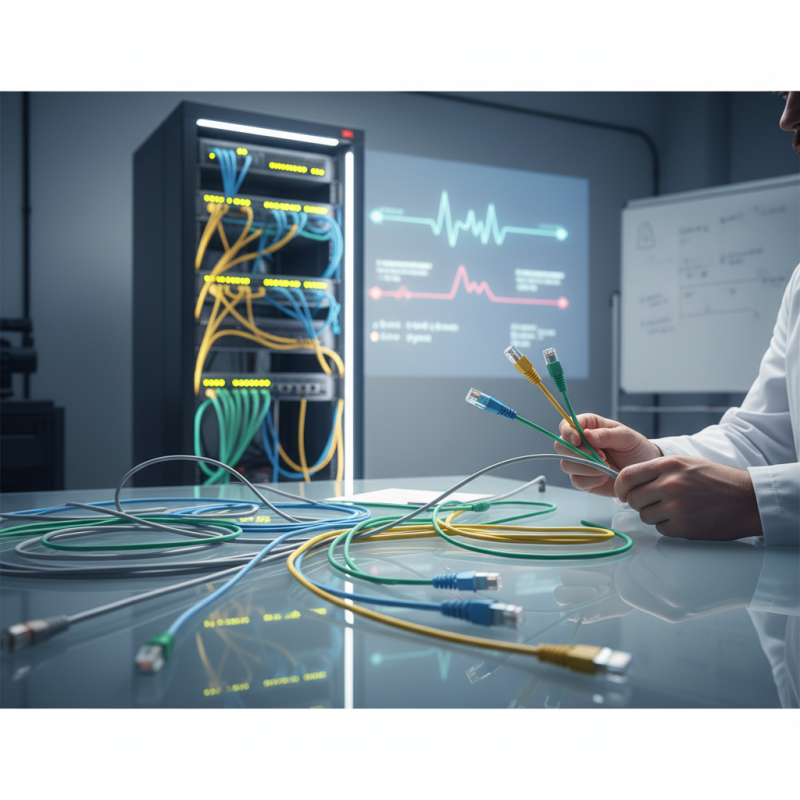
Unshielded Twisted Pair (UTP) cables are essential components in the world of networking, used to connect computers, telephones, and various devices within a local area network (LAN). There are several variants of UTP cables, each designed for specific applications and behaviors in terms of performance and installation. The most common types include Category 5e, Category 6, and Category 6a, with each category representing a different level of capability in terms of data transmission speeds and bandwidth.
Category 5e (Cat 5e) is a widely used type, suitable for network speeds of up to 1 Gbps. It is ideal for home and small office environments where high-speed internet access is needed without excessive data loads. On the other hand, Category 6 (Cat 6) cables support frequencies of up to 250 MHz and can handle network speeds of up to 10 Gbps over shorter distances, making them appropriate for business networks that require faster and more reliable connections. Lastly, Category 6a (Cat 6a) extends the performance of Cat 6 by allowing for improved shielding against crosstalk, supporting speeds up to 10 Gbps over longer runs.
Tips: When installing UTP cables, always avoid tight bends and ensure the cable is not excessively tensioned, as this can affect performance. Additionally, consider the environment where the cables will be installed—exposed areas may require a more durable variant or additional protective covering to withstand potential damage. Finally, always follow local codes and installation best practices to guarantee optimal performance and safety.
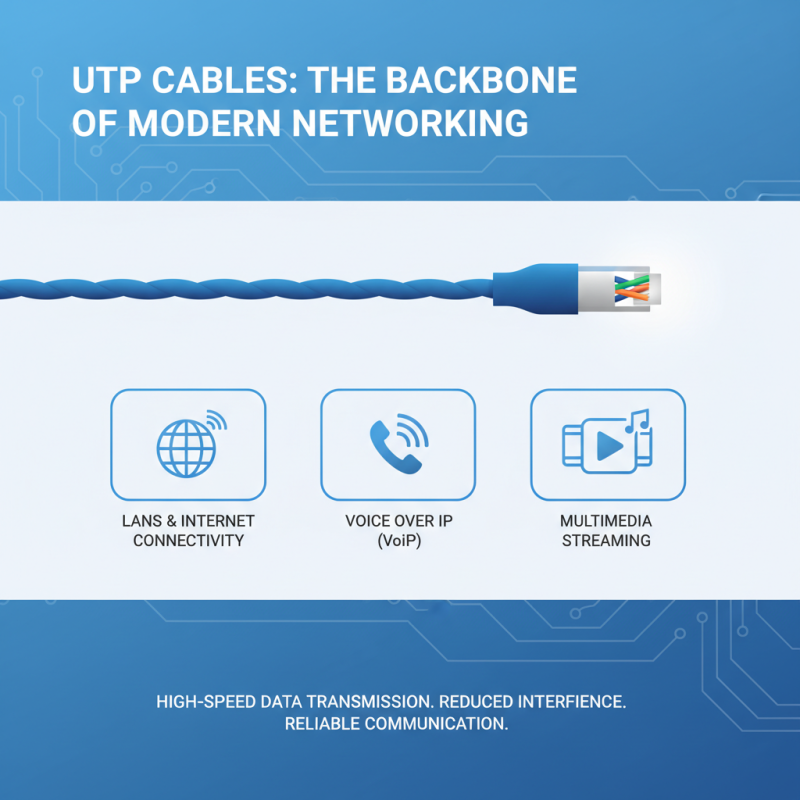
Unshielded Twisted Pair (UTP) cables are a fundamental component of modern networking, supporting a variety of applications crucial for both personal and business connectivity. Primarily utilized in local area networks (LANs), UTP cables facilitate high-speed data transmission, making them essential for internet connectivity, voice over IP (VoIP) services, and multimedia streaming. Their design, which involves twisting pairs of wires together, helps reduce electromagnetic interference, thereby enhancing signal quality and enabling reliable communication between devices.
In addition to traditional networking uses, UTP cables play a significant role in the deployment of telecommunications systems. They are commonly employed in telephone lines and alarm systems, providing the backbone for effective communication solutions. The versatility of UTP cables allows for their use in various settings, from residential networks to large-scale enterprise environments, where they support numerous devices and applications simultaneously. With the growing demand for high-bandwidth applications and increasing reliance on cloud services, UTP cables continue to evolve, underscoring their importance in today’s technology-driven world.
When comparing UTP (Unshielded Twisted Pair) cables to other types of network cables, several key factors come into play, including cost, performance, and application suitability. UTP cables are favored in many local area networks (LANs) due to their affordability and versatility. According to a report by the International Data Corporation (IDC), UTP cables account for approximately 75% of the network cabling market, significantly outperforming other types like coaxial and fiber optic cables in terms of prevalence in typical office environments.
In contrast, fiber optic cables, while offering significantly higher data transmission speeds and bandwidth, are often more expensive and complex to install. A study from MarketsandMarkets indicates that the fiber optic market is expected to grow at a compound annual growth rate (CAGR) of 10% through 2026, driven largely by the demand for high-speed internet connectivity. However, UTP cables still hold a vital place in businesses and homes where high data rates are less critical, and cost efficiency is paramount.
Additionally, compare UTP cables to shielded twisted pair (STP) cables. STP offers additional shielding against electromagnetic interference (EMI), making it suitable for environments with high levels of electrical noise. Despite this advantage, the increased cost and reduced flexibility in installation options often lead network professionals to opt for UTP in non-critical applications, particularly when operating in environments where EMI is not a significant concern. Thus, while UTP cables may not always provide the highest performance, their balance of cost, ease of installation, and sufficient data transfer capabilities makes them the backbone of many current networking setups.
| Cable Type | Number of Pairs | Max Data Rate | Typical Use | Distance Limit |
|---|---|---|---|---|
| UTP Cat5e | 4 | 1 Gbps | Ethernet | 100 meters |
| UTP Cat6 | 4 | 10 Gbps | Ethernet, VoIP | 55 meters |
| UTP Cat6a | 4 | 10 Gbps | High-speed Ethernet | 100 meters |
| UTP Cat7 | 4 | 10 Gbps - 40 Gbps | Data centers, enterprise | 100 meters |
| Fiber Optic | N/A | Up to 100 Gbps | Broadband, long-distance | Several kilometers |
| Coaxial | N/A | Up to 10 Gbps | Cable TV, broadband | Several hundred meters |
Unshielded Twisted Pair (UTP) cables play a significant role in modern networking, particularly in structured cabling systems for telecommunication and data transmission. Understanding the categories of UTP cables is essential, as it informs both performance specifications and application suitability. UTP cables are classified into various categories, each designed to support different bandwidths and data rates. For instance, Category 5e (Cat 5e) cables can handle speeds up to 1 Gbps and a frequency of 100 MHz, making them a popular choice for typical home and office networks. In contrast, Category 6 (Cat 6) cables can support speeds of 10 Gbps at a frequency of 250 MHz, thus enhancing performance in environments with high data demands.
Moreover, the higher categories, such as Category 6a (Cat 6a) and Category 7 (Cat 7), offer even greater capabilities. Cat 6a supports 10 Gbps data transmission up to 100 meters with a frequency of 500 MHz, while Cat 7 can achieve similar speeds over longer distances with enhanced shielding, reducing interference. According to a recent industry report, the demand for higher-category cables is projected to increase by 20% over the next five years, reflecting the growing need for robust network infrastructures.
**Tips:** When selecting UTP cable, consider the specific requirements of your installation environment, including distance, speed, and potential electromagnetic interference. Always prefer higher-category cables for future-proofing your network. Another essential tip is to verify the cable's compliance with the TIA/EIA standards to ensure optimal performance and reliability in data transmission.
When evaluating the performance of UTP cables in network settings, several key factors come into play. One of the primary influences is the cable category. There are different types of UTP cables, such as Cat5e, Cat6, and Cat6a, each designed for varying transmission speeds and bandwidth capacities. The choice of cable can significantly affect data rates; for instance, higher category cables support faster data transmission over longer distances.
Another critical factor is the installation environment. External interference from other electronic devices can degrade cable performance, particularly in environments with high electromagnetic interference. Proper cable management, including keeping UTP cables away from power lines and devices that generate electromagnetic fields, can help mitigate these issues and maintain optimal performance.
Tips: When installing UTP cables, consider using shielded twisted pair (STP) cables if you anticipate interference. Additionally, ensure that connections are secure and that the cables are not kinked or bent beyond the recommended radius, as this can also lead to signal degradation. Keeping cables organized and at the appropriate lengths can further enhance network reliability.