
What Is Joovv Red Light Therapy?

Joovv Red Light refers to a branded approach to photobiomodulation, using red and near-infrared light from LED devices. In practice, a person stands or sits near a panel, following its recommended distance and session time. The light is non-invasive, but the effects depend on factors such as wavelength, intensity, and exposure. Small details matter.

Grand View Research’s Photobiomodulation Market Size, Share & Trends Analysis Report, 2024–2030, tracks commercial growth in this field. That is useful context, not proof that a device delivers a specific health benefit. Market forecasts describe demand, not clinical outcomes. Hamblin’s 2017 review in AIMS Biophysics discusses proposed biological mechanisms, including how cells may respond to light. These mechanisms remain an active area of research, and results from one setup may not apply to another.

This guide explains what Joovv Red Light is, how the devices are commonly used, and what current research can—and cannot—support. It also considers practical questions, such as treatment distance, eye protection, and consistency. Evidence remains uneven. Readers should be cautious of broad claims, compare device specifications, and consult a qualified health professional about personal medical concerns. That distinction is easy to blur when product language sounds more certain than the research.
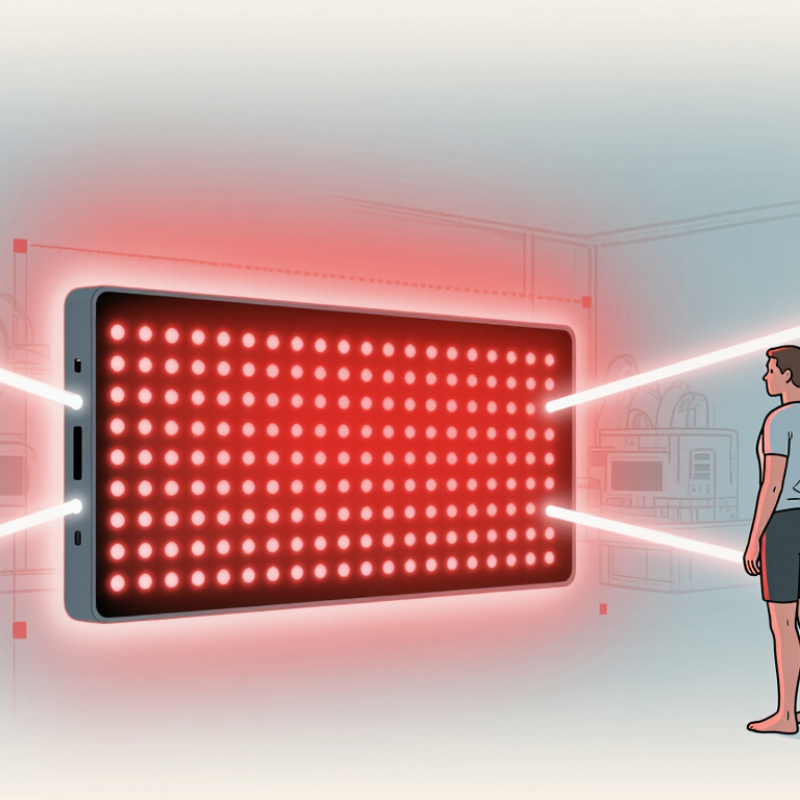
What Is Joovv Red Light Therapy?

Joovv Red Light Therapy: Device Type and Photobiomodulation Basics

Red light therapy devices commonly use light-emitting diodes arranged in a handheld unit, tabletop panel, or larger standing panel. Red wavelengths reach relatively superficial tissue, while near-infrared light can penetrate farther. Some devices provide both. Check the product’s stated wavelength and irradiance; appearance alone tells you little.

Photobiomodulation describes how cells respond to particular wavelengths of light. Light may interact with cellular components and influence signaling involved in energy use and inflammation. The mechanisms are still being studied, and results vary by condition, device, and treatment settings. It is not a substitute for medical care.

Distance matters. A panel used from a few inches away delivers a different exposure than one across a room. Follow the device instructions, keep sessions consistent, and protect your eyes when advised. Less can be more. The routine may feel uneventful, and benefits are not guaranteed. If you have a light-sensitive condition or take medication that increases light sensitivity, ask a qualified clinician before starting.

Joovv’s 660 nm Red and 850 nm Near-Infrared LED Spectrum

Red light therapy uses low-level light to influence cellular activity without relying on heat as its main effect. A common panel combines 660 nm red light with 850 nm near-infrared light. The 660 nm band is visible and may act more superficially; 850 nm is invisible and generally reaches deeper tissue.

Depth is not fixed, though. Skin tone, tissue thickness, distance, and device output all matter.

The wavelengths sit within ranges discussed in photobiomodulation research. A 2020 review by Dompe and colleagues in AIMS Biophysics describes commonly studied light between approximately 600 and 1,100 nm. The World Association for Photobiomodulation Therapy’s dose recommendations also stress delivered energy and treatment area, not wavelength alone.

In practice, irradiance, exposure time, and distance help determine the dose reaching skin. A wavelength label by itself tells only part of the story.

A 660/850 nm combination can therefore be understood as two light bands with different tissue interactions, not a guarantee of a particular result. Keep sessions consistent, follow the device’s safety instructions, and avoid staring into bright LEDs.

Small details count. Published findings vary by condition and protocol, and translating laboratory results into everyday use remains imperfect. That uncertainty deserves attention, not a confident promise.

How PBM Works: The 600–1,100 nm Therapeutic Light Range

Photobiomodulation (PBM) uses red and near-infrared light, commonly discussed across roughly 600–1,100 nanometers. Red light sits near the lower end; near-infrared occupies the higher range. The photons are absorbed by light-sensitive molecules in cells, including cytochrome c oxidase. This may influence mitochondrial signaling and nitric-oxide activity. It is a signaling effect, not simply “more heat.”

A 2020 review by Dompe and colleagues in the Journal of Clinical Medicine describes PBM applications using red and near-infrared wavelengths and highlights variation in treatment parameters. Wavelength alone does not predict results. Irradiance, exposure time, distance, skin characteristics, and the target tissue all matter.

Near-infrared light may reach deeper than red light, but actual penetration varies with tissue and measurement method. No universal depth applies.

The awkward part: protocols still vary. A panel’s stated wavelength range cannot, by itself, establish clinical effectiveness. For a careful comparison, check whether a study reports wavelength, power density, treatment duration, and dose in joules per square centimeter. These details make the evidence easier to assess. They also reveal how much remains uncertain.

Treatment Dosage: Irradiance (mW/cm²), Fluence (J/cm²), and Exposure Time

What Is Joovv Red Light Therapy?

Treatment Dosage: Irradiance (mW/cm²), Fluence (J/cm²), and Exposure Time

Red light therapy, often called photobiomodulation, delivers red or near-infrared light to tissue. Dose depends on more than the device’s brightness. Irradiance describes power reaching each square centimetre, measured in mW/cm². Fluence is the energy delivered per area, measured in J/cm². Time connects them: fluence equals irradiance multiplied by seconds, then divided by 1,000. The arithmetic is simple. The measurement is not.

For example, 30 mW/cm² reaching the skin for 300 seconds delivers 9 J/cm². But distance, beam angle, skin coverage, and device output can change the dose at the treatment site. A timer alone cannot confirm exposure. The World Association for Photobiomodulation Therapy’s condition-specific dosage tables give point doses for particular treatments, not one universal panel setting. That distinction matters.

More is not always better. Hamblin’s 2016 review in AIMS Biophysics describes a biphasic dose response: light may have different effects at lower and higher doses. WALT guidance also varies by condition and treatment site, so its figures should not be treated as a general home-use prescription. Use measured irradiance at the skin when available, and follow device instructions. If output is unclear, the calculation has a weak link. That deserves caution.

Clinical Evidence and Safety: Protocol Variability, Eye Protection, and Risks

Red-light therapy, or photobiomodulation, uses red and near-infrared light to influence cellular activity. Hamblin’s 2017 review describes commonly studied red wavelengths around 630–700 nanometres and near-infrared wavelengths around 700–1,100 nanometres. Those ranges do not define one proven dose. Clinical studies vary in wavelength, irradiance, exposure time, distance, and treatment schedule, making results difficult to compare. A protocol that helps one condition may not help another. That distinction matters.

More light is not automatically better. I would not treat a brighter panel as automatically better. ICNIRP’s 2013 guidelines assess optical radiation by wavelength and exposure, not by a device’s “red light” label. Follow the device’s eye-protection instructions, especially with near-infrared light, which is difficult to see. Never stare into bright emitters. Stop if you experience eye discomfort, headache, or unusual skin irritation. People with eye conditions, light sensitivity, or medicines that increase photosensitivity should seek clinical advice before use. Evidence remains uneven, and consumer devices cannot guarantee clinical results. That uncertainty deserves attention.