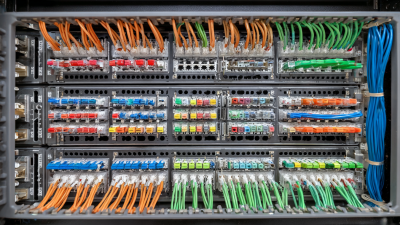
China’s fiber patch panel industry serves data centers, telecom networks, security systems, and enterprise infrastructure worldwide. This guide examines ten leading manufacturers and the practical strengths behind their reputations. A reliable fiber patch panel should support clean cable routing, stable adapter alignment, secure splice protection, and straightforward maintenance. Small details matter. A loose tray or poorly fitted cassette can increase installation time and optical loss.
The evaluation considers manufacturing experience, product range, engineering capability, quality controls, customization, and after-sales support. It also reviews common specifications, including rack size, port density, LC and SC compatibility, fiber modes, insertion loss, and return loss. Strong manufacturers usually provide documented testing, traceable materials, and consistent production standards. Certifications can support credibility, but they should not replace independent technical verification.
No ranking is perfect. Buyer priorities differ.
Some companies excel at high-density data center panels, while others focus on outdoor enclosures or cost-effective projects. Product samples, factory audits, and current test reports can reveal more than a polished website. This article therefore presents a practical comparison rather than an absolute verdict. Readers should confirm environmental ratings, connector quality, delivery capability, and warranty terms before placing an order. Real installations may expose weaknesses that catalogs miss. That limitation deserves attention. By combining supplier background with technical evidence and field-oriented considerations, this overview helps network planners identify Chinese manufacturers that may fit their project requirements, budgets, and long-term maintenance expectations.
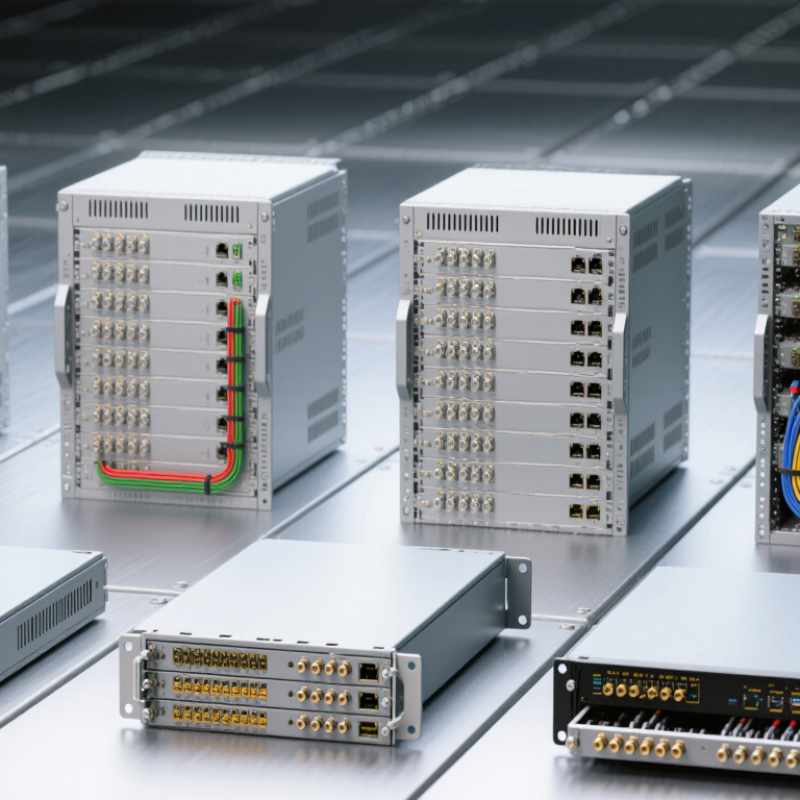
A fiber patch panel is the organized meeting point between incoming fiber cables and active network equipment. It holds adapters, splice trays, and connection modules inside a rack or wall cabinet. Without this structure, loose fibers can bend sharply, collect dust, or become difficult to identify during maintenance. Small errors become expensive delays.
When evaluating China’s top ten fiber patch panel manufacturers, product appearance should not be the main measure. Check insertion loss, return loss, adapter alignment, splice protection, labeling space, and cable-entry design. A reliable panel should support clear routing and maintain the fiber’s minimum bend radius. Technicians also need easy access without disturbing neighboring connections. Field testing with an optical loss test set provides stronger evidence than a polished catalog.
Standards matter, but practical details matter too. Verify material quality, temperature performance, manufacturing consistency, and inspection records before placing a large order. Some panels look excellent in photographs yet feel weak during installation. That is easy to overlook. A supplier’s technical response should explain connector compatibility, port density, and replacement procedures clearly. Ranking manufacturers is also imperfect because prices, certifications, and production quality can change over time. A careful buyer should compare samples, test reports, and after-sales support rather than trust a fixed top-ten list.
A reliable manufacturer should provide more than attractive product photos. Ask for clear drawings, fiber counts, adapter types, splice capacity, and rack dimensions. Check whether the panel supports your cable structure and installation method.
Request recent test records for insertion loss, return loss, tensile strength, and temperature cycling. Reports should identify the tested model and batch. Confirm whether testing follows recognized IEC or TIA requirements. Do not accept a generic certificate without verification.
Inspect the factory when possible. Look for clean assembly areas, labeled components, controlled fiber routing, and trained technicians. Ask how incoming materials are checked and how defects are recorded. Traceability matters when a connector fails months later. Request samples before placing a large order. Test them with your own equipment, not only the supplier’s meter.
A polished sample may hide inconsistent production. I once focused too heavily on packaging and missed uneven splice-tray movement. That mistake changed my evaluation checklist. Now I review latch strength, bend-radius protection, labeling, grounding, and access during maintenance. Ask about replacement parts, warranty terms, packing protection, and realistic lead times. A dependable supplier answers specific questions with evidence. Vague promises deserve another review.
China’s Top 10 Fiber Patch Panel Manufacturers should be judged by performance, not advertising alone. A reliable review examines product design, factory control, testing records, and after-sales support. These manufacturers typically produce rack-mounted, wall-mounted, and modular fiber patch panels for data centers, telecom rooms, and industrial networks. No ranking is perfect. Buyer needs can change the result.
In practical testing, check fiber alignment, adapter fit, splice-tray stability, and cable-entry protection. A well-built panel should open smoothly and protect bend-sensitive fibers. Powder-coated steel, clear labeling, and secure grounding also matter during installation. The leading Chinese manufacturers often provide LC, SC, and MPO configurations, with options for single-mode and multimode systems. Ask for sample units before approving large orders. Small defects become expensive in a busy network room.
Tips: Compare technical drawings, test samples, warranty terms, and delivery records. Confirm port density and rack compatibility. Request photographs of internal assembly, not only finished products. Keep written specifications for every order. This simple step prevents many disputes, although it cannot replace independent inspection.
Objective product and compliance benchmarks commonly used when evaluating fiber patch panel manufacturers in China. The table does not display company names, brands, rankings, or confidential manufacturer data.
| Evaluation Dimension | Typical Industry Specification | Relevant Standard or Reference | Procurement Significance |
|---|---|---|---|
| Rack Compatibility | 19-inch rack or cabinet mounting; commonly 1U, 2U, or 4U height | IEC 60297; EIA-310 | Confirms mechanical compatibility with standard data-center and telecom cabinets. |
| Fiber Capacity | Typical configurations include 12, 24, 48, 72, or 96 fibers | Product configuration and port-density requirements | Helps match the enclosure to current port count and future expansion plans. |
| Adapter Interface | LC duplex, SC simplex, ST, FC, and MPO/MTP adapter options | IEC 61754 series | Ensures connector compatibility with patch cords, pigtails, and active equipment. |
| Supported Fiber Type | Single-mode OS2 and multimode OM1, OM2, OM3, or OM4 | ISO/IEC 11801; IEC 60793-2-50 | Allows selection according to transmission distance and network speed. |
| Splice Management | Integrated splice trays, heat-shrink holders, and slack-fiber routing | TIA-568.3-D; IEC 61756-related practices | Protects fusion splices and maintains the recommended fiber bend radius. |
| Cable Entry and Exit | Rear, side, or top cable entry with grommets and strain-relief features | TIA-568.3-D installation practices | Simplifies installation while reducing cable movement and connector stress. |
| Material and Finish | Powder-coated cold-rolled steel, aluminum, or stainless steel construction | RoHS and REACH requirements where applicable | Affects corrosion resistance, mechanical durability, and environmental compliance. |
| Operating Environment | Common commercial ranges are approximately −20°C to +60°C, depending on design | Manufacturer environmental rating; IEC 61753 where applicable | Determines suitability for indoor rooms, controlled facilities, or harsher locations. |
| Optical Performance | Low insertion loss and high return loss according to connector grade and assembly type | IEC 61753; IEC 61300 test methods | Supports stable links and reduces losses in high-density optical networks. |
| Quality Documentation | Dimensional drawings, material declarations, inspection reports, and traceability records | ISO 9001; RoHS; REACH; customer-specific inspection plans | Improves project approval, incoming inspection, maintenance, and long-term traceability. |
Leading fiber patch panel manufacturers now focus on density, modularity, and easier maintenance. Rack-mounted panels commonly support LC, SC, and MPO connections. High-density 1U and 2U designs can hold many ports in limited cabinet space. Modular cassettes simplify migration from duplex links to parallel optics. Splice trays protect fusion splices from bending, dust, and accidental pulling. Products using G.657.A2 bend-insensitive fiber help reduce signal loss in crowded racks.
Technology choices should match the network, not only the port count. MPO panels support high-speed data center links, while polarity management prevents costly transmission errors. Some advanced panels include sliding adapters, rear cable management, and tool-free modules. They also provide clear labeling for faster moves, adds, and changes. MarketsandMarkets reported that the global fiber optics market could grow from about USD 9.2 billion in 2023 to USD 17.1 billion by 2028. This growth reflects rising bandwidth demand, but density alone does not guarantee performance. That assumption deserves review.
Tips: Check insertion loss, return loss, connector cleanliness, and bend radius before installation. Test every link with an optical power meter and OTDR. Confirm compliance with TIA-568.3-D and relevant IEC connector standards. A practical detail matters: leave service loops behind the panel. Overfilled trays often create hidden stress. Some specifications look impressive on paper, yet field access may remain poor. Ask for test records, temperature ratings, and clear replacement procedures before purchasing.
A top-ten list is only a starting point when selecting a Chinese fiber patch panel manufacturer. Your project needs a supplier that matches its technical and operational requirements. Check panel density, adapter type, fiber compatibility, rack dimensions, and cable management details. Ask for drawings before requesting a quotation. Small errors in port spacing can delay installation.
Request evidence, not broad promises. Review product specifications, quality-control procedures, inspection records, and relevant test reports. Confirm whether the factory performs insertion-loss, return-loss, pull-strength, and temperature testing. A reliable manufacturer should explain sampling methods and replacement procedures clearly. Also examine production capacity, lead times, packaging protection, and communication during sample approval. A video factory tour can help, but it cannot replace independent verification.
Tips: Send the supplier your real installation conditions. Include fiber count, rack size, operating temperature, connector type, and expected delivery date. Order samples and inspect them with your own tools. Check labeling, tray movement, bend-radius protection, and screw alignment. Do not choose the lowest quotation automatically. It may exclude testing, customized labels, or protective packaging. A polished catalog can still hide weak process control. I would compare at least three suppliers using the same checklist. No evaluation is perfect, and my own checklist may miss field issues. Ask for customer references from projects with similar scale and environment. Clear records usually reveal more than confident sales language.
Common fiber patch panel capacity options are typically organized around 12, 24, 48, and 96 fiber ports. When evaluating a Chinese manufacturer, confirm that the quoted capacity matches your connector type, rack-unit requirement, fiber-management method, labeling needs, and expansion plan. Actual loaded capacity may vary by adapter, splice tray, and module design.