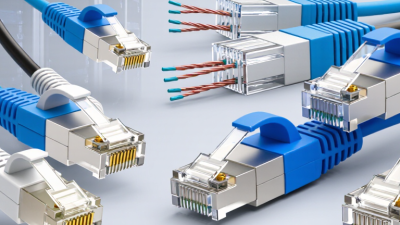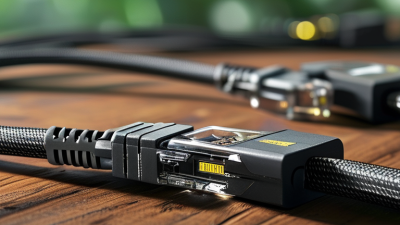
Choosing the right cat 6a cable manufacturer requires more than comparing prices or catalog length. Global buyers need verified performance, stable supply, and clear compliance evidence. A cable may look identical in a product photo, yet its conductor material, separator design, jacket rating, and test documentation can differ sharply.
Industry demand supports careful evaluation. MarketsandMarkets identifies data centers, enterprise networks, and high-speed connectivity as major structured cabling applications. Its market research also links growth with bandwidth expansion and data center investment. The Telecommunications Industry Association’s ANSI/TIA-568.2-D standard defines important requirements for balanced twisted-pair cabling. ISO/IEC 11801 provides another widely recognized framework for generic customer-premises cabling. These references help buyers assess manufacturers beyond marketing claims.
Real installations reveal the details.
A reliable supplier should provide third-party test reports, batch traceability, and consistent electrical specifications. Buyers should check insertion loss, return loss, NEXT performance, conductor size, and operating temperature. Fluke Networks’ certification guidance repeatedly emphasizes field testing, permanent-link performance, and correct installation practices. That matters when a 90-meter horizontal link runs above a crowded ceiling tray.
No ranking is perfect. Published market estimates can differ because companies define “manufacturer” differently. Some firms produce cable locally, while others outsource production and sell under private labels. This guide therefore compares leading manufacturers through measurable criteria, including standards compliance, production capability, quality control, customization, regional support, and delivery reliability. The final choice should reflect the project’s environment, not simply the lowest quotation.

Cat 6A cable supports data transmission up to 10 Gbps across channels reaching 100 meters. Its bandwidth can extend to 500 MHz. This capacity suits data centers, offices, hospitals, and smart buildings. In practical installations, Cat 6A helps carry video, cloud applications, wireless access point traffic, and power over Ethernet.
The main challenge is alien crosstalk. Signals from nearby cables can disturb each other, especially inside crowded racks. Better designs use tighter pair geometry, stronger separators, or shielding. Shielded cables may perform well near motors and electrical equipment, but they require proper grounding. An ungrounded shield can create trouble. That detail is often missed.
Global buyers should examine test reports, conductor material, jacket ratings, and verified transmission performance. Look for compliance with recognized cabling standards, not only attractive laboratory claims. A reliable manufacturer should provide batch traceability, clear installation guidance, and samples for independent testing.
Ask how the cable performs after bending, pulling, and repeated connector termination. Real projects are rarely perfect. I have seen technically strong cable fail because installers ignored bend radius or mixed incompatible components. Manufacturer experience matters, but field evidence matters more. Temperature, humidity, fire requirements, and local electrical practices also affect the correct selection. A cable approved in one region may need additional documentation elsewhere. Проверения should happen before large-volume purchasing.
For global buyers, Cat 6A selection should begin with standards, not catalog claims. ANSI/TIA-568.2-D and ISO/IEC 11801-1:2017 define balanced-cabling requirements for high-speed networks. Cat 6A operates to 500 MHz and supports 10GBASE-T across a 100-meter channel under IEEE 802.3an. That distance includes patch cords, connectors, and the permanent link. A 90-meter horizontal cable is not automatically a complete 100-meter installation. Small wording differences matter.
Compare measured performance carefully. Look for insertion loss, return loss, NEXT, PSANEXT, and attenuation-crosstalk ratio values. Alien-crosstalk data deserves special attention in dense server rooms. The TIA-568.2-D framework separates permanent-link and channel testing, so suppliers should state which test model supports each result. Ask for independent laboratory reports, test frequency, sample length, and calibration details. A glossy certificate is not enough.
Physical design also affects field reliability. Solid copper conductors, verified conductor gauge, stable insulation, and controlled pair geometry support predictable transmission. Shielding may reduce interference, but it can complicate bonding and installation. Check minimum bend radius, pull tension, operating temperature, and connector compatibility. In practical audits, crowded pathways often damage performance before cable aging does. I have seen neat datasheets hide unclear testing conditions. Buyers should challenge those gaps. Performance claims need evidence, not confidence.
Manufacturer-neutral Cat 6A benchmarks based on widely recognized cabling and Ethernet standards
Buyers should verify that Cat 6A products support 500 MHz operation, 10GBASE-T transmission over a 100 m channel, a 90 m permanent link, four balanced twisted pairs, and a nominal 100 Ω impedance. Product selection should also compare shielding design, conductor material, jacket ratings, installation diameter, temperature range, and third-party certification. Reference frameworks include ANSI/TIA-568.2-D, ISO/IEC 11801-1, and IEEE 802.3an.
Global buyers should evaluate Cat 6A manufacturers through evidence, not polished catalogs. ISO/IEC 11801-1 and ANSI/TIA-568.2-D define performance expectations for balanced cabling. Cat 6A should support 10GBASE-T across a 100-meter channel under compliant installation conditions. IEEE 802.3an also confirms 10 Gb/s operation over this distance. Ask manufacturers for independent test reports, not only internal claims. Reports should show insertion loss, return loss, NEXT, and DC resistance unbalance.
Tips: Request samples from different production batches. Inspect conductor diameter, separator shape, jacket thickness, and printing clarity. A clean reel is not proof of quality. Check the cable’s 500 MHz rating and verify the test method. Confirm flame performance certificates for the target market. Also review factory traceability, warranty terms, and documented quality controls.
In practical purchasing, connector compatibility often exposes weak cable design. Excessive untwist near the termination can damage performance. A manufacturer should provide clear stripping instructions and bend-radius limits. Copper purity also matters; avoid vague descriptions such as “premium metal.” Verify solid bare copper through technical documentation and laboratory testing. Some buyers focus heavily on price, then discover unstable links during installation. That lesson is easy to repeat. I would also examine batch consistency, because one excellent sample cannot represent continuous production. The best suppliers welcome third-party verification and explain failures without hiding behind marketing language.
International buyers need more than attractive pricing when selecting Cat 6A cable manufacturers. Reliable producers use solid bare copper conductors, often 23 AWG, with controlled insulation thickness. Their cables should support 500 MHz performance and 10GBASE-T transmission across standard 100-meter channels. Details matter.
Experienced manufacturers provide clear technical files, including conductor resistance, insertion loss, return loss, crosstalk, and flame ratings. They should identify compliance with recognized standards, such as ISO/IEC 11801, IEC 61156, or ANSI/TIA requirements. Independent laboratory reports add credibility, especially when buyers import into different regions. A factory tour, production sample, and batch traceability record can reveal more than a sales presentation.
Quality control must continue from copper drawing to final carton packing. High-speed testing, spark testing, and jacket inspection help prevent hidden defects. Packaging also needs attention. Moisture barriers, accurate labels, and strong reels reduce damage during long-distance transport. Small details matter.
Some suppliers offer impressive samples but inconsistent mass production. That risk deserves honest discussion. Buyers should request samples from different batches and compare test results. A lower price may reflect thinner copper, weaker shielding, or limited after-sales support. Clear communication about connectors, installation conditions, and local certification can prevent expensive misunderstandings. Not every manufacturer fits every market, and even careful buyers can overlook one requirement.
Global buyers should assess manufacturers through evidence, not attractive catalog photos. Request factory audit records, production-line images, and recent sample reports. Factory evidence matters. A serious supplier should explain conductor size, shielding design, jacket material, and tested bandwidth clearly. Ask for samples from regular production, not specially prepared batches. Verify performance against relevant TIA and IEC standards, while checking RoHS, REACH, and destination-specific requirements. Certificates alone can become outdated.
Pricing needs careful comparison. A low unit price may exclude connectors, packaging, testing, or export documentation. Compare complete landed costs, including tooling, freight, duties, and inspection fees. Ask whether copper purity, cable length tolerance, and carton protection remain unchanged at larger volumes. Some quotations are precise but incomplete. That is easy to miss.
Delivery planning should include production capacity and seasonal risks. Confirm minimum order quantities, lead times, port options, and acceptable shipment splits. A written quality agreement should define sample approval, batch testing, labeling, and claims handling. Keep retention samples from every shipment. They provide useful evidence when field performance becomes disputed. I would still avoid relying on one supplier too quickly; even a well-audited factory can face material shortages or testing delays. Build a realistic buffer, because perfect delivery forecasts rarely survive customs checks, weather disruptions, or last-minute design changes.