China has become a major source of network fiber optic cable for telecom operators, data centers, security systems, and industrial networks. Its manufacturers serve both domestic projects and international markets, offering single-mode, multimode, armored, aerial, and indoor cable designs. Yet product quality can vary between factories, even when catalogs appear similar.
This guide introduces ten leading China-based manufacturers and explains what makes each one worth considering. The evaluation focuses on manufacturing experience, fiber performance, production capacity, testing procedures, customization, export support, and compliance with recognized international standards. Practical details matter, such as cable jacket materials, bend radius, attenuation, tensile strength, connector compatibility, and delivery consistency.
Numbers tell only part of the story.
A reliable supplier should provide clear technical datasheets, sample testing, traceable quality records, and responsive engineering support. Factory audits and third-party test reports can reveal details that promotional pages often omit. Questions about raw material sources, water-blocking performance, temperature resistance, and installation conditions also deserve direct answers.
No ranking is flawless. Market data changes, product lines expand, and regional service quality may differ. Some manufacturers excel at large telecom contracts, while others perform better with customized or smaller orders. This introduction therefore treats the list as a practical starting point, not a permanent verdict. Readers should verify certifications, project references, lead times, warranty terms, and after-sales capabilities before making a purchasing decision. Careful comparison remains essential.
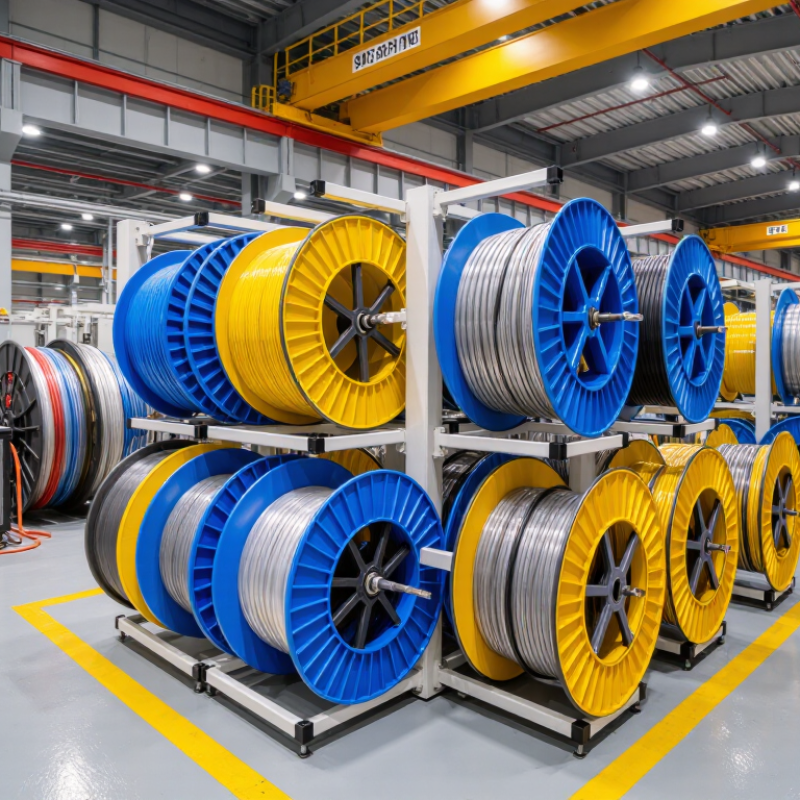
China’s network fiber optic cable manufacturing landscape combines large-scale production with increasingly specialized engineering. Manufacturers serve telecom operators, data centers, rail networks, industrial parks, and rural broadband projects. Production is concentrated around established electronics and cable-making regions, where suppliers can access optical fiber, polymer materials, precision machinery, and experienced technicians.
The strongest factories control more than cable assembly. They manage fiber drawing, coloring, stranding, jacketing, testing, and packaging under documented procedures. Clean production areas reduce contamination risks, while tension control protects fiber performance during manufacturing. Typical quality checks include attenuation testing, tensile strength tests, bending trials, dimensional inspection, and temperature cycling. Details matter.
China’s top ten manufacturers often compete through customization rather than volume alone. They may produce loose-tube, ribbon, armored, indoor, outdoor, and air-blown cable designs for different installation conditions. Reliable suppliers provide traceable test records, clear material specifications, and samples before mass production. International buyers should verify certification scope, factory capacity, delivery history, and after-sales communication instead of trusting a catalog alone.
Some suppliers still present strong technical claims without enough field evidence. That weakness deserves attention. A low price can hide inconsistent coating, weak packaging, or limited testing discipline. Experienced procurement teams compare samples, inspect production controls, and confirm performance against applicable international standards. Manufacturing capability is broad, but consistency between batches remains an area requiring careful review.
The chart presents ten standardized fiber-count configurations commonly used in network fiber-optic cable production, ranging from low-density access cables to high-density backbone cables. It is a product-capacity view rather than a company ranking.
Higher fiber-count designs are typically applied to backbone, metropolitan, data-center, and high-capacity infrastructure networks, while lower-count designs are widely used in access and distribution networks.
China Top 10 Network Fiber Optic Cable Manufacturers
A reliable shortlist begins with measurable evidence, not production claims. The OECD Broadband Statistics for June 2024 reported that fiber represented about 43% of fixed broadband subscriptions across OECD economies. This growth increases pressure on cable suppliers to deliver stable attenuation, accurate fiber counts, and consistent connector compatibility.
Testing must follow recognized requirements, including IEC 60794, IEC 61300, and ITU-T G.657 where applicable. Check attenuation after temperature cycling, bending, tensile loading, and water exposure. Ask for recent test reports, calibrated equipment records, and batch-level traceability. Factory audits should review drawing control, raw-material storage, fiber coloring, jacketing, and final inspection. Small details matter.
Delivery capability also deserves a measurable score. Compare monthly capacity, lead times, reserve inventory, export documentation, and corrective-action history. CRU’s 2024 fibre and cable market analysis identifies FTTH, data centers, and mobile backhaul as major demand drivers, so manufacturers need flexible designs for different deployment conditions. Field experience helps, but it is not proof by itself. A polished certificate can hide weak process control. No scorecard is perfect. Review at least three production batches, speak with technical users, and test samples independently before ranking the top ten.
China’s top ten network fiber optic cable manufacturers serve different infrastructure needs. One large integrated producer combines fiber drawing, coating, cabling, and testing under one roof. Its strength is stable volume production, although large factories may respond slowly to unusual orders. A ribbon-cable specialist focuses on high fiber counts and compact installation. Its products suit crowded data centers and backbone routes. A third manufacturer concentrates on FTTH drop cables, using lightweight jackets and bend-resistant designs for apartment buildings.
Another profile centers on rural last-mile networks. This producer favors simple structures, lower installation weight, and practical aerial deployment. A fifth manufacturer supplies cables for harsh environments, including reinforced jackets for mines, industrial sites, and outdoor cabinets. Its factory records should show temperature, tensile, and crush testing. One high-density specialist develops cables for server rooms. Engineers examine bend radius carefully, because tight trays can create hidden attenuation. The result is efficient, but installers still need disciplined routing.
A seventh manufacturer builds microduct and air-blown cable systems. Its advantage is faster network expansion through existing conduits. An eighth producer targets long-distance and submarine projects, where water blocking and mechanical protection become critical. A ninth manufacturer accepts smaller custom batches, supporting special lengths, connector arrangements, and sheath colors. This flexibility helps integrators, yet customization can increase inspection time. The tenth profile belongs to a quality-focused factory with strict incoming-fiber checks, optical loss testing, and batch traceability. Buyers should request test records, sample approvals, and factory audit evidence. A polished brochure is not enough. Supplier performance can still vary between production lines.
| Rank | Profile | Core Manufacturing Scope | Fiber Types | Cable Constructions | Common Standards and Compliance | Typical Deployment Areas | International Market Orientation |
|---|---|---|---|---|---|---|---|
| 1 | Profile A | Single-mode and multimode optical fiber cables, assemblies, and passive connectivity | G.652.D, G.657.A1/A2, OM3, OM4, and OM5 | Loose-tube, ribbon, tight-buffered, indoor/outdoor, and direct-buried designs | IEC 60794, IEC 60332, ITU-T G.652 and G.657, RoHS, and REACH | Telecommunications backbones, data centers, FTTH, and metropolitan networks | Strong export capability serving telecom operators, contractors, and distributors |
| 2 | Profile B | High-volume network cable production with customized outer jackets and strength members | G.652.D, G.657.A1, G.657.A2, OM2, OM3, and OM4 | ADSS, aerial, duct, micro-duct, armored, and non-metallic cables | IEC 60794, ASTM-related test methods, CPR classifications where applicable, RoHS, and ISO-based quality systems | Long-distance routes, rural broadband, utility corridors, and access networks | Primarily project-oriented exports across Asia, Africa, the Middle East, and Latin America |
| 3 | Profile C | FTTH drop cables, fiber optic distribution cables, patch cords, and termination products | G.657.A1/A2 bend-insensitive single-mode fiber and OM3/OM4 multimode fiber | Flat drop, round drop, figure-eight, indoor simplex/duplex, and riser-rated cables | ITU-T G.657, IEC 60794, IEC 61754 interface standards, RoHS, and REACH | Fiber-to-the-home, multi-dwelling units, campus networks, and building risers | Focused on standardized products for overseas broadband rollouts and local access projects |
| 4 | Profile D | Specialized outdoor cable systems for aerial, underground, and harsh-environment installations | G.652.D, G.655, G.657, and selected dispersion-managed fiber types | ADSS, OPGW-related fiber units, armored, submarine-adjacent terrestrial, and high-strength cables | IEC 60794, ITU-T G-series recommendations, tensile and crush testing, UV resistance testing, and RoHS | Power utilities, railways, highways, oil and gas corridors, and intercity backbones | Suitable for infrastructure tenders requiring customized mechanical and environmental performance |
| 5 | Profile E | Data-center cabling, high-density trunk assemblies, and rack-level optical connectivity | OM3, OM4, OM5, G.657.A1, and G.652.D | MPO/MTP-compatible trunks, breakout cables, duplex patch cords, and bend-optimized assemblies | IEC 61754, IEC 61300, TIA-568, ISO/IEC 11801, RoHS, and low-smoke requirements where specified | Enterprise data centers, cloud facilities, server rooms, and high-performance computing environments | Export mix emphasizes pre-terminated assemblies and short lead-time configuration services |
| 6 | Profile F | Integrated production of optical fiber, cable components, closures, and access-network accessories | G.652.D, G.657.A1/A2, OM1, OM2, OM3, and OM4 | Distribution, feeder, drop, armored, indoor/outdoor, and low-friction duct cables | IEC 60794, ITU-T G.652/G.657, ISO 9001 quality management, RoHS, and REACH | National broadband programs, FTTA, smart-city networks, and telecom access systems | Broad product catalog supports both container-scale orders and customized regional specifications |
| 7 | Profile G | Industrial and specialty fiber optic cable manufacturing for demanding installation conditions | Single-mode, multimode, bend-insensitive, and temperature-resistant fiber options | Industrial Ethernet fiber cables, stainless-steel armored, rodent-resistant, and high-temperature designs | IEC 60794, IEC 60332, vibration and temperature testing, ingress protection testing, and RoHS | Factories, transportation systems, surveillance networks, control rooms, and renewable-energy sites | Serves engineering integrators and industrial distributors with application-specific designs |
| 8 | Profile H | Cost-efficient standard cable production with emphasis on private-label and contract manufacturing | G.652.D, G.657.A1, OM2, OM3, and OM4 | Simplex, duplex, breakout, patch cable, figure-eight, and basic outdoor loose-tube designs | IEC 60794, TIA-568, ISO/IEC 11801, RoHS, and standard optical attenuation testing | Small and medium enterprise networks, security systems, structured cabling, and local FTTH projects | Competitive option for distributors requiring flexible packaging, labeling, and order quantities |
| 9 | Profile I | Fiber optic connectivity, splice closures, distribution boxes, and complete passive network solutions | G.652.D, G.657.A1/A2, OM3, and OM4 | Access cables, indoor distribution cables, patch cords, pigtails, and pre-assembled terminal products | IEC 61754, IEC 61300, IEC 60794, IP-rated enclosure testing, RoHS, and REACH | FTTx cabinets, central offices, campus networks, mobile backhaul, and building distribution points | Frequently supports turnkey passive-network packages for contractors and system integrators |
| 10 | Profile J | Flexible low-volume and customized manufacturing for regional network specifications | G.652.D, G.657.A1/A2, OM2, OM3, and OM4 | Custom jacket colors, indoor/outdoor hybrid, armored, aerial, duct, and patch-cord constructions | IEC 60794, ITU-T G.652/G.657, TIA-568, RoHS, REACH, and customer-specific acceptance tests | Telecom maintenance, campus expansion, surveillance, enterprise networks, and special retrofit projects | Well suited to buyers needing engineering support, sample approval, and customized documentation |
China’s top ten network fiber optic cable manufacturers compete through products, testing depth, and application fit. Their core portfolios usually include G.652D low-loss fiber, G.657A bend-insensitive fiber, ribbon cable, armored cable, ADSS, and OPGW. These designs serve FTTH access, 5G fronthaul, data centers, power grids, and long-haul routes.
Technology matters more than catalog size. Leading factories use controlled preform processes, dry-core designs, high-density ribbon structures, and automated geometric inspection. Bend-insensitive fiber supports tight indoor pathways and crowded cabinets. ADSS withstands aerial installation without metallic support. OPGW combines grounding protection with reliable optical communication. ITU’s Facts and Figures 2023 reported 5.4 billion people online, equal to 67% of the global population. That growth increases demand for stable access and transport networks.
Performance claims should be checked against test records, not marketing language. Buyers should request attenuation results, tensile data, temperature-cycle testing, and IEC or equivalent compliance evidence. The OECD Broadband Statistics report showed fiber represented about 42% of fixed broadband subscriptions across OECD economies at the end of 2023. That figure signals strong migration toward fiber, but market conditions differ widely. A ranking is never absolute. Public comparisons also remain imperfect because manufacturers disclose different warranty, failure-rate, and field-deployment data.
Choosing among China’s top ten fiber optic cable manufacturers requires more than comparing prices. Start with the cable’s intended environment. Indoor networks, outdoor ducts, and direct-burial projects need different jackets, strength members, and moisture protection. Ask for attenuation results at 1310 nm and 1550 nm. Request factory test reports, product samples, and clear batch traceability. A reliable manufacturer should explain fiber type, bend radius, tensile strength, and operating temperature without vague claims. Factory experience matters. So does consistent quality.
Tips: Check independent certifications and testing procedures. Confirm whether samples match mass production. Review packaging photos, connector polishing standards, and delivery records. Ask how defects are handled after shipment. Small details reveal process discipline. Do not trust impressive brochures alone.
A strong supplier should support technical communication before ordering. Engineers should review cable routes, pulling tension, installation tools, and expected service life. Visit the facility when the project is large, or arrange a live video inspection. Observe storage conditions, extrusion lines, and final testing records. I have learned that low pricing can hide higher installation costs, especially when cable dimensions vary between batches. That warning is easy to overlook. It should not be. Also, avoid selecting a manufacturer only because it offers the fastest delivery. Reliable supply needs realistic production schedules, protective packaging, and documented inspection checkpoints. Keep every specification in writing.