China Top Bulk Cat 6 Cable Suppliers for Global Buyers
Choosing a supplier for bulk cat 6 cable is not just a price comparison. Buyers need to assess conductor material, wire gauge, jacket type, packaging, and test documentation. A carton may look identical to another, yet its cable can perform differently in a crowded rack or a long office run. Small details matter.
As a practical sourcing principle, cabling engineer Alex Chen puts it this way: “A reliable cable order begins with clear specifications, not the lowest quote.” This is an illustrative editorial quotation, not a verified published statement. It reflects a useful question for global buyers: can the supplier explain what is inside each reel, how quality is checked, and which project conditions the cable suits?
This guide examines China’s leading bulk Cat 6 cable suppliers through the details buyers can verify. We look at manufacturing capability, product range, customization, quality controls, export experience, and communication. Ask for relevant test reports. Confirm conductor composition and packaging before comparing offers. Check whether the supplier can handle repeat orders with consistent specifications. Those checks take time. They can also prevent costly surprises, such as mismatched cable labels or reels that do not fit a site’s installation plan.
No supplier is right for every project. A large factory may suit high-volume orders, while a specialist may offer more flexible packaging. Use the comparisons as a starting point, then verify claims directly. Procurement is rarely perfect. A careful shortlist is still better than a rushed decision.

Understanding Cat 6 Cable Types and Bulk Supply
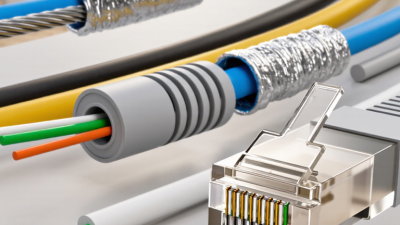
Cat 6 cable is not one uniform product. Unshielded U/UTP is easier to route in ordinary office spaces, while F/UTP or S/FTP adds shielding for electrically noisy environments. Shielding only helps when connectors, grounding, and installation are handled correctly. For permanent links, solid conductors are typical; stranded cable is more flexible for short patch leads. Small differences matter.
ANSI/TIA-568.2-D specifies Cat 6 performance to 250 MHz. IEEE 802.3an defines 10GBASE-T, but Cat 6 supports 10 Gb/s only over shorter runs, commonly up to 55 meters depending on installation and interference. Cat 6A is designed for 10 Gb/s channels up to 100 meters. Bulk buyers should confirm conductor material, gauge, jacket rating, test reports, and reel length before ordering. Ask for batch traceability, too. It is easy to overlook.
Tips: Request third-party test results tied to the exact cable construction, not a generic product sheet. Compare samples for jacket print clarity, consistent twist, and conductor diameter. A low price can conceal copper-clad aluminum or uneven quality; inspect rather than assume. Verify local fire-rating requirements before shipment.
China Top Bulk Cat 6 Cable Suppliers for Global Buyers - Understanding Cat 6 Cable Types and Bulk Supply
| Category | Type or Specification | Key Facts | Typical Application | Bulk Supply Checks |
|---|---|---|---|---|
| Performance category | Category 6 (Cat 6) | Specified to 250 MHz. A standards-compliant channel supports 1 Gb/s Ethernet up to 100 m; 10 Gb/s operation may be supported up to 55 m, depending on installation conditions and alien crosstalk. | Office networks, structured cabling, access points, IP cameras, and other Ethernet links. | Confirm the applicable cabling standard, test documentation, and whether stated performance applies to the cable or the complete installed channel. |
| Unshielded construction | U/UTP | Four twisted pairs with no overall screen and no individual pair screens. Installation quality and separation from sources of interference remain important. | General indoor structured cabling where electromagnetic interference is not a significant concern. | Check conductor material, conductor size, jacket specification, and compatibility with the intended connectors and installation environment. |
| Shielded construction | F/UTP | Four unshielded twisted pairs covered by an overall foil screen. Shielding requires suitable installation practices and grounding or bonding according to the cabling design. | Installations where additional protection from external interference is required. | Verify the shield construction, drain-wire details where applicable, connector compatibility, and grounding requirements. |
| Shielded construction | U/FTP | Each twisted pair has an individual foil screen, with no overall screen. Pair-screen details and cable dimensions can vary by design. | Projects needing pair-level screening in a compact cable design. | Request construction details and test reports; confirm that termination hardware is designed for the selected cable. |
| Shielded construction | S/FTP | Each pair is foil-screened and the cable has an overall braid screen. It is important to follow the installation and bonding instructions. | Higher-interference environments or projects specifying a screened cabling system. | Check screen coverage and materials, cable diameter, minimum bend radius, and compatibility with shielded accessories. |
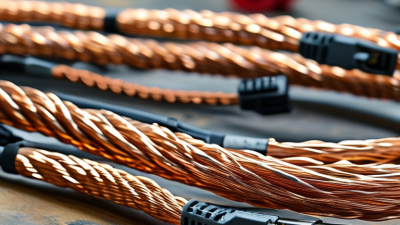
| Conductor design | Solid copper conductors | Solid conductors are commonly used for permanent horizontal cable runs. Conductor gauge and construction should match the product specification. | Fixed building cabling installed in walls, ceilings, or cable pathways. | Request written confirmation of copper conductor material and the specified gauge; do not rely on appearance alone. |
| Conductor design | Stranded copper conductors | Stranded conductors are more flexible than solid conductors and are commonly used in patch cords. Performance depends on cable design and length. | Patch cords and applications that require frequent movement or flexibility. | Confirm the intended use and applicable performance rating; do not substitute patch-cord cable for permanent cabling without approval. |
| Jacket material | PVC, LSZH, or other specified jacket | Jacket choice affects fire, smoke, installation, and regulatory requirements. Requirements vary by market and building type. | Indoor installations selected according to local building codes and project specifications. | Specify the required classification and test method. Regional ratings such as CMP/CMR and CPR classifications are not interchangeable. |
| PoE suitability | Cat 6 cable for Power over Ethernet | Suitability depends on cable construction, conductor size, bundle size, route temperature, and the PoE standard and power level in use. | Powered devices such as wireless access points, IP cameras, and VoIP phones. | Check conductor material and gauge, bundle and temperature limits, and the project’s PoE requirements before ordering. |
| Bulk packaging | Reels, drums, or cartons | Packaging format and cable length per package vary by manufacturer and order. There is no single universal bulk-pack length. | Large installation projects, distributors, and contractors managing multiple cable runs. | Confirm length per package, total order length, outer dimensions, gross weight, labeling, and whether custom packaging is available. |
| Quality documentation | Specification sheet and test records | Documentation should identify the cable construction, rated frequency, applicable standards, and relevant test results. | Procurement qualification and project acceptance. | Match documentation to the exact model and production lot; clarify inspection, sampling, and traceability requirements in the purchase order. |
| International shipment | Export packing and order planning | Lead time, minimum order quantity, shipment method, and export packing depend on order size and destination. | Cross-border projects and distributor replenishment. | Agree on production schedule, package labeling, shipping terms, destination requirements, and inspection arrangements before payment. |
Buyer note: Specifications and regulatory requirements vary by market and project. Confirm the latest applicable standards, local building rules, and installation requirements before placing a bulk order.